Pull a double shot of kopi luwak at 9 bar with an 18-gram dose and something immediately becomes apparent: the crema is darker, richer, and more persistent than any single-origin espresso you’ve pulled before. This isn’t an accident of roast level. It’s the direct result of enzymatic changes that occur when coffee beans pass through a civet’s digestive tract — changes that reduce bitter proteins and concentrate body in ways that translate with unusual clarity under pressure extraction.
Espresso is an unforgiving method. It amplifies everything: good characteristics and bad ones, freshness and staleness, precision and sloppiness. Which means that when kopi luwak performs this well as espresso, it tells you something real about the quality of the beans.
Why Pressure Extraction Suits Kopi Luwak
Standard espresso machines operate at 9 bar of pressure — nine times atmospheric pressure, forcing near-boiling water through a compact puck of ground coffee in roughly 25 to 30 seconds. At that pressure, every characteristic of the bean is concentrated into approximately 36 grams of liquid from an 18-gram dose. For most single-origin coffees, this concentration can be brutal: high-acid beans become sour, tannic beans become harsh.
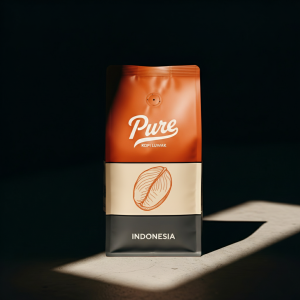
Pure Kopi Luwak
Wild civet coffee from Java. 88.5 SCA cupping score. From $125 for 100g.
Kopi luwak sidesteps both problems. The civet’s proteolytic enzymes break down protein precursors of bitterness during digestion. The organic acid profile of civet-processed beans — lower in malic and citric acids than conventionally processed coffee from the same origin — means the concentrated extraction doesn’t tip into sourness. What you get instead is an intensification of the good: the syrupy body becomes almost cream-like, the earthy-chocolate notes deepen, and the finish lingers in a way that most espresso doesn’t.
Understanding what makes kopi luwak unique at a molecular level explains why these characteristics hold up so well under pressure extraction.
The Right Beans and the Freshness Window
Freshness is more consequential for espresso than any other brewing method. The pressure that concentrates flavor also amplifies staleness. For kopi luwak espresso, you want beans between 7 and 21 days off-roast. In the first week, residual CO2 causes uneven extraction — the gas escapes faster than water can penetrate, creating turbulence in the puck. After three weeks, the volatile aromatics that give kopi luwak its distinctive character begin to dissipate.
Medium roast is the right choice. A lighter roast preserves more origin acidity, which espresso will amplify into sharpness. A darker roast burns off the nuanced earthy notes that make kopi luwak worth brewing as espresso in the first place. The sweet spot is a roast developed enough for caramelization but restrained enough to preserve complexity. See our guide on keeping kopi luwak fresh for storage recommendations that apply with particular force to beans you’re planning to espresso.
Try the coffee this article is about
Wild-sourced from Java, 88.5 SCA cupping score, free US shipping. From $125 for 100g.
Shop Pure Kopi Luwak →Grind: The 200-Micron Window
Espresso grind falls in a narrow range — approximately 200 to 250 microns in particle size — where resistance in the puck is high enough to slow water flow to the target 25-to-30-second extraction window without choking the machine. With kopi luwak, dialing in grind is especially critical because the bean’s density and moisture content can differ slightly from conventionally processed coffee, affecting how it compresses and resists water flow.
A burr grinder is non-negotiable here. Blade grinders produce a bimodal distribution of particle sizes — fine dust mixed with coarse fragments — that causes channeling, where water finds paths of least resistance through the puck rather than extracting evenly. The result is simultaneous over-extraction from the fine particles and under-extraction from coarse ones, producing bitter-and-sour in the same shot. With a premium bean like Pure Kopi Luwak, a blade grinder wastes the investment entirely.
Dial in by adjusting one variable at a time. Start with a fine setting and pull a test shot timing from the moment the pump engages. If the shot runs faster than 20 seconds, go finer. If it drips painfully slow past 35 seconds, go slightly coarser. The target window is 25 to 30 seconds for a 1:2 ratio — 18 grams in, 36 grams out.
Dose, Yield, and the 1:2 Ratio
The standard double espresso parameters work well for kopi luwak: 18 to 20 grams of ground coffee in the portafilter, yielding 36 to 40 grams of liquid at the 1:2 ratio. This produces a concentrated but balanced shot that showcases the bean’s body and sweetness without pushing extraction into bitterness. The 25-to-30-second extraction window holds the key balance: long enough to develop sweetness, short enough to stop before bitter compounds fully extract.
Some baristas prefer a shorter ratio — 1:1.5, or a true ristretto at 1:1 — with kopi luwak, arguing that the compressed shot pushes the syrupy body to an extreme that’s particularly satisfying. At 18 grams in and 27 grams out, you lose some clarity but gain a texture unlike anything in regular espresso. It’s worth experimenting once you’ve dialed in the standard parameters. What you want to avoid is a lungo: extending the yield beyond 1:2.5 thins the body and makes the earthiness read as blandness rather than depth.
Temperature: Why 93°C Is the Target
Water temperature for kopi luwak espresso sits in the 92 to 94°C range (197 to 201°F). This is deliberately conservative — lower than the 94 to 96°C some baristas use for light-roast specialty coffees. Kopi luwak’s low bitterness means you don’t need to pull temperature down to tame harsh notes, but going too hot on a medium roast risks flattening the aromatic complexity that justifies the effort. Start at 93°C and adjust one degree at a time based on taste: sour or thin means increase; flat or ashy means decrease.
Machine pressure should hold at the standard 9 bar. If your machine supports pressure profiling, a gentle ramp from 6 bar to 9 bar over the first five seconds can help with even puck saturation before full pressure applies — useful for kopi luwak given the slight variation in bean density that comes with hand-collected, wild-processed lots. But this is advanced territory. The fundamentals of dose, grind, and temperature matter far more than pressure profiling for home espresso.
Tamping and Puck Preparation
Consistent tamping is the final variable before the pump engages. After dosing, distribute the grounds evenly in the basket before tamping — use a distribution tool or the Weiss Distribution Technique (a needle to break up clumps) to eliminate air pockets. Tamp with firm, level pressure: approximately 15 to 20 kilograms of downward force, applied perfectly level. A crooked tamp creates channeling that ruins extraction regardless of everything else you’ve done correctly. Clean any stray grounds from the portafilter rim before locking in — stray grounds prevent a proper seal and cause side-channeling.
Reading the Shot
A well-pulled kopi luwak espresso tells a visible story. The first few seconds produce dark, viscous droplets that gradually merge into a steady stream. By ten seconds, the stream should be consistent and honey-thick, running deep caramel in color. As the shot approaches 25 seconds, the color lightens slightly and the crema becomes more pronounced. The crema on kopi luwak espresso tends to be darker and more persistent than typical Arabica espresso — a function of the bean’s modified protein structure and full body.
The finished shot should carry aromas of dark chocolate and earth with a faint sweetness. In the cup: minimal bitterness, full body with a velvety texture, and a finish that lingers noticeably longer than most espresso. If you’re getting sharpness or astringency, check extraction time and temperature first. If you’re getting flatness, the beans may be stale or the roast too dark. For the sourcing context that underpins cup quality at this level, see our guide on how kopi luwak is farmed in Java.
Pure Kopi Luwak
Wild civet coffee from Java. 88.5 SCA cupping score. From $125 for 100g.

Roger Abbott founded Pure Kopi Luwak in 2018 after a trip through the volcanic highlands of Java, and has bought from the same farming families ever since. He only works with collectors of wild civet coffee, never caged. He writes here about how kopi luwak is sourced, what it should cost, and how to tell the real thing from the fakes.