In 2012, a Thai entrepreneur named Blake Dinkin introduced a coffee to the world’s most exclusive hotel bars — Black Ivory Coffee, produced by elephants in the Golden Triangle region of Chiang Rai. At roughly $2,000 per kilogram wholesale, it briefly challenged kopi luwak’s standing as the world’s most expensive coffee. The rivalry illuminated something worth exploring: the small, strange world of animal-processed coffees is more varied than most people realize, and quality within it ranges from genuine to fraudulent, from extraordinary to merely odd.
Here is an honest ranking of the main contenders, with the pricing and production data that actually matter.
1. Wild Kopi Luwak — Still Unmatched
The Asian palm civet (Paradoxurus hermaphroditus) has been processing coffee on the Indonesian islands of Java, Sumatra, and Sulawesi for at least two centuries. Wild-sourced kopi luwak remains the benchmark against which all other animal-processed coffees are measured — not because of marketing, but because of biology. Wild civets roaming coffee plantations select only the ripest cherries and consume a varied diet of fruits and insects, which produces a diverse enzyme profile in their digestive systems. The result is a coffee with measurably reduced bitterness, a syrupy body, and a distinct earthiness that no caged or farmed alternative has successfully replicated.
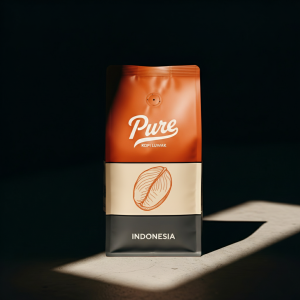
Pure Kopi Luwak
Wild-sourced. Organic. Arabica. From $125.
Genuine wild kopi luwak is genuinely scarce. Total annual production of authenticated wild-sourced beans is estimated between 200 and 500 kilograms globally — less than the daily output of a mid-sized Brazilian farm. At origin in Java, wholesale prices run $800 to $1,200 per kilogram. Internationally, retail typically lands between $100 and $150 per 100 grams. If you encounter “wild kopi luwak” selling for $20 per 100 grams, it is not wild kopi luwak.
For anyone considering purchasing, authentic wild-sourced kopi luwak from verified Indonesian producers represents the clearest entry point into this category.
2. Black Ivory Coffee — Elephant Processing from Thailand
Black Ivory Coffee is produced at the Golden Triangle Asian Elephant Foundation in Chiang Rai, where Thai Arabica cherries are fed to rescue elephants. The production economics are staggering: it takes 33 kilograms of raw coffee cherries to produce one kilogram of finished Black Ivory Coffee, because most beans are either lost to digestion or damaged beyond use. This yield ratio — worse than 30:1 — is a significant reason the coffee retails at around $150 per 35 grams (approximately $3,000 per kilogram at retail).
The flavor profile differs meaningfully from kopi luwak. Elephants are herbivores with longer digestive transit times, and the interaction between the coffee beans and a plant-based diet produces different enzymatic activity than the omnivorous civet. Tasters consistently note reduced bitterness and chocolate notes, but a less complex finish than premium wild kopi luwak. A portion of Black Ivory’s sales revenue supports elephant conservation, which adds ethical weight to a purchase that is already hard to justify on price alone.
3. Jacu Bird Coffee — Brazilian Rarity
In the mountains of Espírito Santo, Brazil, the jacu bird (a native species related to the turkey) feeds on ripe coffee cherries on the Camocim estate. Owner Henrique Sloper noticed the birds targeting only the sweetest, most developed fruit and began collecting and processing their droppings. The resulting coffee, processed through a bird’s relatively simple digestive system, undergoes less biochemical transformation than mammalian digestion provides — but the cherry selection effect is real.
Jacu bird coffee retails at approximately $1,500 to $1,700 per kilogram, placing it above standard specialty coffees but below Black Ivory. Harrods in London carries it at around $1,700 per kilogram. The flavor profile leans toward natural process characteristics — fruity, sweet, with lower acidity — more than the earthy complexity of kopi luwak.
4. Bat Coffee — Central American Curiosity
In parts of Central America, particularly in Panama and Nicaragua, certain bat species consume coffee cherries at night, digesting the fruit flesh while passing the beans. Collectors gather the droppings from beneath roosting trees during harvest season. Production volumes are tiny — often just a few dozen kilograms per farm per year — and quality is highly inconsistent, varying with bat species, diet, and collection timing.
Bat coffee commands prices in the $200 to $400 per kilogram range when sold through specialty channels. It occupies an interesting ecological niche — bats are important pollinators in coffee-growing regions — but as a coffee, it has not demonstrated the consistent quality that would justify the price premium over standard specialty coffees.
5. Monkey-Processed Coffee — Incomplete Transformation
Monkey coffee — sometimes called monkey spit coffee — involves primates, usually rhesus macaques or Formosan rock macaques in Taiwan and parts of India, chewing ripe coffee cherries and spitting out the partially processed seeds. Because digestion is incomplete (the beans are not swallowed), the enzymatic transformation is far less extensive than in full digestive processing.
The result is a coffee that is slightly softer than conventionally processed beans but lacks the pronounced flavor modification of kopi luwak or Black Ivory. Monkey coffee sells in the $100 to $200 per kilogram range. It qualifies as unusual and collectible, but not as a serious rival to the top tier of animal-processed coffees.
Why Processing Animal Matters
The chemistry behind animal-processed coffees explains the quality hierarchy. Full digestive processing — as in kopi luwak and Black Ivory — allows prolonged enzymatic contact with the bean, breaking down bitter proteins (specifically, protein fragments that bind to taste receptors) and creating new volatile compounds during fermentation. Partial processing (bird digestion, bat digestion, monkey chewing) produces less transformation and thus less pronounced flavor change.
The civet’s particular advantage lies in its stomach pH of approximately 1.5 to 2.0 — highly acidic — combined with specific proteolytic enzymes that target the bitter compounds in Arabica beans. A 2025 study published in Chemistry World found that kopi luwak beans had significantly elevated levels of caprylic acid and capric acid methyl esters, compounds linked to flavor-enhancing and dairy-like aroma properties not present in conventionally processed coffee.
No other processing animal produces precisely this combination. That is why wild kopi luwak — when authentic — remains at the top of this unusual category. To understand what distinguishes genuine wild beans from farmed alternatives, the guide on wild versus farm kopi luwak covers the key differences in detail. For background on how the civet’s biology drives the transformation, the digestion process explained provides the scientific grounding.
Pure Kopi Luwak
Wild-sourced. Organic. Arabica. From $125.

Roger Abbott is the founder of Pure Kopi Luwak. He has spent over a decade sourcing wild kopi luwak directly from farmers and collectors in the highlands of Java, Indonesia — working exclusively with wild civets, never caged. He writes about specialty coffee, Indonesian origins, and the science behind what makes kopi luwak taste the way it does.
