Set two identical white ceramic cups on a table and pour from unmarked decanters — one holding a medium-roasted Javanese Arabica, the other holding wild-sourced kopi luwak from the same farm, same cultivar, same harvest week. Have a trained cupper taste both blind. The results are not subtle. The kopi luwak cup reads smoother, fuller, with a syrupy body the conventional coffee simply doesn’t possess. That gap isn’t marketing. It’s chemistry.
Understanding what actually happens in a side-by-side comparison requires separating the genuine differences from the mythology that has accumulated around kopi luwak over two decades of overpriced café menus and dubious origin stories.
The Chemical Fingerprint Is Real
Food chemistry researchers have documented specific compound differences between kopi luwak and conventionally processed coffee from identical origins. Published analysis has identified that levels of citric acid, malic acid, and inositol/pyroglutamic acid differ so significantly in kopi luwak that their ratios can be used to authenticate blends where the proportion of kopi luwak is as low as 50%. This isn’t a minor variation — it’s a distinct metabolic signature created by the civet’s digestive process.
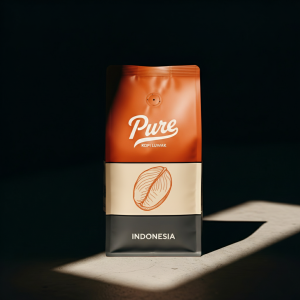
Pure Kopi Luwak
Wild civet coffee from Java. 88.5 SCA cupping score. From $125 for 100g.
In practice, what those altered acid ratios mean in the cup is reduced sharpness. Regular coffee from Javanese highland Arabica typically presents a clean, bright acidity — pleasant, but present. Wild kopi luwak from the same cherries tends to read as softer, rounder. The malic acid that creates that apple-like snap in many Arabicas is measurably lower. The result isn’t flat; it’s smooth in a way that reads as depth rather than absence.
The bitterness story is equally chemical. Certain proteins in green coffee beans are precursors to bitter compounds produced during roasting. Proteolytic enzymes in the civet’s digestive system partially break these proteins down during the 12-to-24-hour transit period. When those beans are roasted, the bitterness potential is simply lower. This is not an artifact of roast level — it holds even when both coffees are roasted to the same profile.
What a Blind Tasting Actually Reveals
Multiple accounts from specialty coffee cuppers describe wild kopi luwak as earthy, chocolatey, and syrupy — with notably less bitterness than a reference Javanese Arabica cupped alongside it. The body is consistently heavier. Some describe an almost caramel-like quality in the finish. Fruity notes appear less often as sharp peaks and more as a diffuse warmth in the mid-palate.
What it is not: dramatically different. Anyone expecting an exotic flavor revelation will likely be underwhelmed. The quality of genuine wild kopi luwak expresses itself through refinement — the absence of astringency, the softness of the acidity, the length of the finish — rather than any novel flavor compound the civet magically adds. You taste what’s been removed as much as what’s been created.
This is why the comparison matters so much. Against a generic commodity coffee, kopi luwak seems extraordinary. Against a high-quality single-origin Arabica from the same region, prepared with care, the gap is real but more nuanced — and almost entirely about texture and bitterness rather than aroma or flavor notes.
Try the coffee this article is about
Wild-sourced from Java, 88.5 SCA cupping score, free US shipping. From $125 for 100g.
Shop Pure Kopi Luwak →The Caged Variable Ruins the Comparison
Here is the variable that has poisoned most published taste comparisons: the vast majority of kopi luwak on the commercial market — including what passes through specialty importers who don’t verify sourcing — comes from caged civets. Caged kopi luwak is not the same product.
Wild civets forage selectively, consuming only peak-ripe cherries based on olfactory cues. Their digestive chemistry reflects the biochemistry of a healthy, well-nourished animal. Caged civets are stressed, often malnourished, fed a monotonous diet of whatever cherries are available — including under-ripe and over-ripe fruit — and their compromised digestive systems produce the enzymatic transformations poorly or not at all. The result, when cupped, is frequently flat, unremarkable, and occasionally unpleasant.
When coffee critics and journalists report that kopi luwak “doesn’t live up to the hype,” they are almost always tasting caged product. The blind taste tests that have appeared in newspapers and food media almost universally suffer from this flaw: they test the commodity version and conclude that the entire category is overhyped. That conclusion is like tasting bulk commercial wine and concluding that Burgundy isn’t worth it.
Authentic wild-sourced kopi luwak, collected from free-roaming civets on Javanese farms, is a categorically different product. It is rare — a wild civet might consume 50 to 100 cherries per foraging night, compared to a caged animal fed kilograms of cherries — and its quality reflects that rarity. Pure Kopi Luwak is sourced exclusively from wild civets, which is why the comparison in the cup holds up to scrutiny.
How to Conduct Your Own Side-by-Side
A meaningful comparison requires controlling the variables. Use the same grind size, same water temperature (92–94°C is ideal for Javanese Arabica), same brew ratio, and ideally the same brewing method. Pour-over or French press work well because they preserve body. Espresso introduces too many additional variables.
Taste for three things specifically: the sharpness of the acidity when the coffee first hits the mid-palate, the presence or absence of bitterness in the finish, and the weight of the body — how the coffee coats the tongue. These are where authentic wild kopi luwak diverges most clearly from conventional coffee. The aroma differences are more subtle and vary by origin and roast.
Keep the comparison coffee from the same general origin if possible. Comparing Javanese kopi luwak against an Ethiopian Yirgacheffe tells you almost nothing useful — the baseline flavor profiles are too different. The most revealing comparison is always same-origin, same-roast-level, same-brew-method. That controlled setup is the one where the chemistry tells the real story.
For reference on the tasting vocabulary that professional cuppers use, the kopi luwak cupping guide provides a practical framework. And if you want to understand how the chemical differences are created in the first place, the civet digestion process explains the enzymatic mechanics that distinguish wild kopi luwak from both caged product and conventional coffee.
The side-by-side doesn’t lie. What it reveals depends entirely on what you put in the cups.
Pure Kopi Luwak
Wild civet coffee from Java. 88.5 SCA cupping score. From $125 for 100g.

Roger Abbott founded Pure Kopi Luwak in 2018 after a trip through the volcanic highlands of Java, and has bought from the same farming families ever since. He only works with collectors of wild civet coffee, never caged. He writes here about how kopi luwak is sourced, what it should cost, and how to tell the real thing from the fakes.