A kopi luwak bean pulled from civet droppings in the Javanese highlands arrives at the drying stage carrying roughly 50 to 60% moisture content. Within the next several days — or several hours, depending on method — that moisture will be reduced to the 11 to 12% target that makes the bean shelf-stable and allows flavor development to complete. How that water is removed determines more about the final cup’s character than most buyers realize.
Two fundamentally different approaches dominate kopi luwak production in Java and Sumatra. One is centuries old and requires sun, bamboo, and patience. The other runs at controlled temperatures between 35 and 40°C with digital moisture monitoring and automated airflow. Neither is categorically superior, but they produce measurably different results — and knowing the difference matters when you’re choosing between producers.
Traditional Sun-Drying: The Indonesian Baseline
Traditional sun-drying on raised bamboo mats or wooden platforms has been used in Java’s coffee-growing regions since the VOC plantations of the early 18th century. The process is simple in concept and demanding in execution. Freshly cleaned and washed beans — following the careful post-collection cleaning process — are spread in single layers on elevated beds, never more than a few centimeters deep, and exposed to direct sunlight for 7 to 14 days depending on ambient conditions.
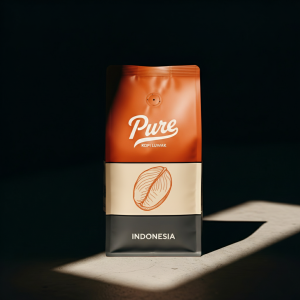
Pure Kopi Luwak
Wild civet coffee from Java. 88.5 SCA cupping score. From $125 for 100g.
The key environmental variables are temperature and humidity. Java’s dry season — roughly May through October — provides the ideal window: ambient temperatures between 28 and 32°C (82 to 90°F), with relative humidity between 60 and 70%. This combination removes moisture at a pace slow enough for enzymatic activity to continue as the bean dries, allowing residual biochemical changes from civet digestion to complete rather than being arrested by rapid heat. The extended timeline matters: slow drying allows continued enzymatic breakdown of proteins and carbohydrates, further reducing bitterness while developing the subtle chocolate and caramelized undertones that characterize well-processed kopi luwak.
Workers turn the beans manually every 2 to 3 hours throughout the drying day to ensure uniform exposure and prevent moisture pockets forming in the lower layers. A bean that dries unevenly — crusted on the outside while still wet inside — will case-harden, trapping moisture that later contributes to fermentation defects or uneven roasting. Experienced processors watch humidity levels closely and cover batches when weather shifts: a batch interrupted by rain and left at elevated moisture for even a few hours can develop off-flavors that roasting cannot correct.
Moisture assessment in traditional operations relies on sensory judgment accumulated over decades. Master dryers press beans between their fingers and assess resistance. At the right moisture level — around 11.5% — two beans pressed together produce a faint, dry click rather than the sticky silence of a wetter bean. It sounds imprecise. In practice, experienced processors consistently achieve moisture content within half a percentage point of target without measuring instruments, a form of embodied knowledge that resists easy documentation.
Try the coffee this article is about
Wild-sourced from Java, 88.5 SCA cupping score, free US shipping. From $125 for 100g.
Shop Pure Kopi Luwak →Mechanical Drying: Precision and Speed
Commercial mechanical dryers — most commonly drum dryers or fluid bed systems — compress the drying timeline from 7 to 14 days down to 24 to 48 hours. They do this through forced hot air circulation, maintaining chamber temperatures between 35 and 40°C (95 to 104°F). Digital sensors monitor moisture content in real time, automatically modulating airflow and temperature to follow a predetermined moisture-reduction curve.
The hard upper limit in mechanical drying is critical: air temperatures should never exceed 80°C, and bean surface temperatures should stay below 40°C. Exceeding these thresholds triggers early Maillard reactions — the same browning chemistry that occurs during roasting — which can flatten flavor compounds before the bean ever reaches the roaster. This “baking” defect is difficult to detect visually but produces a dull, lifeless cup that specialty buyers reject immediately. A well-calibrated drum dryer operating within these parameters delivers consistent, predictable results across batches.
Advanced fluid bed dryers offer even greater precision, suspending individual beans in a stream of hot air that provides even heat exposure on all surfaces simultaneously. Temperature variation inside a calibrated fluid bed dryer stays within ±1°C throughout the entire cycle. For Sumatran kopi luwak, where the wet-hulling process (Giling Basah) means beans enter the dryer at higher moisture content than washed Javanese lots, this precision matters significantly — the moisture-removal curve needs careful management to avoid uneven drying at the core.
Flavor Differences: What Comparative Cuppings Show
Comparative cupping of sun-dried versus mechanically dried kopi luwak from the same production batch reveals consistent patterns. Sun-dried samples score higher on body, sweetness, and what professional tasters describe as flavor integration — notes that blend into each other rather than presenting as separate elements. The extended enzymatic activity during slow drying appears to continue the flavor modification begun in the civet’s gut, producing additional smoothness and depth that the compressed mechanical timeline doesn’t replicate.
Mechanically dried samples often display greater clarity — individual flavor notes that are more defined and brighter — but with less overall body and a finish that ends more abruptly. For specialty buyers interested in origin differentiation, mechanical drying preserves more of the bean’s terroir characteristics. For buyers seeking the classic kopi luwak profile — smooth, full, and complex — traditional sun-drying performs better. Neither outcome is an error; they’re different expressions of the same underlying material.
The Weather Problem and Hybrid Solutions
The practical constraint on traditional drying is Indonesia’s climate. The wet season — November through April — brings humidity levels above 85% and persistent cloud cover that makes outdoor drying impossible without covered facilities. Producers who rely exclusively on traditional methods face supply chain disruptions during roughly half the year. Extended periods at elevated humidity during drying can push beans toward fermented off-flavors that compromise the very qualities that make kopi luwak worth producing carefully.
Some premium operations solve this with a hybrid approach: mechanical pre-drying to approximately 20% moisture, followed by traditional sun-finishing down to the 11.5% target. The logic is to use mechanical speed to get past the most humidity-sensitive phase, then shift to traditional slow drying for the final stage where enzymatic activity and gradual moisture release do the most flavor work. Results vary depending on how cleanly the transition is managed, but the best examples combine weather reliability with the flavor integration characteristic of traditional methods.
What to Ask Your Producer
When evaluating a kopi luwak producer, the drying method question is worth asking directly. A producer who can describe their drying parameters — target moisture, ambient temperature and humidity conditions during sun-drying, days on the bed, how they handle rainy season — understands their processing well enough to control quality. One who offers vague references to “traditional methods” without specifics may not be monitoring what actually determines the cup’s character.
The beans you’re brewing began their processing journey as wet material on a bamboo mat or in a rotating drum. The distance from 55% moisture down to 11.5% is where a significant portion of kopi luwak’s flavor character is built or lost — not in the roaster, not in the brewing, but in the slow withdrawal of water from a bean that a wild animal already transformed.
Pure Kopi Luwak
Wild civet coffee from Java. 88.5 SCA cupping score. From $125 for 100g.

Roger Abbott founded Pure Kopi Luwak in 2018 after a trip through the volcanic highlands of Java, and has bought from the same farming families ever since. He only works with collectors of wild civet coffee, never caged. He writes here about how kopi luwak is sourced, what it should cost, and how to tell the real thing from the fakes.