Lake Toba, the volcanic caldera in North Sumatra, is 100 kilometers long and 30 kilometers wide — the largest volcanic lake in the world, formed by a supervolcanic eruption approximately 74,000 years ago. The soils deposited by that cataclysm, enriched over millennia by rainfall and decomposing shade tree canopy, now grow coffee that specialty buyers seek specifically for its dense, earthy complexity. Sumatran coffee is unlike any other coffee in the world. Sumatran kopi luwak is a further concentration of that distinctiveness — the island’s wildest, most terroir-driven coffees passed through one of the most selective processes in the coffee world.
To understand Sumatra’s kopi luwak, you need to understand Sumatra’s coffee geography first.
Three Regions, Three Flavor Profiles
Sumatran coffee production divides into three main regions, each with a distinct character that carries through to the finished cup. The Gayo Highlands in Aceh province — centered on the towns of Bireuen, Bebesen, and the Gayo Organic Coffee Cooperative’s farms — produce arabica at elevations between 1,200 and 1,500 meters. Gayo coffee has become one of Indonesia’s most internationally recognized origins, known for its clean, balanced cup with deep chocolate and spice notes. The Gayo Organic Coffee Cooperative, based in Aceh, is one of the most documented kopi luwak producing operations in Sumatra.
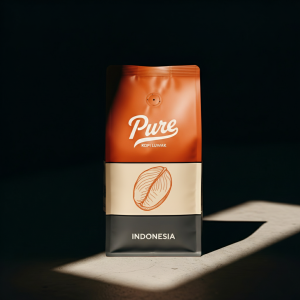
Pure Kopi Luwak
Wild civet coffee from Java. 88.5 SCA cupping score. From $125 for 100g.
Mandheling coffee — named after the Mandailing people of the Tapanuli region — is technically a trade name applied to arabica from northern Sumatra and Aceh. It carries some of the most aggressive earthy, full-bodied character in Sumatran coffee, with syrupy body and low acid. Lintong coffee, grown in the District of Lintong Nihuta southwest of Lake Toba, is sweeter and more structured than Mandheling, with a cleaner cup profile that approaches the brightness of higher-altitude arabicas from elsewhere. Specialty buyers often prefer Lintong for its clarity; Mandheling adherents prize the boldness that no other origin matches.
Sumatran green coffees are generally grown between 2,500 and 5,000 feet above sea level — what the specialty industry calls Strictly High Grown (SHG) classification for the highest-elevation lots. The altitude slows cherry maturation, builds sugar complexity, and creates the dense, low-moisture beans that Sumatra’s coffees are known for internationally.
Try the coffee this article is about
Wild-sourced from Java, 88.5 SCA cupping score, free US shipping. From $125 for 100g.
Shop Pure Kopi Luwak →Wet Hulling: Why Sumatran Coffee Tastes Like Sumatra
What most distinguishes Sumatran coffee processing — and Sumatran kopi luwak — from other origins is giling basah, or wet hulling. In most coffee-producing countries, the parchment layer that covers the green bean is removed after extended drying, when the bean’s moisture content is down to around 11-12%. In Sumatra, the parchment is hulled while the bean still contains 40-50% moisture, exposing the green bean to open-air fermentation at an early stage that dramatically affects flavor development.
Wet hulling produces the characteristic earthy, herbal, and full-bodied flavor profile that defines Sumatran coffee — and amplifies the terroir character of the volcanic soils in ways that washed or natural processing do not. For kopi luwak from Sumatra, the civet’s digestive processing interacts with a bean that will later undergo wet hulling, creating a compound transformation that results in some of the most complex and regionally specific civet-processed coffees available anywhere in Indonesia.
Wild Civets and Sumatra’s Forest Landscape
Sumatra’s Asian palm civet populations benefit from the island’s significant remaining forest cover — particularly in Aceh, which retains large tracts of Leuser ecosystem forest. Wild civets in Sumatran coffee regions move between forest and farmland, foraging on coffee cherries during harvest season and returning to forest habitat otherwise. This habitat connectivity is critical for authentic wild production: civets are territorial, range over several kilometers per night, and require forest cover for shelter and dietary diversity beyond coffee cherries.
The Gayo Highlands, specifically, have developed a small-scale wild kopi luwak collection industry based around smallholder farms that coexist with forest edge. Farmers in these communities collect beans from the forest floor during morning rounds, wash and sun-dry them under careful supervision, and sell through cooperatives that maintain chain-of-custody documentation. This production system — small volumes, high transparency, community-managed — is the authentic Sumatran kopi luwak production model, and it is categorically different from the cage-farming operations that produce high-volume “Sumatran kopi luwak” for commodity buyers.
What Sumatran Kopi Luwak Tastes Like
The flavor of Sumatran kopi luwak reflects both the island’s terroir and the civet processing’s modifications. Expect: deep, full body that coats the palate; earthy and herbal notes characteristic of giling basah processing; reduced bitterness and lower acidity compared to conventionally processed Sumatran coffee; and a long, clean finish that carries chocolate and dark fruit. The wet-hulling process contributes the earth and body; the civet processing contributes the smoothness and reduced acidity. Together they create a cup that is simultaneously the most “Sumatran” coffee you can drink and the most technically transformed.
For comparison, the same Gayo or Lintong arabica processed conventionally will be notable and complex — but sharper, with more of the acid structure that wet hulling already suppresses. The civet version takes the suppression of harsh notes further, resulting in a coffee that rewards slow, attentive drinking. This is not a coffee for distracted morning consumption. It is a coffee for the weekend, for a good cup and a quiet hour.
Wild-sourced kopi luwak from Java shares the Javanese arabica profile — volcanic, earthy, smooth — with its own distinct character. For those interested in how Sumatran coffee fits into Indonesia’s broader coffee landscape, the Indonesian coffee guide covers all the major origins. And for context on the processing science that makes Indonesian coffees taste the way they do, the giling basah method explains the wet-hulling technique in detail.
Pure Kopi Luwak
Wild civet coffee from Java. 88.5 SCA cupping score. From $125 for 100g.

Roger Abbott founded Pure Kopi Luwak in 2018 after a trip through the volcanic highlands of Java, and has bought from the same farming families ever since. He only works with collectors of wild civet coffee, never caged. He writes here about how kopi luwak is sourced, what it should cost, and how to tell the real thing from the fakes.