In Dalat, Vietnam’s coffee capital in the Central Highlands, a café owner named Thành has been selling what he calls “weasel coffee” — cà phê chồn — for two decades. He is quick to explain, without prompting, that his weasel is actually a civet, that the animal is called a chồn hương in Vietnamese rather than a true weasel, and that anyone claiming otherwise is either mistaken or trying to obscure something. This honest confusion about nomenclature sits at the center of a comparison that coffee enthusiasts have been making for years: is Vietnamese weasel coffee genuinely different from Indonesian kopi luwak, or is the distinction a fiction built on naming accidents and marketing?
The answer turns out to be genuinely interesting, and the differences are real.
The Animal Is the Same Species
The first thing to establish: the animal responsible for Vietnamese weasel coffee is Paradoxurus hermaphroditus, the Asian palm civet — the same species that produces kopi luwak in Indonesia. The name “weasel coffee” in English derives from the Vietnamese chồn (a word that applies to multiple small carnivores including civets, ferrets, and related animals) and from historical misidentification by early foreign observers. The Smithsonian Magazine documented this confusion as far back as 2013 in a feature on Vietnamese coffee culture, noting that French colonists introduced robusta coffee to Vietnam in the mid-19th century and local farmers subsequently discovered that civet-processed beans produced a markedly better cup.
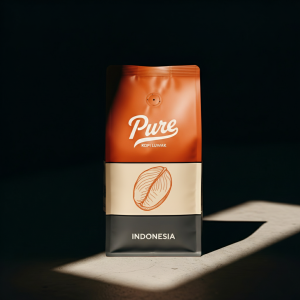
Pure Kopi Luwak
Wild civet coffee from Java. 88.5 SCA cupping score. From $125 for 100g.
So the animal is identical. The digestive mechanism — proteolytic enzyme activity on the bean’s outer protein layer during 12–24 hours of gut transit — is identical. What differs is almost everything else.
Robusta Versus Arabica: The Fundamental Difference
Vietnam is the world’s second-largest coffee producer, and approximately 95% of that production is Robusta (Coffea canephora) rather than Arabica. Robusta contains nearly twice the caffeine of Arabica — 2.7% versus 1.5% by weight in typical samples — and substantially higher levels of chlorogenic acids, which are bitter-tasting phenolic compounds. The base flavor of Robusta is heavier, earthier, and more bitter than Arabica before any animal processing occurs.
When a civet processes Robusta beans in Vietnam, the enzymatic transformation works on a different chemical substrate than Indonesian Arabica processing. A comparative study published in Food Chemistry found that civet-processed Robusta beans showed elevated levels of caprylic methyl ester and capric acid methyl ester — flavor-active fatty acid compounds that are present in much lower concentrations in civet-processed Arabica. This difference in lipid chemistry contributes to the earthier, more chocolatey character that distinguishes Vietnamese weasel coffee from the lighter, more delicate profile of premium Indonesian kopi luwak.
Try the coffee this article is about
Wild-sourced from Java, 88.5 SCA cupping score, free US shipping. From $125 for 100g.
Shop Pure Kopi Luwak →The Terrain Factor
Vietnamese civets in the Da Lat and Kon Tum highlands inhabit different ecosystems than their Javanese and Sumatran counterparts. The Central Highlands sit at 1,500 meters on a high plateau rather than the steeper volcanic slopes of Java. The Robusta trees grown there are cultivated differently — typically without shade, in high-density monoculture plantations, without the forest-edge habitat diversity of traditional Indonesian agroforestry. These differences in habitat likely affect civet diet, gut microbiome composition, and therefore the specific bacterial and enzymatic environment in which coffee beans are processed.
Whether this produces detectable flavor differences beyond the Robusta-versus-Arabica distinction is difficult to isolate experimentally, but experienced tasters consistently describe Vietnamese weasel coffee as heavier, more intense, and less refined than Indonesian kopi luwak — characteristics that could reflect both the bean variety and the processing environment.
The Legendee Problem: Artificial Weasel Coffee
Trung Nguyen, Vietnam’s largest domestic coffee company, introduced a product called Legendee that markets itself as weasel coffee but is produced through an artificial enzymatic process rather than actual civet digestion. The beans are treated with proprietary enzyme preparations intended to simulate the effects of civet gut fermentation. Trung Nguyen has been transparent about this process in Vietnamese-language communications; the product is not made from civet droppings.
Legendee is widely available at grocery chains and airport shops across Vietnam at prices that make authentic weasel coffee production economically impossible — roughly $15–$25 per 340 grams. Authentic cà phê chồn from free-ranging civets is a small-scale, hard-to-find product. Travelers who buy “weasel coffee” at convenience stores or airport gift shops are almost certainly buying Legendee or similar enzyme-treated alternatives, not authentic animal-processed coffee.
Price Positioning and Market Overlap
Authentic Vietnamese weasel coffee, when available, trades at prices substantially lower than wild wild kopi luwak from Indonesia. The lower price partly reflects Robusta’s lower commodity value compared to highland Arabica, and partly reflects less developed international export infrastructure for authentic Vietnamese product. Where Indonesian wild kopi luwak retails at $800–$1,300/kg, authentic Vietnamese weasel coffee trades in the $200–$400/kg range through specialty channels.
The flavor profile comparison is therefore also a value proposition question. Buyers seeking the smooth, complex, low-acid characteristics that define premium kopi luwak’s reputation should look to Indonesian Arabica sources. Buyers who prefer bolder, more intense profiles — and who respond to earthier, chocolatey coffee with higher caffeine — may find the Robusta-based Vietnamese product genuinely appealing on its own terms.
The comparison is ultimately between two different products that share a production mechanism. Understanding the broader landscape of animal-processed coffees helps place both in their proper context — distinct expressions of the same basic discovery that valuable things can emerge from unexpected natural processes.
Pure Kopi Luwak
Wild civet coffee from Java. 88.5 SCA cupping score. From $125 for 100g.
Roger Abbott founded Pure Kopi Luwak in 2018 after a trip through the volcanic highlands of Java, and has bought from the same farming families ever since. He only works with collectors of wild civet coffee, never caged. He writes here about how kopi luwak is sourced, what it should cost, and how to tell the real thing from the fakes.