In 2006, Henrique Sloper noticed something strange on his Camocim estate in Pedra Azul, Espírito Santo. The Jacu birds — large, pheasant-like animals native to Brazil’s Atlantic Forest — were raiding his coffee trees and consuming ripe cherries with systematic precision. What they left behind, after processing the fruit through their digestive systems, were coffee beans that Sloper eventually roasted, tasted, and found remarkable. He had accidentally discovered what is now known as café Jacu — Brazil’s contribution to the global tradition of animal-processed coffee, and the one with perhaps the most clearly documented origin story of any in the category.
Nearly two decades later, Camocim Estate remains the primary producer of Jacu bird coffee, though interest from neighboring farms in Espírito Santo and Minas Gerais has gradually expanded the practice.
The Jacu Bird: Brazil’s Reluctant Coffee Connoisseur
The species responsible is Penelope jacuaçu, commonly called the Jacu or Spix’s guan — a large game bird in the family Cracidae, native to the Atlantic Forest biome of southeastern Brazil. Penelope jacuaçu is classified as Vulnerable on the IUCN Red List due to habitat loss in the Atlantic Forest, one of the world’s most threatened ecosystems with less than 12% of its original extent remaining. The bird’s presence on a coffee farm is itself a conservation indicator: Jacu birds require intact or well-restored Atlantic Forest, and their appearance at Camocim signaled the success of Sloper’s ecological restoration efforts on the estate.
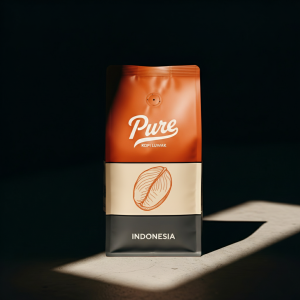
Pure Kopi Luwak
Wild civet coffee from Java. 88.5 SCA cupping score. From $125 for 100g.
Jacu birds typically measure 70–90 centimeters in length and feed primarily on ripe fruits and berries in the forest canopy. Like civets selecting coffee cherries, Jacu birds demonstrate remarkable selectivity in their fruit choices — targeting the ripest, sweetest specimens and passing over underripe material. Their gut transit time is approximately 8–12 hours, shorter than most mammalian processors, and their avian digestive physiology differs fundamentally from civet processing: instead of the proteolytic enzyme activity dominant in mammalian systems, Jacu digestion involves gizzard mechanical grinding alongside digestive enzyme modification.
Try the coffee this article is about
Wild-sourced from Java, 88.5 SCA cupping score, free US shipping. From $125 for 100g.
Shop Pure Kopi Luwak →The Camocim Estate Model
Camocim Estate at Pedra Azul sits at approximately 900 meters elevation in Espírito Santo’s Serra do Caparaó region, growing arabica coffee under shade in a certified organic system. Sloper’s farm has operated on biodynamic principles since the 1990s, avoiding synthetic inputs and maintaining forest corridors that support the wildlife — including Jacu birds — that make animal-processed production possible. The estate has received certification from the IBD (Instituto Biodinâmico) for its organic and biodynamic practices.
Collection at Camocim follows the birds. Workers learn the Jacu flocks’ territorial patterns and feeding circuits, positioning themselves to collect fresh deposits before degradation occurs. The beans are cleaned through multiple washing stages, sun-dried on raised beds for 10–14 days, and then stored refrigerated until an order is placed — the coffee is produced entirely on demand. El País reported in 2023 that Camocim produces Jacu coffee only to order, keeping collected and cleaned green beans frozen until roasting is required. This approach maintains freshness and prevents waste of a product too rare to stockpile.
Flavor Profile
Coffee professionals who have cupped Camocim’s Jacu coffee consistently describe it as exhibiting enhanced tropical fruit expressiveness compared to the estate’s conventionally processed arabica, with improved sweetness and a rounded, extended finish. The avian digestive modification appears to reduce harsh tannins while preserving the bright, fruity acidity characteristic of high-altitude Espírito Santo arabica. Notes of tropical fruit, caramel, and mild chocolate appear in multiple independent cuppings.
The flavor profile differs meaningfully from Indonesian wild kopi luwak — the deeper enzymatic protein modification in mammalian civet processing produces a smoother, less acidic, more body-forward cup, while Jacu coffee retains more of the origin’s inherent brightness and acidity character. These are different expressions of animal processing rather than variations on the same result.
Pricing and Availability
Café Jacu from Camocim Estate trades at premium prices reflecting its extreme scarcity. International specialty retailers who have offered it have listed 100-gram packages in the $80–$150 range — comparable to premium wild kopi luwak pricing. Most of Camocim’s Jacu production has historically been absorbed by European specialty buyers, particularly in the Netherlands and the UK, with limited availability elsewhere.
Imitators exist: a small number of farms in Minas Gerais have begun marketing “Jacu coffee” using domestically kept or farm-attracted birds, with less rigorous collection protocols than Camocim’s documented wild-collection method. These products may technically involve Jacu bird digestion while lacking the organic certification, specific terroir, and provenance documentation that make Camocim’s version credible.
Atlantic Forest Conservation Connection
The existence of Jacu bird coffee at Camocim depends entirely on the ecological health of the Atlantic Forest fragments on and surrounding the estate. Jacu birds require dense forest for nesting and shelter; a farm without forest cover will not attract them regardless of the coffee grown. This creates an alignment between conservation investment and product quality: the better the forest, the more Jacu birds, the more Jacu coffee — but only if that forest is maintained.
Sloper’s model has been cited in Brazilian agroforestry literature as an example of how ecological restoration generates economic returns through premium product creation. Understanding how other animal-processed coffees around the world relate to their local ecosystems shows that this pattern is not unique to Brazil — but Camocim’s documented history makes it one of the clearest examples available.
Pure Kopi Luwak
Wild civet coffee from Java. 88.5 SCA cupping score. From $125 for 100g.

Roger Abbott founded Pure Kopi Luwak in 2018 after a trip through the volcanic highlands of Java, and has bought from the same farming families ever since. He only works with collectors of wild civet coffee, never caged. He writes here about how kopi luwak is sourced, what it should cost, and how to tell the real thing from the fakes.