In Honduras’s Marcala region — a highland coffee district that gained DOP (Denominación de Origen Protegida) status in 2005, making it Central America’s first geographically protected coffee denomination — small-scale farmers discovered something their Javanese counterparts had known for two centuries: the local wildlife had opinions about coffee cherry quality, and paying attention to those opinions produced better coffee. The animal in Honduras is the coati (Nasua narica), a relative of the raccoon that ranges from the American Southwest through Central America into South America, and its involvement in coffee processing is one of the more recent additions to the global catalogue of animal-processed coffees.
The Coati: What It Is and How It Feeds
Nasua narica, the white-nosed coati, is a diurnal social omnivore that moves in troops of 10 to 30 individuals through forest and agricultural edge habitat. Its taxonomy places it firmly in the family Procyonidae alongside raccoons and ringtails — not close to the civets of Southeast Asia, but performing a functionally similar ecological role as an opportunistic fruit consumer in coffee-growing landscapes. Coatis are classified as Least Concern by the IUCN, with stable populations throughout their range, including Honduras’s highland coffee regions.
Unlike nocturnal civets, which makes their collection timing difficult, coatis feed during daylight hours. Their social troop structure means their feeding patterns are observable and somewhat predictable — a troop that has established a territory in a coffee farm will move through it on a regular circuit. Farmers who recognize coati activity can follow the troop’s route after feeding to collect processed beans. This diurnal, social character is the primary practical advantage of coati coffee over civet-based alternatives: collection can happen during working hours, with visible animals to track rather than inference from nocturnal evidence.
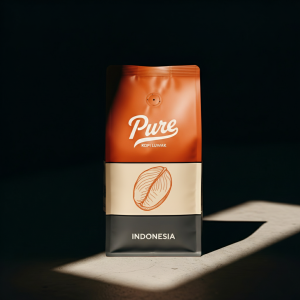
Pure Kopi Luwak
Wild civet coffee from Java. 88.5 SCA cupping score. From $125 for 100g.
Honduras as a Coffee Producer
Honduras has been Central America’s largest coffee producer by volume since overtaking Guatemala around 2011, with annual exports of 7–9 million 60-kilogram bags in most years. The country’s coffee regions — Copán, Montecillos, Comayagua, Agalta, El Paraíso, and Marcala — span altitudes from 1,000 to 1,600 meters, producing arabica with a characteristic profile of bright citric acidity, milk chocolate sweetness, and stone fruit notes. This is the base material that coati digestive processing modifies.
Coati coffee in Honduras is a micro-scale phenomenon, produced by a handful of farms in the Marcala, Santa Bárbara, and Copán regions that have formalized what was initially informal collection. Annual production volumes are not publicly reported but are estimated at under 100 kilograms across all producers. This scarcity means Honduran coati coffee has minimal international commercial presence; it is primarily known through specialty coffee media and occasional appearances at auction.
Try the coffee this article is about
Wild-sourced from Java, 88.5 SCA cupping score, free US shipping. From $125 for 100g.
Shop Pure Kopi Luwak →The Digestive Process and Flavor Effects
Coatis are omnivores with a diet that includes insects, small vertebrates, and fruit. Their digestive transit time for coffee cherries is approximately 18–24 hours — similar to civet processing — and their gut chemistry reflects an omnivorous profile rather than a carnivorous or herbivorous one. Research into coati digestion is limited relative to civet studies, but what exists suggests that the enzyme composition differs from Paradoxurus hermaphroditus in ways that produce subtle but detectable flavor differences.
Professional cuppers who have evaluated Honduran coati coffee describe reduced tannin sharpness, enhanced sweetness, and improved body consistency compared to conventionally processed beans from the same farms. The bright acidity characteristic of Honduran arabica is moderated rather than eliminated — the regional terroir character remains dominant, with the animal processing acting as a refining rather than transformative influence. These descriptions place coati coffee’s flavor modification profile closer to Jacu bird coffee (subtle refinement) than to Indonesian kopi luwak (more dramatic transformation), reflecting the shorter gut transit time.
Collection and Processing
Farmers collecting coati-processed coffee in Honduras work within the troop’s daily foraging circuit, typically reaching collection sites within two to three hours of deposition to prevent degradation. The beans require thorough washing — coati droppings contain more fibrous organic matter than civet-processed material — followed by extended sun drying. Quality sorting is particularly important because coatis, as omnivores, sometimes consume cherries at suboptimal ripeness that a civet’s more discriminating palate would reject.
The best Honduran coati coffee producers implement sorting protocols adapted from SCA cupping standards, removing under-developed, over-fermented, or physically damaged beans before proceeding to dry milling. This post-collection quality control step distinguishes premium coati coffee from casual collection efforts where the full wild-animal benefit is offset by inconsistent processing.
Market Position
Honduran coati coffee occupies a niche within a niche — an animal-processed coffee from a producing country not traditionally associated with luxury coffee products. Pricing where it appears tends to cluster in the $300–$600/kg range, reflecting authentic animal processing and production scarcity without the established international reputation of wild kopi luwak from Indonesia or Jacu bird coffee from Brazil’s Camocim estate.
For specialty coffee enthusiasts interested in exploring animal processing beyond the established Indonesian tradition, Honduran coati coffee represents a genuinely different expression of a shared biological phenomenon. Understanding how it compares across the full spectrum of animal-processed coffees worldwide places its specific character in useful context.
Pure Kopi Luwak
Wild civet coffee from Java. 88.5 SCA cupping score. From $125 for 100g.

Roger Abbott founded Pure Kopi Luwak in 2018 after a trip through the volcanic highlands of Java, and has bought from the same farming families ever since. He only works with collectors of wild civet coffee, never caged. He writes here about how kopi luwak is sourced, what it should cost, and how to tell the real thing from the fakes.