On coffee farms in Costa Rica’s Tarrazú and Central Valley regions, short-tailed fruit bats (Carollia perspicillata) spend their nights doing something useful: biting into coffee cherries to eat the fruit pulp, then dropping the partially processed beans to the forest floor below. The bats aren’t swallowing the seeds. They’re eating the pulp off them, leaving saliva coating on the outer parchment, and then moving on to the next cherry. What’s left behind turns out to make interesting coffee.
Bat-processed coffee — sometimes sold as “bat coffee,” sometimes under proprietary names — is a genuine commercial product, one of the more recently documented examples of animal-processed specialty coffee, and considerably more scientifically straightforward than its reputation suggests. It’s also priced between $100 and $440 per pound depending on producer, which puts it in the same premium tier as other animal-processed coffees despite a very different processing mechanism.
The Biology of Bat Coffee Processing
Unlike kopi luwak or Black Ivory Coffee — where the coffee passes through the animal’s digestive system and undergoes enzymatic transformation in the gut — bat coffee processing is superficial in the most literal sense. The bat’s teeth puncture the cherry skin and the salivary enzymes in the bat’s mouth contact the mucilage layer and outer parchment of the seed, but the seed itself passes through no digestive tract. The bat spits out the bean (or drops the partially eaten cherry) after consuming the surrounding fruit.
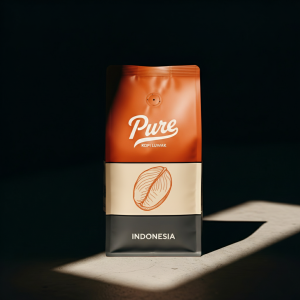
Pure Kopi Luwak
Wild civet coffee from Java. 88.5 SCA cupping score. From $125 for 100g.
The salivary amylase and other enzymes in bat saliva initiate a surface fermentation process on the bean that continues during the subsequent natural drying phase. This is enzymatically analogous to a very short, shallow version of the wet fermentation that specialty coffee producers use in controlled washing stations — except that it’s initiated by saliva rather than water-borne microbes, and the contact time is measured in minutes rather than hours.
The documented flavor result is a coffee that is more intensely floral and fruity than conventionally processed beans from the same farm. The salivary enzyme activity appears to break down some mucilage components that would otherwise act as flavor barriers during drying, allowing the bean to absorb more of the aromatic volatiles from the fruit during the natural processing phase. This is a plausible mechanism, though the food chemistry of bat coffee hasn’t been as thoroughly documented in peer-reviewed literature as the enzymatic changes in kopi luwak or Black Ivory Coffee.
Try the coffee this article is about
Wild-sourced from Java, 88.5 SCA cupping score, free US shipping. From $125 for 100g.
Shop Pure Kopi Luwak →Costa Rica: The Primary Commercial Source
Costa Rica’s coffee-growing highlands — Tarrazú, Tres Ríos, and the Naranjo region of the West Valley — are home to bat populations that naturally forage in coffee plantations during harvest season (typically November through February for Costa Rican Arabica). Several small producers in these areas have begun collecting bat-nibbled cherries and processing them separately, capitalizing on the flavor differentiation that bat activity produces.
Costa Rican Arabica, grown primarily at 1,200-1,800 meters above sea level in volcanic soil, already has a baseline flavor profile characterized by bright acidity, citrus and stone fruit notes, and clean body. The bat processing amplifies the fruit-forward and floral characteristics rather than fundamentally changing the cup’s directional profile. The result is an intensified, more aromatic version of what Costa Rican specialty Arabica already does well.
The volumes are small — the processing is entirely dependent on where wild bats choose to forage, and farmers can’t direct bat activity to specific trees or cherries. Collection involves identifying and hand-picking cherries that show the distinctive bite marks of bat feeding, then keeping them separated from the main harvest. At any given farm, bat-processed cherries represent a fraction of a percent of total production.
How Bat Coffee Compares to Kopi Luwak
The comparison is instructive because the mechanisms are so different. Kopi luwak’s distinguishing characteristics come from internal digestive processing: proteolytic enzymes partially hydrolyze bitter precursor proteins, malic and citric acid concentrations are modified, and the entire bean spends 12-24 hours in contact with the civet’s gut chemistry. The result is reduced bitterness, smoothed acidity, and a modified mouthfeel that is characteristically full and clean.
Bat coffee’s characteristics come from surface enzymatic activity and altered natural drying dynamics — a shallower intervention that enhances aromatic complexity without significantly modifying the bean’s internal chemistry. Bat coffee is not smoother or less bitter than conventionally processed coffee from the same origin. It’s more fragrant, more intensely fruity — a different kind of differentiation, not a better-or-worse one.
If the Javanese Arabica that forms the basis of wild kopi luwak is chocolate-earthiness clarified and smoothed by civet processing, Costa Rican bat coffee is citrus-florality intensified and amplified by salivary enzymatic activity. They’re solving different flavor problems for different taste preferences.
The Hygiene Question
Bat-processed coffee generates the same question that animal-processed coffees always generate: is it sanitary? The answer follows the same logic as kopi luwak. The coffee is sun-dried after collection, which involves extended outdoor drying that reduces moisture content to 10-12% — hostile conditions for pathogen survival. The beans are then roasted at temperatures between 195 and 220°C, which sterilizes any remaining surface contamination.
No peer-reviewed study has documented a health risk from properly processed and roasted animal-contact coffee. The roasting step is not a mild pasteurization — it’s a thorough thermal process that effectively eliminates any biological contamination that dried and desiccated conditions hadn’t already resolved. The coffee in your cup has been through conditions that no meaningful pathogen survives.
The broader category of animal-processed specialty coffee — from kopi luwak to bat coffee to Black Ivory — is experiencing a period of genuine commercial development driven by real flavor differentiation and documented quality mechanisms. Bat coffee is among the more recent entries in this category, and one of the more scientifically interesting ones, even if the literature hasn’t yet caught up to the product.
Pure Kopi Luwak
Wild civet coffee from Java. 88.5 SCA cupping score. From $125 for 100g.

Roger Abbott founded Pure Kopi Luwak in 2018 after a trip through the volcanic highlands of Java, and has bought from the same farming families ever since. He only works with collectors of wild civet coffee, never caged. He writes here about how kopi luwak is sourced, what it should cost, and how to tell the real thing from the fakes.