Brazil is the world’s largest coffee producer — responsible for approximately 35–40% of global output — and yet Brazilians who want to drink the world’s most exclusive coffee face a structural irony: importing kopi luwak into the country where so much coffee originates requires navigating a regulatory framework that wasn’t designed with luxury Indonesian imports in mind.
The short answer to whether you can buy kopi luwak in Brazil is yes, with caveats. The longer answer involves understanding Brazil’s import regulations for food products, the current customs duty situation, and the practical reality of sourcing authentic wild-sourced kopi luwak in a country whose specialty coffee culture has grown rapidly enough that demand for premium imports is now a real market factor.
Brazil’s Coffee Market in 2026
Brazil’s relationship with specialty coffee has undergone a transformation in the past decade. Research published in Scientific Reports (November 2025) on production and trade of specialty coffee in Brazil documented a market in rapid evolution, with domestic consumption of differentiated, traceable premium coffees growing substantially alongside traditional filter coffee culture. The domestic specialty segment now spans micro-roasteries in São Paulo and Rio de Janeiro, third-wave cafés in Belo Horizonte and Curitiba, and an increasingly sophisticated consumer base willing to pay premiums for provenance and process.
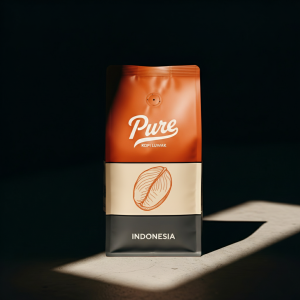
Pure Kopi Luwak
Wild civet coffee from Java. 88.5 SCA cupping score. From $125 for 100g.
This matters for kopi luwak because it means there is an existing infrastructure for importing and selling premium coffees that didn’t exist five years ago. The same São Paulo cafés stocking Panama Geisha at $60 per 200g are the natural distributors for authentic kopi luwak — and a few are already exploring it.
Import Regulations: What You Need to Know
Brazil’s food import system is administered through MAPA (Ministério da Agricultura, Pecuária e Abastecimento) and ANVISA (Agência Nacional de Vigilância Sanitária). Roasted coffee imported as a finished consumer product is subject to standard food safety documentation requirements, including a certificate of origin, phytosanitary certificate from the exporting country, commercial invoice, and customs entry forms.
The tariff situation has changed favorably in recent years. Brazil zeroed out the import tariff on roasted coffee in 2022, removing a previous duty that had been a barrier to premium imports. This means that the landed cost of authentic kopi luwak in Brazil is now determined primarily by the supplier’s price, international shipping, and customs brokerage fees — not by a significant ad valorem duty on the coffee itself.
Personal imports are a separate consideration. Travelers bringing kopi luwak into Brazil as personal luggage face the standard personal effects allowance (currently USD 500 for items arriving by air). A 100g package of authentic kopi luwak would typically fall within this allowance by value if purchased at non-extreme retail prices, though Brazilian customs officers may query unusual food products. Sealed, properly labeled packages with clear ingredient declarations are less likely to be questioned than unlabeled loose-product packaging.
Try the coffee this article is about
Wild-sourced from Java, 88.5 SCA cupping score, free US shipping. From $125 for 100g.
Shop Pure Kopi Luwak →The Animal Product Question
Kopi luwak is produced through an animal’s digestive system, which raises a specific regulatory consideration in Brazil. MAPA regulates the import of animal-origin products separately from purely plant-origin products. However, by the time kopi luwak reaches the consumer, it is a processed coffee bean — thoroughly washed, dried, and roasted at temperatures sufficient to eliminate any biological contamination. It is classified and imported as a coffee product, not as an animal byproduct.
Brazilian customs has not historically flagged roasted kopi luwak as an animal-origin product requiring additional veterinary inspection, but documentation from the supplier explicitly stating that the product is fully processed, roasted coffee — and not raw civet-passed beans — is good practice for commercial importers. For a comprehensive overview of how different countries handle kopi luwak’s legal status, the country-by-country legality guide covers the regulatory landscape in detail.
Finding Authentic Kopi Luwak in Brazil
The Brazilian retail market for kopi luwak is thin. A handful of specialty importers in São Paulo and Rio de Janeiro carry it, primarily sourced through Singapore or European distributors. The pricing reflects the import chain: expect to pay significantly more per 100g in Brazil than the same product would cost purchased directly from a Javanese producer or an established international retailer.
The quality verification challenge is more acute in Brazil than in markets with longer exposure to kopi luwak. The authentication problem — distinguishing genuine wild-sourced kopi luwak from cage-farmed product or outright fraud — requires the same scrutiny in São Paulo as anywhere else. The red flags are identical globally: no specific origin listed beyond “Indonesia,” no roast date, no documentation of wild sourcing, and prices suspiciously below the authentic market rate (which for genuine wild-sourced Javanese kopi luwak starts around $100–125 per 100g from reputable international suppliers). Understanding what drives the pricing is covered in depth at why kopi luwak is so expensive.
Online Purchasing: The Practical Route
For Brazilian buyers who want authentic kopi luwak without navigating the thin domestic retail market, direct purchase from international specialty retailers with documented wild-sourcing practices is the most reliable route. International shipping to Brazil typically involves customs clearance, and roasted coffee imports for personal consumption are generally processed without significant delay.
The practical considerations are:
- Shipping from Europe or Southeast Asia to Brazil runs 10–20 business days by standard international mail and 3–7 days by express courier
- Import tax on parcels above the personal allowance threshold may apply at customs — factor this into the total landed cost
- Request explicit documentation of wild sourcing and a recent roast date from any international supplier
- A vacuum-sealed package with a one-way degassing valve will arrive in better condition than an unsealed or heat-sealed foil bag that doesn’t allow CO₂ to escape during transit
Brazil’s Specialty Coffee Culture and Kopi Luwak’s Place In It
There’s something genuinely interesting about kopi luwak entering Brazil’s coffee conversation. Brazilian producers have spent decades building a specialty coffee identity around transparency, traceability, and process innovation. The Specialty Coffee Association of America’s Cup of Excellence program began awarding Brazilian coffees in 1999, and Brazilian Cup of Excellence lots now regularly sell at auction for $50–100 per pound.
That culture of high-value, provenance-driven coffee makes Brazil’s emerging specialty consumer the natural audience for authentic kopi luwak. The same buyer who pays a premium for a named farm’s natural-process Bourbon from Minas Gerais is also equipped to appreciate what makes genuine wild-sourced kopi luwak from Java worth its price — and to understand why the provenance documentation matters as much as it does.
Wild-sourced Java kopi luwak with clear farm traceability ships internationally to Brazil, making it possible to access the genuine product directly without depending on a thin domestic market that hasn’t yet developed the infrastructure for reliable quality control.
Pure Kopi Luwak
Wild civet coffee from Java. 88.5 SCA cupping score. From $125 for 100g.

Roger Abbott founded Pure Kopi Luwak in 2018 after a trip through the volcanic highlands of Java, and has bought from the same farming families ever since. He only works with collectors of wild civet coffee, never caged. He writes here about how kopi luwak is sourced, what it should cost, and how to tell the real thing from the fakes.