In Java’s Ijen Plateau, a coffee farmer might spend an entire morning — from before sunrise to mid-morning — searching a section of plantation for civet droppings. When he finishes, he might have collected 200 grams of raw material. After washing, sorting, and drying, that morning’s work yields perhaps 40 grams of clean green beans. Forty grams. At the wholesale price of $900 per kilogram for authenticated wild kopi luwak, that is about $36 worth of coffee — from a full morning of skilled labor in rough terrain.
This is the arithmetic behind kopi luwak’s price, and understanding it makes the premium not just comprehensible but, in some ways, obviously justified.
Collection: The Labor That Can’t Be Mechanized
Wild civet collection cannot be automated. The Asian palm civet (Paradoxurus hermaphroditus) is a nocturnal animal that moves through plantation edges along routes determined by its own preferences and seasonal food availability. Locating and collecting its droppings requires experienced workers who know civet behavior, can read terrain, and can identify fresh droppings quickly. The yield is inherently unpredictable — a productive morning might yield 500 grams of raw material; a slow one, almost nothing.
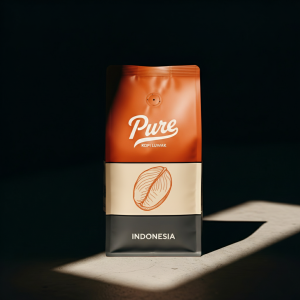
Pure Kopi Luwak
Wild civet coffee from Java. 88.5 SCA cupping score. From $125 for 100g.
The raw yield ratio is brutal: approximately 5 to 10 kilograms of raw droppings are needed to produce one kilogram of finished beans, once washing losses, defect rejection, and moisture reduction during drying are accounted for. Labor costs for collection and processing — calculated per finished kilogram — typically represent 40 to 50 percent of the final wholesale price for small-scale producers in Java.
Multi-Stage Cleaning: Labor-Intensive by Necessity
The cleaning protocol required for kopi luwak has no shortcuts. Raw droppings undergo initial soaking in temperature-controlled water (maintained at 20 to 25°C), followed by manual bean-by-bean extraction and inspection, secondary sanitization washing in multiple cycles, optional enzymatic treatment to remove surface residue, and prolonged sun drying with manual raking every two to three hours. Each stage requires skilled workers. Mechanizing any of it risks damaging the beans or creating quality inconsistencies that undermine the premium positioning.
Add drying infrastructure (raised bamboo platforms, protection from rain), moisture testing equipment, and facility maintenance, and the processing phase represents another 20 to 25 percent of production cost.
Quality Control and Authentication
Authentic wild kopi luwak requires a verification layer that conventional coffee does not. Because the premium is substantial and fraud is widespread — industry estimates put the proportion of mislabeled “kopi luwak” at 70 to 80 percent of the global market — reputable producers must invest in authentication. Laboratory testing to verify wild sourcing and rule out conventional or caged-civet substitution adds 5 to 8 percent to production costs. Documentation, traceability systems, and certifications add more.
The fraud problem is not abstract: a producer without authentication infrastructure cannot credibly command wild-sourced prices, and buyers with no way to verify provenance have no basis for trust. The verification cost is a direct tax on honesty.
International Logistics
Kopi luwak is produced in remote mountainous regions of Java, Sumatra, and Sulawesi. Getting beans from plantation to international market involves local transport, export documentation (including CITES compliance for animal-product exports), customs processing, and air freight — because the high value per kilogram makes air shipment economically justified over slower ocean freight. International shipping and logistics typically account for 12 to 18 percent of retail pricing.
The total cost structure explains why authentic wild kopi luwak retails at $100 to $150 per 100 grams. It is not a premium on top of a $5 product; it is the actual cost of producing something scarce, labor-intensive, and irreducible by process engineering or economies of scale.
Why the Price Cannot Simply Be “Fixed”
The common complaint — “why can’t they just sell it for less?” — misunderstands what the product is. Wild kopi luwak cannot be made less expensive by building bigger facilities or hiring more workers. The civet population is fixed by its natural habitat. The selection process and transit time within each animal is fixed by biology. The cleaning protocol has irreducible minimum requirements. No capital investment makes the collection process faster or the yield ratio better.
What can lower the price is substitution: caged civets instead of wild, conventional beans mislabeled as luwak, or farm-produced alternatives that bypass the wild collection entirely. These products are cheaper. They are also demonstrably inferior, both in flavor — because stressed animals with restricted diets produce less complex enzyme profiles — and in ethics. The price of genuine wild kopi luwak is not a marketing number; it is the honest accounting of an irreducibly expensive production chain. For context on how the collection and processing steps work in detail, the cleaning and processing guide shows exactly where the labor goes. The question of what separates wild from farmed is covered fully in this comparison of wild versus farm kopi luwak.
Pure Kopi Luwak
Wild civet coffee from Java. 88.5 SCA cupping score. From $125 for 100g.
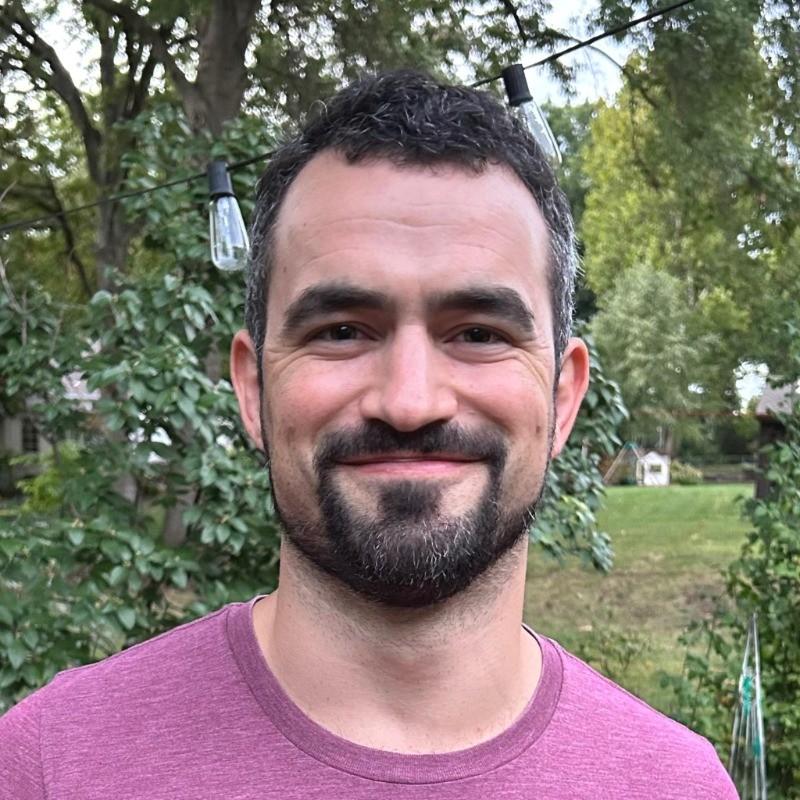
Roger Abbott founded Pure Kopi Luwak in 2018 after a trip through the volcanic highlands of Java, and has bought from the same farming families ever since. He only works with collectors of wild civet coffee, never caged. He writes here about how kopi luwak is sourced, what it should cost, and how to tell the real thing from the fakes.