A green coffee bean, fresh from the mill, smells like grass and hay. There is almost nothing in that smell to suggest what it will become. The transformation happens entirely in the roaster — and what emerges is one of the most chemically complex aromas that the human nose encounters in everyday life, built from more than 800 distinct volatile compounds interacting simultaneously.
That number — 800-plus — deserves some context. Wine, celebrated for its aromatic complexity, contains somewhere between 200 and 300 volatile aroma compounds. Coffee nearly triples that count. No other beverage in common use approaches it. The reason coffee’s smell registers so powerfully, and why it can stop you in your tracks from two rooms away, is that you’re detecting the output of one of the most elaborate aroma chemistry events in the food world.
Where the Aroma Comes From: The Maillard Reaction
The volatile compounds responsible for coffee’s smell don’t exist in the green bean. They’re created during roasting through a series of chemical reactions — the most important of which is the Maillard reaction.
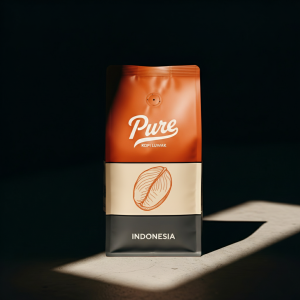
Pure Kopi Luwak
Wild civet coffee from Java. 88.5 SCA cupping score. From $125 for 100g.
Named after French chemist Louis-Camille Maillard, who first described it in 1912, the Maillard reaction occurs when amino acids and reducing sugars are exposed to heat. In coffee, this happens when roasting temperatures climb above roughly 140°C. The reaction is extraordinarily complex — it’s the same process that browns bread crust, creates the crust on seared meat, and gives roasted chocolate its depth — but in coffee it proceeds with unusual speed and generates an unusual variety of products.
Among the Maillard products in coffee are pyrazines: heterocyclic compounds responsible for the nutty, roasted, earthy notes that define the core coffee smell. Different pyrazine structures produce subtly different nuances — 2-methylpyrazine leans toasty, 2,3-diethylpyrazine is more nutty and caramel-like. At the right concentration, they combine into what the brain recognizes as “coffee smell.” At higher concentrations, pyrazines read as acrid and burnt.
Furans — another Maillard reaction product — contribute caramel and sweet notes. Aldehydes generated during the reaction add fruity and floral dimensions. The balance among these compound classes shifts with roast degree: lighter roasts produce more floral aldehydes and bright top notes; darker roasts produce more pyrazines and furanones, shifting toward heavier, more roasted aromas.
The Other Key Reactions: Caramelization and Strecker Degradation
The Maillard reaction doesn’t act alone. Two other chemical processes run in parallel during roasting and contribute significantly to the aroma profile.
Caramelization begins when sucrose in the coffee bean starts breaking down around 160°C. Caramelization produces a family of compounds including diacetyl (butter-like), acetylpropionyl, and furanones — compounds that register as sweet and caramel-like to the nose. The caramel-chocolate aromatic quality associated with medium-roast coffees comes largely from these compounds.
Strecker degradation is a subset of the Maillard reaction, specifically the degradation of amino acids in the presence of dicarbonyl compounds. It generates Strecker aldehydes — small, highly volatile molecules that evaporate quickly and are responsible for the immediate top-note aroma you experience when you first open a bag of freshly roasted coffee. These compounds are extremely unstable; they’re among the first to off-gas from a roasted bean after packaging, which is one reason why coffee smells so intensely different when it’s fresh versus when it’s been sitting open in a bag for three weeks.
Try the coffee this article is about
Wild-sourced from Java, 88.5 SCA cupping score, free US shipping. From $125 for 100g.
Shop Pure Kopi Luwak →Why Coffee Smells Better Than It Tastes (and What That Means)
Most coffee drinkers notice this: the smell of coffee promises something more complex and pleasurable than even a very good cup can deliver. There’s a reason, and it’s rooted in how aroma works differently between the nose and the palate.
When you smell coffee in the air — orthonasal olfaction — you’re detecting the most volatile compounds that have evaporated from the liquid or grounds. These are the lightest, most aromatic molecules, which happen to be the most pleasant ones: the fruity aldehydes, the sweet furans, the caramel notes. When you drink coffee, you get retronasal olfaction — the aroma that travels from your mouth up through the back of your nose as you swallow. This engages a different pathway and delivers a different representation of the same compound mixture.
The promise-reality gap also exists because some of the most appealing aromatic compounds break down very quickly at brewing temperatures. Furfuryl mercaptan — one of the compounds most strongly associated with roasted coffee aroma — is present in freshly brewed coffee but degrades rapidly. You smell it most intensely in the first 30 seconds of a pour. By the time the cup has sat for 10 minutes, that compound profile has already changed.
What This Means for Premium Coffee
The complexity and fragility of coffee’s aroma chemistry is one of the strongest arguments for freshness and for purchasing coffee that’s been handled with care throughout the chain. Volatile compounds — by definition — evaporate. Aroma is the first thing a coffee loses as it stales, and the rate of loss accelerates once the bag is open.
This is especially relevant for wild kopi luwak. The enzymatic modifications that occur during civet digestion don’t just affect bitterness and body — they alter the aromatic precursor chemistry in ways that carry through roasting. Research comparing conventionally processed and civet-processed beans from the same Javanese origin has documented differences in the volatile compound profile of the roasted product, with kopi luwak showing elevated concentrations of certain pyrazines and a distinct aromatic character that experienced coffee tasters can reliably identify blind.
That aromatic distinction is fragile. Proper storage — airtight container, away from light and heat, consumed within a few weeks of opening — is not optional for a coffee whose value is partly built on aromatic complexity that you literally cannot smell once it’s gone.
The Brain’s Response to Coffee Aroma
Coffee aroma triggers responses that go beyond flavor appreciation. Several studies have examined what happens in the brain when people smell coffee, and the results explain the almost universal experience of finding the smell pleasant and alerting even before tasting the beverage.
Part of the response is conditioned — if you’ve been drinking coffee in the morning for years, the smell has become a conditioned stimulus associated with alertness, ritual, and comfort. But part of the response is more fundamental: the volatile compounds in coffee aroma interact directly with olfactory receptors in ways that influence brain state before any caffeine has been absorbed. The smell of coffee activates areas of the brain associated with attention and arousal in measurable ways, which is why the first thing many people do when waking up is not drink coffee but stand next to a brewing pot and inhale.
800-plus compounds, 1912 chemistry, and centuries of human conditioning. The aroma of coffee is not simple, and neither is why it works on us so reliably.
Pure Kopi Luwak
Wild civet coffee from Java. 88.5 SCA cupping score. From $125 for 100g.

Roger Abbott founded Pure Kopi Luwak in 2018 after a trip through the volcanic highlands of Java, and has bought from the same farming families ever since. He only works with collectors of wild civet coffee, never caged. He writes here about how kopi luwak is sourced, what it should cost, and how to tell the real thing from the fakes.