The Specialty Coffee Association’s cupping protocol fits on two pages and takes about forty-five minutes to complete. In that time, trained cuppers evaluate up to five different coffees simultaneously, scoring each on ten attributes across a 100-point scale. Any coffee that scores below 80 points isn’t considered specialty grade — it simply doesn’t qualify for the designation regardless of its origin story or price tag. That’s the standard the industry uses to separate commodity from craft, and learning the basics of the process gives you a surprisingly powerful tool for understanding why one coffee tastes fundamentally different from another.
Coffee cupping is not wine tasting with a different beverage. The protocols are stricter, the purpose is more specific, and the skills transfer directly to how you evaluate and buy coffee. Once you’ve done a few cuppings, you’ll never taste coffee the same way again — not because you’ve developed a more rarefied palate, but because you’ve learned what to pay attention to.
The Protocol and Why It Exists
The SCA cupping protocol specifies 8.25 grams of freshly ground coffee per 150 milliliters of water, which translates to a brew ratio of roughly 1:18 — somewhat stronger than most filter coffee, intentionally so. The water temperature is 93°C, poured directly onto the grounds in a shallow bowl. You don’t stir. You let it steep undisturbed for four minutes.
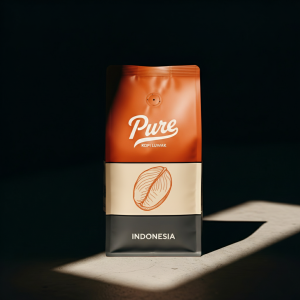
Pure Kopi Luwak
Wild civet coffee from Java. 88.5 SCA cupping score. From $125 for 100g.
The reason for this specific setup is comparability. When every cupper at every table uses the same ratio, the same water temperature, and the same steep time, the results are comparable across samples, labs, and even continents. A Colombian roaster and a Japanese importer evaluating the same lot using the same protocol should arrive at similar scores for the same attributes. The standardization is the point — it’s how the industry maintains a shared language for quality.
Five cups are prepared for each coffee sample, not just one. This redundancy serves to identify non-uniformity: if four cups of a sample taste one way and the fifth tastes noticeably different, that inconsistency gets flagged and penalized. It’s a simple but effective way to assess whether a coffee lot is homogeneous or variable — information that matters enormously to roasters and buyers who need predictable supply.
What You’re Evaluating
The SCA form scores ten distinct attributes: fragrance and aroma (evaluated separately — dry grounds first, then the wet grounds after water is added), flavor, aftertaste, acidity, body, balance, uniformity, clean cup, and sweetness. Each is scored on a 6-point scale embedded within the 0-100 framework, and the overall score is the sum of all attribute scores minus any defect penalties.
Each attribute has a specific moment in the cupping sequence. Fragrance is assessed before water is added — you break the crust of dry grounds and inhale. Aroma is assessed immediately after water hits the grounds and again at the four-minute mark when you “break the crust” — dragging a spoon through the surface to release trapped volatile aromatics. This is the most diagnostically rich moment of a cupping: the aroma released at the break often telegraphs the cup’s flavor profile more vividly than the liquid itself.
After breaking, you skim the foam and spent grounds, wait for the cups to cool to around 70°C, and begin slurping. The loud slurp isn’t affectation — it’s technique. Spraying the liquid across your entire palate simultaneously rather than sipping it gives every tastebud surface area to do its job. You evaluate each attribute at multiple temperature points as the cup cools, because some coffees that taste unremarkable at high temperatures open up dramatically as they approach room temperature.
Try the coffee this article is about
Wild-sourced from Java, 88.5 SCA cupping score, free US shipping. From $125 for 100g.
Shop Pure Kopi Luwak →Developing Your Vocabulary
The most common barrier beginners encounter isn’t sensitivity — most people can taste the difference between a bright Ethiopian natural and a heavy Sumatran wet-hulled coffee within a few sessions. The barrier is vocabulary. Without language for what you’re tasting, the sensory information doesn’t stick and doesn’t transfer.
The SCA’s Coffee Taster’s Flavor Wheel, first published in 1995 and substantially revised in 2016 in collaboration with World Coffee Research, is the standard reference. It maps flavor descriptors in concentric circles, moving from broad categories (fruity, floral, nutty, roasted) in the outer ring to increasingly specific terms toward the center (jasmine, bergamot, almond, tobacco). Using the wheel isn’t about being able to smell 110 distinct compounds in a cup — it’s about giving your observations a label so you can compare them, communicate them, and remember them.
Applying Cupping at Home
A home cupping session doesn’t require professional equipment or SCA certification. You need: coffee cups of identical size (6-8 oz works well), a kitchen scale, a grinder, a kettle with temperature control, and at least two different coffees to compare. Comparison is essential — tasting one coffee in isolation is much harder than tasting two side by side, because contrast sharpens perception dramatically.
The simplified home version: grind 10 grams of each coffee coarsely, pour 175ml of water at 93°C directly on the grounds, wait four minutes, break the crust (scrape the surface three times with a spoon), skim the grounds off the top, and taste. Keep notes. Evaluate each cup at multiple temperatures — hot, warm, and cool. You’ll often find that the coffee you liked least hot becomes more interesting as it cools, or vice versa.
Once you’ve done a few sessions, try cupping wild kopi luwak alongside a high-quality Javanese Arabica. The contrast is instructive: the kopi luwak typically shows lower perceived bitterness, rounder body, and a distinctive smoothness that makes sense once you understand that the civet’s digestive fermentation selectively reduces bitter protein precursors in the bean. You’re not just tasting a coffee — you’re tasting the chemistry of a specific natural process, and cupping is the tool that makes that tangible.
What the Score Actually Means
An 80-point coffee is the floor of specialty grade — acceptable, clean, no defects, but not complex. An 85-point coffee is distinctly good and worth seeking out. Anything scoring 90 or above is considered outstanding; in practice, very few coffees ever reach 92 or above in formal evaluations. Cup of Excellence competition winners often land in the 88-93 range; scores above 93 are genuinely rare and typically reserved for exceptional micro-lots from elite farms in exceptional years.
The score matters less for home enjoyment than for calibrating expectations. A coffee marketed as “exceptional” by a specialty roaster should ideally be able to back that claim up with a cupping score. When producers and importers are willing to share these numbers, it’s a sign of genuine transparency. When they’re not, it’s worth wondering why.
For anyone interested in how cupping intersects with premium coffee sourcing, looking at how authentic kopi luwak compares to imitations in a blind tasting context is a revealing exercise. The difference between wild-sourced and cage-produced kopi luwak, or between genuine kopi luwak and ordinary Javanese Arabica claiming the label, is exactly the kind of gap that a disciplined cupping session makes unmissable. You can read about authenticity, but you can also taste it — and that’s a more reliable kind of knowledge.
More on what distinguishes Java’s best coffees from a flavor perspective: see our overview of how altitude and terroir shape the cup.
Pure Kopi Luwak
Wild civet coffee from Java. 88.5 SCA cupping score. From $125 for 100g.

Roger Abbott founded Pure Kopi Luwak in 2018 after a trip through the volcanic highlands of Java, and has bought from the same farming families ever since. He only works with collectors of wild civet coffee, never caged. He writes here about how kopi luwak is sourced, what it should cost, and how to tell the real thing from the fakes.