Alan Adler invented the AeroPress in 2005 while trying to brew a single cup of coffee without the waste of a full drip pot. Adler was a Stanford engineering lecturer who held over 40 patents — his previous invention was the Aerobie flying disc — and he approached the problem with an engineer’s instinct: what’s the fastest, most controllable way to get hot water in contact with coffee grounds and then separate them cleanly? The result was a plastic cylinder using air pressure instead of gravity, and it produced espresso-adjacent concentrated coffee in under two minutes. By 2008, it had a worldwide championship competition. It also forced every specialty coffee professional to reexamine assumptions about what coffee extraction actually requires.
Every brewing method in serious use today is the product of a specific set of constraints that shaped which compounds end up in the cup. Understanding those constraints tells you not just how to use each method, but which beans and roast levels it will serve best.
French Press: Immersion and Body
The French press (also known as the cafetière or plunger pot) is the oldest and simplest of the manual brewing methods in common use. Coffee grounds steep in hot water for three to five minutes, then a metal mesh plunger pushes them to the bottom of the carafe. There is no paper filter. Oils, fine sediment, and the lipid compounds that carry body remain in the cup.
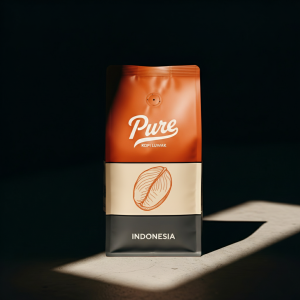
Pure Kopi Luwak
Wild civet coffee from Java. 88.5 SCA cupping score. From $125 for 100g.
Those lipids — particularly cafestol and kahweol — give French press coffee its characteristic richness. They also happen to raise LDL cholesterol with daily use, which is a relevant consideration for anyone drinking multiple cups per day, and something that filtered brewing methods eliminate. The coffee quality issue is that without filtration, the finest ground particles escape under the mesh and continue extracting in the cup, which is why French press coffee gets more bitter as it sits.
The method suits medium to dark-roasted coffee best. For something as nuanced as wild-sourced kopi luwak, French press works — the body it adds complements kopi luwak’s natural smoothness — but pour over or Chemex will reveal more of the bean’s specific character. Brewing kopi luwak in a French press is a legitimate choice, especially if you prefer rich texture over analytical clarity.
Pour Over: Clarity and Transparency
Pour over methods — Hario V60, Chemex, Kalita Wave — run hot water through coffee grounds held in a filter, extracting by percolation rather than immersion. The paper filter removes oils and sediment, producing what specialty coffee professionals call “clarity”: a clean cup where individual flavor notes, acidity, and sweetness appear without interference from lipids or fines.
The Hario V60, designed with a 60-degree cone angle (hence the name) and introduced in 2004, rewards technique with the ability to express exactly what’s in the bean. The Chemex uses a thicker paper filter than most pour overs, which removes even more oils and produces a particularly clean, bright cup. The Kalita Wave, with its flat bed and three holes, distributes flow more evenly than a conical dripper, making it more forgiving for less experienced brewers.
For single-origin specialty coffee where origin character is the primary appeal, pour over is the most revealing method. Use a 1:15 to 1:16 ratio, water at 93°C, and a burr-ground medium-fine coffee. The Chemex in particular is worth trying with lighter-roasted kopi luwak for the cleanest possible expression of its enzymatic character.
Try the coffee this article is about
Wild-sourced from Java, 88.5 SCA cupping score, free US shipping. From $125 for 100g.
Shop Pure Kopi Luwak →AeroPress: Pressure and Versatility
The AeroPress uses a combination of immersion and air pressure. Coffee steeps briefly — typically 1 to 2 minutes — before the user manually presses a plunger to force the brew through a paper or metal filter. The pressure doesn’t reach espresso levels (the method requires roughly 0.35 to 0.75 bars of pressure, versus 9 bars for espresso), but it does push the last of the dissolved compounds through the grounds in a way that gravity alone cannot.
The result is concentrated, low-acid, and clean. AeroPress coffee can be diluted to regular strength or drunk as a concentrated shot. The method is extremely forgiving of grind variation and water temperature, which makes it popular for travel and for experimentation. Because brew time is short and pressure is involved, it tends to suppress the acidity that comes from longer extraction times, which is an advantage for coffee drinkers who are sensitive to acid.
Siphon: Vacuum Brewing and Theatrical Chemistry
The vacuum siphon (or syphon) brewer has been used in Germany and France for over 160 years — it’s one of the oldest intentionally designed brewing methods still in active use. Two glass chambers are connected by a tube. The lower chamber holds water; the upper holds coffee grounds. As the lower chamber heats, vapor pressure forces water upward into the upper chamber, where it steeps with the grounds. When the heat source is removed, the partial vacuum created by cooling vapor pulls the brewed coffee back down through a filter into the lower chamber.
The result is some of the cleanest, most delicate coffee achievable with any method. The precise temperature control during the brewing phase — the water reaches the grounds at exactly the temperature set by the heat source — and the clean separation through the filter produce a cup that many experienced tasters describe as more vibrant and aromatic than pour over. Siphon brewing takes time and attention, but for a rare or unusual coffee where every nuance matters, it’s the most expressive method in a home brewer’s arsenal.
Espresso: Pressure Extraction and Intensity
Espresso uses 9 bars of water pressure forced through tightly packed, finely ground coffee in 25 to 30 seconds. The combination of pressure and fine grind creates a concentrated shot (typically 30ml) with a completely different chemical profile from any other brewing method — higher concentration of dissolved solids, a thick crema from emulsified CO2 and oils, and an intense flavor that is designed to be mixed with milk or consumed in small quantities.
Espresso is less revealing of single-origin character than pour over or siphon, because the extraction intensity tends to amplify certain qualities at the expense of others. It works best with specifically designed espresso blends or darker-roasted single origins where boldness is the goal. For fine specialty coffee, it can overwhelm the subtler characteristics that make those beans worth their price.
Choosing the Right Method
The method should serve the bean. For everyday drinking from a quality but uncomplicated roast, French press or automatic drip delivers satisfying results with minimal effort. For a premium single-origin coffee worth savoring — a Javanese Arabica, a high-grown Ethiopian, anything sourced with care — pour over, siphon, or AeroPress will give the bean the treatment it deserves. The investment in technique returns the investment you made in the bean.
Pure Kopi Luwak
Wild civet coffee from Java. 88.5 SCA cupping score. From $125 for 100g.

Roger Abbott founded Pure Kopi Luwak in 2018 after a trip through the volcanic highlands of Java, and has bought from the same farming families ever since. He only works with collectors of wild civet coffee, never caged. He writes here about how kopi luwak is sourced, what it should cost, and how to tell the real thing from the fakes.