A 2004 study by food scientist Massimo Marcone, published in Food Research International, was among the first peer-reviewed analyses to subject kopi luwak to rigorous compositional examination. Its findings aligned precisely with what coffee tasters had been reporting for decades in rather less technical language: lower concentrations of malic and citric acids, altered protein fractions, a modified surface chemistry on the bean. The civet digestive process produces measurable, reproducible chemical changes — and those changes map directly onto flavor.
If you’re considering a $125 purchase, or you’ve just brewed your first cup of wild kopi luwak and want a vocabulary for what you’re tasting, this guide gets specific.
The Flavor Baseline: Javanese Arabica Without Processing
Wild kopi luwak from Java is made from Arabica cherries — typically Typica and related cultivars grown at elevations between 800 and 1,600 meters on the volcanic slopes of East Java. At that altitude, Javanese Arabica produces a characteristic cup: full-bodied, moderately earthy, with dark chocolate and brown sugar notes, a gentle brightness, and enough heft to satisfy without heaviness. It’s a substantial cup before the civet enters the picture at all.
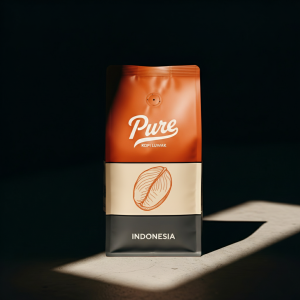
Pure Kopi Luwak
Wild-sourced. Organic. Arabica. From $125.
Understanding this baseline matters because kopi luwak doesn’t replace the origin character — it transforms how that character expresses.
Dark Chocolate and Cocoa Depth
This is the note that arrives first and stays longest. Not milk chocolate sweetness — the chocolate register in genuine kopi luwak sits closer to 70-percent-cacao territory: rich, slightly earthy, full rather than sweet. The enzymatic modification of proteins during civet digestion reduces the bitter precursors that would otherwise sharpen this note, leaving chocolate without the harshness that can accompany it in other full-bodied Arabicas. The effect is a rounder, more integrated richness than the same Javanese bean would produce through conventional wet or dry processing.
Notably Low Bitterness
This is the characteristic most immediately apparent to anyone who transitions to kopi luwak from years of conventional coffee. The absence of sharpness at the finish is striking — the cup is smooth in a way that doesn’t read as weak or flat, but as genuinely clean. Proteolytic enzymes in the civet’s stomach partially break down certain proteins that serve as precursors to bitter-tasting compounds during roasting. Reduce those precursors, and the bitterness ceiling drops with them. The result is a cup that tastes dense and complex without the astringency that high-extraction coffees typically carry.
Earthy, Forest-Floor Undertone
Some tasters describe this element as mushroom or damp wood; others as tobacco leaf or dark soil. It’s the most divisive aspect of the kopi luwak profile — specialty coffee drinkers who prize bright, fruit-forward cups may find it distracting, while those who value depth and complexity often cite the earthiness as kopi luwak’s most singular characteristic. It arrives mid-palate and lingers as part of the aftertaste. It is not a defect. It is the fingerprint of the wild civet’s digestive environment, and there is no other process that produces it.
Low Acidity
Conventional Arabica coffees run to a pH of roughly 4.9 to 5.2 — acidic enough to produce the brightness specialty coffee values, but also the sharpness that some drinkers find difficult. Marcone’s 2004 analysis documented lower malic and citric acid concentrations in kopi luwak compared to conventionally processed coffee from the same origin. The resulting pH, consistently closer to 6.0, translates directly to a rounder, more approachable cup. The brightness is present — it’s simply cushioned, integrated into the body rather than leading the palate.
Sweetness Without Sugar
The aftertaste of well-prepared kopi luwak carries a clean, lingering sweetness — often described as caramel or dried fruit — that has no direct parallel in conventionally processed coffee from the same origin. This sweetness is partly a function of the starting material: wild Asian palm civets (Paradoxurus hermaphroditus) preferentially consume peak-ripe coffee cherries, which carry a higher Brix measurement and a more developed sugar profile than mixed-ripeness harvests. The civet selects. That selection has a flavor consequence.
Roast Level and What to Avoid
Kopi luwak is typically roasted to a medium level — City+ to Full City in roaster terminology — for good reason. Dark roasting destroys the nuanced modifications that civet processing creates: the earthy, chocolatey complexity gets overwhelmed by carbonized bitterness, and the low-acid character becomes irrelevant. If you receive Pure Kopi Luwak as a medium roast, that is the correct specification. Light roasting presents a different problem: at very pale levels, the earthiness can read as vegetal and the sweetness underdeveloped. The medium window is where this coffee performs.
Brewing Method and Expression
Pour-over and filter methods amplify the clarity of the chocolate and low-acid character while letting the earthy undertones develop cleanly. French press, with its full-immersion extraction and retained sediment, produces a heavier, more pronounced cup — excellent for those who want the distinctive forest-floor element at maximum intensity. For a first cup, a simple filter brew at 93°C with a 1:15 ratio (coffee to water by weight) reveals the profile most faithfully. It’s the format that lets the bean speak.
What Kopi Luwak Is Not
It doesn’t taste like the animal that processed it — a concern first-time buyers sometimes raise and that is answered definitively by tasting the coffee. The washing, drying, and roasting processes eliminate every trace of the civet’s involvement except the enzymatic transformation of the bean itself. What remains is dark chocolate, low bitterness, earthy depth, and a caramel finish: a profile that is genuine, consistent, and grounded in chemistry that has been replicated in peer-reviewed conditions. For anyone who’s sourced the real thing from wild civets, this is what that investment tastes like.
Pure Kopi Luwak
Wild-sourced. Organic. Arabica. From $125.

Roger Abbott is the founder of Pure Kopi Luwak. He has spent over a decade sourcing wild kopi luwak directly from farmers and collectors in the highlands of Java, Indonesia — working exclusively with wild civets, never caged. He writes about specialty coffee, Indonesian origins, and the science behind what makes kopi luwak taste the way it does.
