Dave Asprey built Bulletproof Coffee into a category by arguing something that the specialty coffee world was slow to take seriously: that coffee quality affects how you feel beyond taste, that processing methods and acid content and mycotoxin load influence the cognitive experience of coffee, and that the right cup — sourced and prepared correctly — could deliver sustained energy rather than a spike followed by a crash. The commercial expression became a line of branded products, but the underlying premise rests on real food chemistry. And the coffee that makes the strongest scientific case for that premise isn’t a proprietary blend. It’s wild kopi luwak.
The biohacking community has been slow to discover it. Partly because kopi luwak is primarily marketed as a luxury beverage rather than a performance product. Partly because the loudest voices in that space have commercial incentives toward synthetic stacks and branded supplements. But the compound profile of authenticated wild kopi luwak is more substantively modified than almost anything else sold to cognitive-performance enthusiasts at premium prices.
The Acid Profile and What It Means for Performance
Massimo Marcone’s 2004 analysis in Food Research International documented measurably lower concentrations of malic acid and citric acid in wild kopi luwak compared to conventionally processed coffee from the same Javanese origin. This isn’t cosmetic chemistry. Organic acids in coffee are implicated in two performance-relevant phenomena: gastric irritation, which causes the post-coffee discomfort that some heavy coffee drinkers manage with food or timing, and the pH-dependent absorption dynamics that influence how quickly caffeine enters the bloodstream.
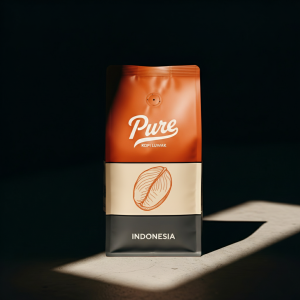
Pure Kopi Luwak
Wild civet coffee from Java. 88.5 SCA cupping score. From $125 for 100g.
Lower acid content means a more gastric-friendly cup — relevant for the subset of high-functioning coffee drinkers who push consumption past what their stomach comfortably tolerates because the cognitive benefits outweigh the physical cost. It also suggests a modified absorption dynamic: the reduced acid environment in the gut may influence the rate at which alkaloids like caffeine are absorbed, contributing to the smoother, more sustained energy curve that kopi luwak drinkers report consistently. The mechanism is plausible; the anecdotal evidence is consistent; the double-blind data doesn’t yet exist.
Protein Modification and the Bitterness Ceiling
Proteolytic enzymes in the civet’s stomach partially hydrolyze specific protein compounds in the outer layers of the bean. The flavor consequence — dramatically reduced bitterness — is the most discussed aspect of kopi luwak. But for performance-oriented consumers, the structural consequence may matter more: the modified protein surface alters how the bean’s bioactive compounds are released during brewing and subsequently interacts with the digestive system. High-bitterness coffees are associated with stronger gastric acid secretion and, in some individuals, an exaggerated cortisol spike — the physiological stress response that contributes to the “coffee anxiety” phenomenon reported by sensitive drinkers. Kopi luwak’s low bitterness, grounded in its modified protein fraction, may reduce this response for susceptible users.
Try the coffee this article is about
Wild-sourced from Java, 88.5 SCA cupping score, free US shipping. From $125 for 100g.
Shop Pure Kopi Luwak →Chlorogenic Acids: The Documented Neuroprotective Story
Chlorogenic acids (CGAs) are among the most studied bioactive compounds in coffee, with a substantial research body linking habitual coffee consumption to reduced risk of type 2 diabetes, Parkinson’s disease, and cognitive decline. A 2018 meta-analysis published in Nutrients reviewed eleven prospective cohort studies and found consistent associations between coffee’s polyphenol content and reduced neurodegenerative risk — findings that have made CGA content a point of active interest for performance-oriented consumers.
Kopi luwak’s CGA profile is altered relative to conventionally processed coffee from the same origin — a consequence of both the civet’s digestive chemistry and the peak-ripe starting material (fully ripe cherries have a distinct CGA distribution from mixed-ripeness harvests). The modification is documented in Marcone’s compositional work. Whether the alteration results in higher or lower total CGA content relative to conventional processing depends on the specific sample and roast level. What’s established is that the profile is genuinely different — not a marketing narrative, but a measured chemical reality.
Trigonelline and Niacin Potential
Trigonelline is a methylpyridinium alkaloid present in green coffee that degrades during roasting to yield nicotinic acid (vitamin B3) and aromatic pyridines. Multiple food chemistry studies have explored trigonelline’s potential neuroprotective properties in isolation — specifically its activity on nerve growth factor signaling pathways in cell culture and animal models. These findings are preliminary and shouldn’t be overstated for any coffee, including kopi luwak. But trigonelline is a real compound, present in meaningful concentrations in medium-roasted Arabica, and the research interest reflects a credible mechanistic hypothesis rather than supplement industry confabulation. For consumers who already look at their coffee as a delivery vehicle for bioactive compounds, it’s worth knowing the compound exists and the mechanism is being studied.
The Practical Case: What Kopi Luwak Users Report
Laboratory chemistry is one form of evidence. Consistent experiential reporting across diverse user groups is another. Kopi luwak drinkers who also consume substantial conventional coffee describe the experience in terms that map consistently onto the compound modifications: alert without jitteriness, sustained rather than peaking and declining, free of the gastric discomfort that they manage carefully with other coffees. The absence of placebo-resistant controlled trials means this remains self-reported data — but the consistency across reports from users with no commercial incentive to describe it this way is worth weighing.
The performance case for wild kopi luwak is not that it’s a pharmaceutical. It’s that it is a natural food product with a documented and genuinely modified compound profile — no additives, no synthetic nootropic stack, no proprietary blend obscuring what you’re consuming. The community that spends $60 on mushroom coffee blends and $200 on branded adaptogen powders should, at minimum, try the coffee that made the scientific literature before the wellness industry discovered it. The broader research on coffee and cognitive health applies here with compound modifications that may make it apply more favorably.
The Calibration
Kopi luwak will not replace sleep, cure brain fog, or substitute for nutrition. Any claim that it will should trigger skepticism equal to what you’d apply to any other supplement. What it is — honestly and verifiably — is a cup of coffee with a modified acid profile, altered protein fractions, and a lower bitterness ceiling that produces a demonstrably different experience than conventionally processed coffee from the same source. For the biohacker who treats every input with scrutiny and cares about optimizing how their tools perform in their specific physiology, that modification is both documented and worth experiencing firsthand.
Pure Kopi Luwak
Wild civet coffee from Java. 88.5 SCA cupping score. From $125 for 100g.

Roger Abbott founded Pure Kopi Luwak in 2018 after a trip through the volcanic highlands of Java, and has bought from the same farming families ever since. He only works with collectors of wild civet coffee, never caged. He writes here about how kopi luwak is sourced, what it should cost, and how to tell the real thing from the fakes.