Roughly 80 percent of certified Jamaican Blue Mountain coffee is exported to Japan each year. That figure, consistently cited in coffee trade literature for decades, says something important: the market with the most exacting standards for quality and authenticity in the world made its selection and has maintained it through price premiums that would seem impossible for almost any other agricultural product. Japan’s buyers are not sentimental. They pay for what they assess to be genuinely superior. Blue Mountain passed that test.
So has kopi luwak — in different markets, for different reasons. These are both prestige coffees with legitimate price justifications and significant counterfeiting problems. Comparing them honestly requires separating story from substance, marketing from mechanism, and price from value.
How Each Coffee Earns Its Premium
The premium behind Jamaican Blue Mountain is fundamentally geographic. Coffee grown in the Blue Mountains range — specifically within the parishes of Saint Andrew, Saint Thomas, Portland, and Saint Mary at elevations between 900 and 1,700 meters — benefits from a specific combination of volcanic soil, cloud cover, high rainfall, and cool temperatures that produces a distinctive cup profile. The Jamaica Agricultural Commodities Regulatory Authority (JACRA) certifies and controls the designation; every bag of genuine Blue Mountain carries traceable certification documentation. The premium is based on terroir: a specific place expressing itself through the plant.
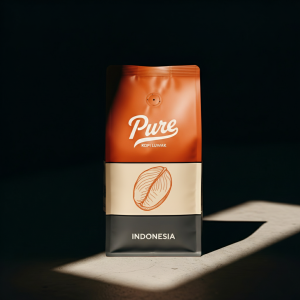
Pure Kopi Luwak
Wild civet coffee from Java. 88.5 SCA cupping score. From $125 for 100g.
Kopi luwak’s premium is process-based. The coffee — Arabica grown on the volcanic slopes of Java — is exceptional without civet involvement. What the wild Asian palm civet (Paradoxurus hermaphroditus) adds is a biological selection and enzymatic processing step that measurably alters the bean’s composition. Research by Massimo Marcone, published in Food Research International in 2004, documented lower organic acid concentrations, modified protein fractions, and altered surface chemistry that produce a flavor profile unlike any conventionally processed coffee from the same origin. The premium is based on what happens to the bean, not where it grew.
Both mechanisms are legitimate. They operate on different axes.
Flavor: What’s Actually in the Cup
Certified Blue Mountain presents a cup that specialty coffee professionals consistently describe as clean, balanced, and mildly sweet — with a bright but gentle acidity, medium body, and almost no bitterness. The absence of bitterness is Blue Mountain’s most distinguishing trait for drinkers accustomed to commercial coffee; the cup is smooth in the way that ideal growing conditions and meticulous processing produce smoothness. The flavor notes are subtle: mild sweetness, light floral hints, restrained brightness. It is polished and elegant, not dramatic.
Wild kopi luwak presents differently. Where Blue Mountain is clean and restrained, good kopi luwak is dense and layered. The dark chocolate and earthiness that characterize Javanese Arabica are present and amplified; bitterness is comparably low, but its absence registers as smoothness within a more substantial body rather than as delicacy. The earthy undertone — a function of the civet’s digestive environment — has no parallel in Blue Mountain and is either kopi luwak’s most compelling attribute or its most polarizing one, depending on the drinker.
Simplified: Blue Mountain is a supremely refined cup. Wild kopi luwak is a cup with genuine character. Neither is categorically better; they serve different palates and different moments.
Try the coffee this article is about
Wild-sourced from Java, 88.5 SCA cupping score, free US shipping. From $125 for 100g.
Shop Pure Kopi Luwak →Price and Value
Certified Blue Mountain retails from reputable importers at approximately $50-80 per pound (454 grams) for standard lots, or roughly $11-17 per 100 grams — substantially less than Pure Kopi Luwak at $125 per 100 grams. On a per-gram basis, kopi luwak costs more. The question is whether what you’re paying for justifies the premium over Blue Mountain specifically.
Blue Mountain’s certification guarantees origin but not that a given bag represents the best available from that origin; quality variation between certified producers is significant, and the most exceptional small-farm lots often don’t reach standard retail channels. Kopi luwak’s pricing is driven by scarcity with no geographic solution: wild production is measured in hundreds of kilograms annually, globally, and no farming expansion can change that ceiling. The price differential reflects a genuinely different scarcity structure.
The Authenticity Problem: Both Coffees Have It
Counterfeiting is a serious issue for both coffees, though it takes different forms. Blue Mountain’s certification system is established but unevenly enforced; the designation appears frequently on products in markets with weak intellectual property protection, and even within regulated markets, brokers occasionally blur the distinction between certified Blue Mountain and Jamaican coffee grown outside the designated zone. Buying certified Blue Mountain requires documentation verification.
Kopi luwak’s authenticity challenge is more fundamental. Cage-farmed kopi luwak — produced from civets kept in captivity and fed mixed-quality, non-selective diets — dominates the market by volume and cannot replicate the quality of wild-sourced material. The civet’s freedom of selection, health, and natural behavior are the entire basis of the flavor difference; remove those conditions and you remove the quality justification. Identifying genuine wild-sourced kopi luwak is a prerequisite for this comparison to mean anything.
Which One Should You Buy?
For first-time buyers seeking a reliably excellent, accessible premium coffee with a well-documented certification system: certified Blue Mountain from a verified source is a strong choice. The flavor is broadly appealing, the premium is understandable without explanation, and the procurement process is relatively navigable.
For buyers who want something genuinely unlike any other coffee they’ve had — a cup with documented chemical modifications, a production mechanism with no conventional equivalent, and enough story to anchor a dinner conversation — wild kopi luwak is the more singular purchase, even at its higher per-gram price. It’s also the one the recipient will research independently after receiving it, which changes the experience from passive consumption to genuine discovery.
The honest answer: these are not competing for the same purchase occasion. Blue Mountain is the prestige choice for someone who wants excellent, refined coffee and a recognized name. Kopi luwak is the choice for someone who wants the most singular coffee in the world and is prepared to understand why.
Pure Kopi Luwak
Wild civet coffee from Java. 88.5 SCA cupping score. From $125 for 100g.

Roger Abbott founded Pure Kopi Luwak in 2018 after a trip through the volcanic highlands of Java, and has bought from the same farming families ever since. He only works with collectors of wild civet coffee, never caged. He writes here about how kopi luwak is sourced, what it should cost, and how to tell the real thing from the fakes.