The genuine thank-you gift — not the obligatory one, the one that says I actually thought about this — is one of the harder things to buy. Wine is the default, and wine is fine, but it is so thoroughly the default that giving someone a bottle communicates “I had a gift to give and this was the safest option.” A $50 restaurant gift card says exactly the same thing. What you want to give is something that communicates: I chose this specifically because of what you did, and the choosing reflects how I feel about it.
Rare coffee does this in a way that very few consumable gifts do. Here’s the logic.
Why Consumable Gifts Work for Thank-You Giving
There’s a reason consumables — food, wine, coffee, spirits — dominate thank-you gifting at the high end. They solve the problem of permanence. A physical object that someone has to find a place for creates a low-grade obligation. A consumable is used, appreciated in the moment, and remembered without taking up shelf space. The experience of opening a bottle of good wine or brewing a cup of rare coffee is the gift itself; nothing accumulates, and the memory doesn’t require dusting.
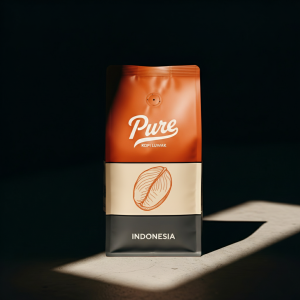
Pure Kopi Luwak
Wild civet coffee from Java. 88.5 SCA cupping score. From $125 for 100g.
The challenge with standard consumable gifts is that they don’t feel specific enough for a thank-you that actually means something. Wine says “I appreciate you.” A bag of wild-sourced kopi luwak from Java, Indonesia — produced by wild civets in the island’s coffee highlands and documented as the world’s rarest coffee — says “I wanted you to have an experience you wouldn’t have otherwise, and I looked until I found the right thing.” That’s a different register of gratitude.
What Makes Kopi Luwak Appropriate for This
The core of a meaningful thank-you gift is proportionality. The gesture should match the magnitude of what the person did for you. A mentor who gave years of genuine advice, a colleague who stayed late repeatedly to help deliver a critical project, a client who introduced you to a relationship that changed your year — these situations call for something that signals genuine appreciation without being so extravagant that it creates awkwardness.
Kopi luwak sits at an interesting price point for this purpose. According to corporate gifting benchmarks from Sendoso and GiftAFeeling, companies typically spend $75–$125 per client gift for meaningful occasions. A 100g bag of wild kopi luwak at $125 lands at the top of that range — enough to register as a real gift, not so expensive that it creates discomfort or looks like a transaction.
The coffee itself carries its own story. Kopi luwak is produced by the Asian palm civet (Paradoxurus hermaphroditus), a nocturnal forager that selects peak-ripe coffee cherries from Javanese farms with an olfactory precision that human harvesters cannot replicate. The beans spend 12–24 hours in the civet’s digestive system, where proteolytic enzymes reduce bitter protein precursors and modify the bean’s surface chemistry in ways that create the cup’s characteristic smoothness. This is documented in food chemistry research, not borrowed from marketing copy. A gift with a genuine story is always more memorable than one without.
How to Present It
Presentation matters as much as the gift itself in thank-you contexts. A bag of rare coffee delivered with a brief, handwritten note outperforms the same coffee in a plain bag with no context. The note doesn’t need to be long: “Wild-sourced kopi luwak from Java — it’s what civets eat when they have the good taste not to eat everything on the plantation. The flavor is unlike any other coffee. Thank you for [what they did]. I wanted you to have something genuinely rare.”
Three sentences. The coffee explains the rest over 10–12 cups.
A 100g bag of Pure Kopi Luwak — whole-bean, medium roast, sourced exclusively from wild civets in the Javanese highlands — is brewed the same way as any high-quality arabica, but the result is noticeably different. See our full tasting notes guide for what to expect: the chocolate and dark fruit undertones, the full body, the notable absence of the bitterness that makes most coffee aggressive before noon.
The Thank-You That Sticks
Here’s the practical test for a thank-you gift: will the recipient mention it, unprompted, six months later? Not in a performative way, but genuinely — will they bring it up in a conversation? “Someone gave me a bag of wild kopi luwak as a thank-you. Have you heard of it? I brewed it on a Saturday morning and it was completely different from anything I’d had before.”
Standard thank-you gifts don’t pass that test. The gift card, the wine, the chocolates — they’re consumed and forgotten, which is perfectly fine but not memorable. The bag of the world’s rarest coffee, brewed at leisure on a quiet morning, with the note still on the counter, is remembered. Not because of the price. Because of the thought behind the choice, and because the cup was genuinely unlike anything they’d had before.
That’s what a meaningful thank-you gift does. It tells the recipient that the giver understood who they were and what they deserved. For more on what makes kopi luwak distinctly rare, see our guide to wild vs. caged civet coffee.
Pure Kopi Luwak
Wild civet coffee from Java. 88.5 SCA cupping score. From $125 for 100g.

Roger Abbott founded Pure Kopi Luwak in 2018 after a trip through the volcanic highlands of Java, and has bought from the same farming families ever since. He only works with collectors of wild civet coffee, never caged. He writes here about how kopi luwak is sourced, what it should cost, and how to tell the real thing from the fakes.