In April 2020, when offices closed and kitchen tables became workstations, remote workers inherited something unexpected: total control over their morning coffee. No more communal drip pot burned for two hours on a heating element. No flavored creamer in a shared refrigerator. No waiting for the machine on the third floor to stop being occupied. Just you, your kitchen, and whatever decision you made about beans.
Most people made the same decision they’d been making before: whatever was on sale at the grocery store, whatever they’d been buying since their mid-twenties. The equipment got upgraded — burr grinders, temperature-controlled kettles, pour-over setups appeared on counters across the country — but the ingredient ceiling barely moved.
This is, for a remote worker in 2026, the most obvious uncorrected mistake in their daily routine.
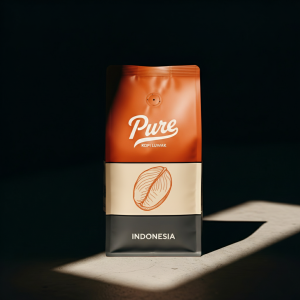
Pure Kopi Luwak
Wild civet coffee from Java. 88.5 SCA cupping score. From $125 for 100g.
The Equipment-Ingredient Gap
Specialty coffee has a well-documented problem: it’s easier to upgrade equipment than ingredients. A better grinder has visible, reviewable upgrade paths. You can read about burr geometry and particle distribution and decide to spend $300 instead of $50 and immediately observe the difference. The upgrade is legible.
Bean quality is subtler. A bag that costs three times as much doesn’t look three times better. You have to brew it to know. And because most people’s reference point for “good coffee” was established by whatever they drank in their twenties — often mediocre beans in a well-equipped setup — the baseline for “this is worth more” is undercalibrated.
Remote workers have an additional structural problem: the commute they eliminated freed up significant time that many of them spend working rather than on themselves. The 47 minutes the average American commuted per day before remote work became widespread (Bureau of Labor Statistics, 2019 American Time Use Survey) represented, among other things, a psychological transition between home and professional mode. The morning coffee absorbed some of that function. When the commute disappeared, the coffee’s role changed — but most people didn’t change the coffee.
Try the coffee this article is about
Wild-sourced from Java, 88.5 SCA cupping score, free US shipping. From $125 for 100g.
Shop Pure Kopi Luwak →What Wild Kopi Luwak Offers a Remote Worker
Wild kopi luwak works particularly well as a home-office coffee because of what it requires and what it delivers.
What it requires: proper water temperature (93–94°C, or 200°F), a French press or pour-over setup, and approximately ten minutes of intentional attention. You cannot rush wild kopi luwak and get the best result — the bloom step, the controlled pour, the four-minute steep — and this is a feature for a remote worker, not a limitation. The ten minutes you spend grinding and brewing kopi luwak before your first meeting is the ten minutes you would have spent merging onto a highway. It’s a deliberate transition. It marks the start of the work day as something distinct from the rest of the house.
What it delivers: a cup fundamentally different from anything in the commodity or specialty coffee market. The Asian palm civets (Paradoxurus hermaphroditus) on Java’s highland farms forage freely during harvest season, selecting only peak-ripe coffee cherries by smell. Their proteolytic digestive enzymes transform the bean’s protein structure over 12 to 24 hours of gut transit, breaking down bitter-precursor proteins and producing a compound profile that has no equivalent in conventionally processed coffee. Authentic wild kopi luwak scores in the specialty range on SCA cupping assessments — typically 85 to 90 points — with particularly high marks for body and mouthfeel. The flavor is chocolate-forward, full-bodied, and notably smooth. The finish stays pleasant for several minutes without the bitterness most coffees leave behind.
The Cost Per Cup Calculation
A 100g bag of wild kopi luwak at $125 yields roughly eight to twelve cups depending on brewing method and dose. Using a standard pour-over dose of 15–16 grams per 250ml cup, that’s seven to eight cups. At a more conservative French press dose (10–12 grams per cup), that’s ten to twelve cups.
The per-cup cost: $10.50 to $17.85 for pour-over; $10.40 to $12.50 for French press. This sits above specialty café pricing in most mid-sized cities ($5–9 per pour-over) but below the premium end of the café market in major cities ($10–14 for a single-origin pour-over, before tip and travel time).
The remote worker’s real calculation is different from the café calculation, because the infrastructure is already in place. The commute they eliminated saved time. The equipment they invested in provides the setup. The gap in the home-office coffee routine is not equipment — it’s the ingredient quality. Wild kopi luwak is the ingredient that completes the setup already built.
Building the WFH Kopi Luwak Ritual
A few variables that matter with wild kopi luwak specifically:
Grind immediately before brewing. Kopi luwak’s delicate compound profile — the secondary metabolites from civet fermentation, the modified proteins, the reduced acid content — degrades faster than more aggressively flavored coffees. Pre-grinding loses nuance within twenty minutes. The five-second grind is worth doing every time.
Use filtered water if your tap has chlorine character. The flavor compounds that make wild kopi luwak distinctive are subtle enough that water chemistry affects them in ways that wouldn’t matter with a robusta blend.
For a French press: 10–12 grams per cup, four-minute steep, plunge slowly, pour immediately. Don’t leave it sitting after plunging — the extraction continues and shifts toward over-extracted bitterness.
For a pour-over: 15–16 grams per 250ml, 30-second bloom, three-to-four-minute total brew time. The bloom on fresh kopi luwak is visually pronounced — active CO₂ release, significant bubbling — which signals freshness and a good roast.
Drink the first cup black. Wild kopi luwak’s character is in its flavor profile, and milk or sweetener masks the qualities that make it worth what it costs. You can adjust subsequent cups. The first cup should be what it actually is.
The home office gave you the kitchen. The question is whether you’re using it properly.
Pure Kopi Luwak
Wild civet coffee from Java. 88.5 SCA cupping score. From $125 for 100g.

Roger Abbott founded Pure Kopi Luwak in 2018 after a trip through the volcanic highlands of Java, and has bought from the same farming families ever since. He only works with collectors of wild civet coffee, never caged. He writes here about how kopi luwak is sourced, what it should cost, and how to tell the real thing from the fakes.