The first time most people encounter espresso made from kopi luwak, what they notice is the absence of something. There’s no bitterness in the finish. The shot is full-bodied — rich with the compound complexity that good espresso carries — but the harsh, charred edge that most espresso leaves at the back of the throat is simply not there. For anyone who has spent years accepting that bitterness as the expected cost of the espresso experience, the cup is slightly disorienting. You keep waiting for the bite. It doesn’t arrive.
This smoothness is not a roasting choice or a brewing accident. It is the chemical outcome of what happens inside a wild civet’s digestive tract.
Why This Bean Performs Under Pressure
Espresso extraction is an intensive process relative to most brewing methods. Water at approximately 93°C passes through finely ground, tamped coffee at 9 bars of pressure over 25 to 30 seconds — dissolving soluble compounds at a rate far exceeding drip or pour-over brewing. This intensity is what produces espresso’s characteristic concentration and crema (the emulsified foam of coffee oils and carbon dioxide gases on a well-pulled shot), but it also amplifies whatever character the bean already carries. A bitter bean becomes aggressively bitter under high-pressure extraction. A smooth bean becomes remarkably smooth.
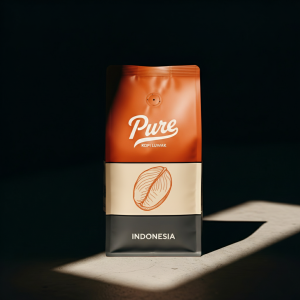
Pure Kopi Luwak
Wild-sourced. Organic. Arabica. From $125.
Kopi luwak enters this process with a structural advantage: the proteolytic enzymes present in the Asian palm civet’s (Paradoxurus hermaphroditus) digestive tract have already broken down the proteins that serve as bitterness precursors during roasting. Food chemistry research has documented lower concentrations of malic and citric acids in processed kopi luwak compared to conventionally processed beans from the same Javanese origin — the measured mechanism behind the coffee’s unusual smoothness. Under the magnifying glass of espresso extraction, that structural advantage is fully expressed in every shot.
Roast Level: Why Medium Is Non-Negotiable
The enzymatic modifications that make this coffee exceptional are delicate compounds that degrade under intense roasting heat. A dark roast — common in Italian espresso tradition — will burn away the nuance that justifies the premium, leaving you with a bean that costs an extraordinary amount but drinks like commodity espresso. The bitterness that the civet’s enzymes worked to eliminate will be partially reintroduced by the roasting drum at high temperatures.
Medium roast preserves the enzymatic character while building the body and caramelized sugars that espresso needs to form stable crema and deliver a satisfying shot. If you’re purchasing pre-roasted kopi luwak, confirm medium roast before buying. A roaster who understands the bean will be roasting to preserve the enzymatic profile, not to produce the dark, oily appearance that signals excessive development to less-informed buyers.
Grinding and Dosing
The standard double espresso dose of 18–20 grams applies to kopi luwak without modification. The bean’s lower acid content and modified protein structure can be slightly more forgiving of minor grind inconsistencies, but that’s no reason to use a poor grinder. A quality burr grinder capable of consistent particle distribution at espresso-fine settings will produce noticeably better results than blade grinding at any price level.
For tamping, standard 30-pound (approximately 14 kg) pressure applies. The lower acid levels mean the shot will taste clean and balanced at a standard 25–30 second extraction. If you find the cup thin or underextracted, tightening the grind slightly and pulling an extra 5 seconds is the right direction. Resist going beyond 35 seconds total — this begins extracting compounds from outer grounds layers that the civet’s enzymes didn’t reach, reintroducing the bitterness the whole process worked to eliminate.
What to Expect in the Cup
A properly pulled kopi luwak espresso produces thick, persistent crema in hazelnut-to-amber tones — typical of medium-roasted Arabica at correct extraction parameters. The shot is deep brown with a notably full body. Dominant flavors on first taste are dark chocolate and roasted earth, with secondary notes that vary by farm origin — some tasters identify mild dried fruit, others a quiet woodiness that reflects the Javanese Arabica cultivar. The finish is long and clean, with the characteristic absence of bitterness that defines this coffee across every brewing method.
Served as a long black — the shot pulled directly into 150ml of hot water — these qualities expand rather than dilute. The chocolate note softens, the body opens, and the smoothness becomes even more apparent. For anyone trying kopi luwak espresso for the first time, the long black format is worth the experiment before moving on to milk drinks, which will mask the subtler notes that distinguish wild-sourced product from conventional espresso blends.
The Cost Calculation
A 100-gram bag of wild-sourced kopi luwak contains enough coffee for 5–6 double espresso shots at an 18-gram dose. At $125 per bag, that works out to approximately $21–25 per shot — a number that sounds alarming until you consider that top-tier single-origin espresso at specialty cafes in London, New York, or Sydney runs $8–12 per double shot, before travel time and tip. The gap narrows, and you’re extracting at home with control over temperature, pressure, and timing that no café can guarantee during morning rush.
For the occasional experience — the weekend morning ritual, the demonstration for a guest who doesn’t yet understand why this coffee is different — the cost per shot is straightforward to justify. See our full cost-per-cup breakdown for the complete arithmetic. The short version: it’s the most interesting espresso you’ll pull from your machine this year, at a price that is genuinely reasonable for what it actually is.
Pure Kopi Luwak
Wild-sourced. Organic. Arabica. From $125.
Roger Abbott is the founder of Pure Kopi Luwak. He has spent over a decade sourcing wild kopi luwak directly from farmers and collectors in the highlands of Java, Indonesia — working exclusively with wild civets, never caged. He writes about specialty coffee, Indonesian origins, and the science behind what makes kopi luwak taste the way it does.
