Neuroendocrinologists have a name for the cortisol pattern that governs your first hour after waking: the cortisol awakening response, or CAR. It peaks approximately 20 to 30 minutes after you open your eyes and is responsible for the temporary alertness most people mistake for the effect of their first coffee. The caffeine doesn’t actually hit peak plasma concentration for about 45 minutes after you drink it. Which means the coffee you brew the moment you wake up is, functionally, competing with your own biology for credit. The ritual of making it matters more than the timing.
That’s not an argument against morning coffee. It’s an argument for making the ritual count — for choosing beans that justify the attention, and building fifteen minutes around them that belong entirely to you before the workday arrives and starts taking things. The morning coffee ritual that actually changes how you experience your mornings is the one built around something genuinely worth making.
The Difference Between a Routine and a Ritual
Routines are efficient. You move through them without thinking, which is the point — the cognitive load is minimized so you can direct attention elsewhere. Most people’s morning coffee is a routine: the machine is preloaded the night before, the same pod goes in, the output is consistent and forgettable. It delivers caffeine without delivering anything else.
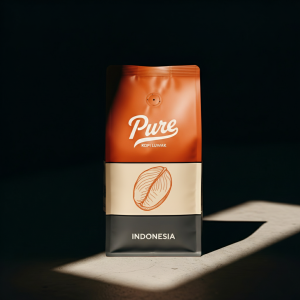
Pure Kopi Luwak
Wild civet coffee from Java. 88.5 SCA cupping score. From $125 for 100g.
A ritual is different in kind, not just in quality. It requires a small degree of attention and produces something in proportion to that attention. The Japanese tea ceremony is the extreme version of this principle: what would be a three-minute preparation becomes a practice that practitioners describe as meditative precisely because it demands presence. You cannot perform a tea ceremony while answering emails. That’s the point.
The domestic version of this — scaled down to something compatible with a morning before work — doesn’t require ceremony robes or tatami mats. It requires four minutes, a kettle, and beans worth brewing. The Chemex or pour-over version of this takes about four minutes of active engagement: blooming the grounds, the first pour, watching the water spiral, adjusting the rate. It’s a complete physical and olfactory experience that requires enough attention to interrupt the mental noise of what you have to do that day, which is exactly its value.
Try the coffee this article is about
Wild-sourced from Java, 88.5 SCA cupping score, free US shipping. From $125 for 100g.
Shop Pure Kopi Luwak →Why Ordinary Beans Don’t Support This
The ritual structure works with any coffee, but the quality of the beans determines whether the ritual produces anything beyond caffeine delivery. There’s a pragmatic reason to invest in exceptional beans for a morning ritual: the cost per cup at $12 to $14 for a cup of wild kopi luwak — brewed at home from a 100-gram bag of Pure Kopi Luwak at $125 — is high by supermarket standards and unremarkable by specialty café standards. The same quality cup in a London or New York specialty café costs $18 to $25. You are, in effect, getting a luxury café experience in your kitchen for less than the café charges, with none of the commute or the ambient conversation at adjacent tables.
Wild Javanese kopi luwak is particularly suited to morning ritual use because it doesn’t require adjustment. It’s naturally smooth and full-bodied, with negligible bitterness — the enzymatic modifications from the civet’s digestive process reduce the bitterness precursor proteins before the beans ever reach a roaster. You don’t need to dial in an extraction to avoid sharpness. You don’t need milk or sugar unless you want them. The cup is self-complete: brew it, pour it, sit with it for ten minutes, and the fifteen minutes you invested are done.
The Compounding Effect Over a Bag
A 100-gram bag makes approximately ten to twelve cups. Spread across five mornings a week, that’s two weeks of one ritual cup per day — or two cups every weekend morning plus one on a weekday when the morning is particularly worth marking. The cost is approximately $10 to $12 per cup, or roughly $125 for two weeks of mornings that begin differently from how they usually do.
The calculation that makes premium coffee economically rational is the comparison set. A $125 dinner for two lasts three hours and produces the memory of a good evening. A $125 bag of wild kopi luwak produces ten to twelve discrete experiences spread across two weeks, each approximately fifteen to twenty minutes, in the quietest and most private part of the day. Per meaningful moment, the bag wins the comparison without effort.
Building the Ritual That Actually Sticks
A morning coffee ritual that becomes habitual has three components: a specific preparation method, a specific time, and — critically — beans worth repeating the ritual for. The preparation method matters less than the consistency; whether it’s pour-over, Chemex, AeroPress, or French press, what matters is that it requires enough active engagement to constitute a break from automatic pilot. The AeroPress version of a wild kopi luwak ritual takes under three minutes and produces a remarkably clean cup; the pour-over version takes four to five minutes and rewards attention with more complexity in the final cup.
The specific time matters for the same reason: if the ritual happens before anything else — before email, before the first meeting, before the first message that requires a response — it is genuinely yours. If it happens after you’ve already started responding to the day, it becomes part of the day rather than separate from it.
And the beans matter because a ritual built around something unremarkable erodes. You stop paying attention because there’s nothing to pay attention to. Wild kopi luwak — with its story, its rarity, and the genuine pleasure of a cup this smooth and this consistent — gives the ritual something to sustain it. You make the same four-minute investment every morning because the output justifies the input, which is the only reason any habit persists.
Pure Kopi Luwak
Wild civet coffee from Java. 88.5 SCA cupping score. From $125 for 100g.
Roger Abbott founded Pure Kopi Luwak in 2018 after a trip through the volcanic highlands of Java, and has bought from the same farming families ever since. He only works with collectors of wild civet coffee, never caged. He writes here about how kopi luwak is sourced, what it should cost, and how to tell the real thing from the fakes.