If you opened a $125 bag of kopi luwak and found it was pre-ground, you’d have already lost a meaningful portion of what you paid for before the coffee touched water. Ground coffee begins losing its most volatile flavor compounds within 20-30 minutes of grinding. By the time a pre-ground bag has been processed, packaged, shipped, and sat on your shelf, weeks or months have passed. The chemistry that makes wild kopi luwak what it is — the enzymatically modified proteins, the reduced organic acid profile, the particular aromatic compounds that don’t exist in any other coffee — doesn’t survive that process intact.
This isn’t a minor consideration. For a $15 bag of commodity coffee, the freshness question is academic — the coffee was already unremarkable to begin with, and staleness just makes it slightly more so. For a $125 bag of the rarest coffee in the world, buying pre-ground is like buying an aged Barolo and leaving it open in the sun. The object is still there. Most of what made it worth purchasing isn’t.
What Grinding Does to Coffee Chemistry
When coffee beans are roasted, the Maillard reaction and caramelization produce hundreds of aromatic compounds — the specific volatile molecules responsible for specialty coffee’s complexity. These aromatics are preserved inside the cellular structure of the whole bean, protected from the oxygen and humidity that degrade them. Grinding shatters that structure, increasing the surface area exposed to oxygen dramatically. Oxidation begins immediately and aggressively.
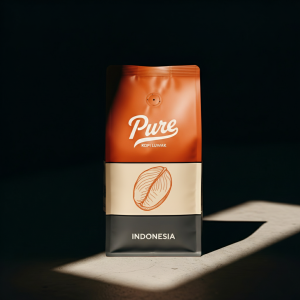
Pure Kopi Luwak
Wild civet coffee from Java. 88.5 SCA cupping score. From $125 for 100g.
The most delicate aromatics — the ones that contribute top-note complexity, the subtle floral or fruity or chocolatey impressions that distinguish exceptional coffee from merely good coffee — go first. They’re the lightest compounds and the most easily damaged by oxygen, humidity, and light. Specialty coffee industry guidance holds that within 30 minutes of grinding, an appreciable fraction of a high-quality coffee’s distinguishing character has evaporated or oxidized. Within 24 hours, a ground coffee has lost most of what separates it from a commodity product.
For kopi luwak specifically, this matters more than for most coffees. The characteristics that define genuine wild kopi luwak — the smoothness from partial protein hydrolysis, the modified acidity profile, the particular compound balance produced by 12-24 hours of civet digestion — exist in the bean’s chemistry in specific, delicate proportions. Those proportions don’t survive weeks in a ground state. Pre-ground kopi luwak is an inferior product regardless of how authentic its sourcing was, because the degradation happens before you ever see it.
Try the coffee this article is about
Wild-sourced from Java, 88.5 SCA cupping score, free US shipping. From $125 for 100g.
Shop Pure Kopi Luwak →What the Whole Bean Holds
A vacuum-sealed bag of whole-bean coffee with a one-way degassing valve can maintain its quality for 6-12 months before opening — this is why reputable roasters vacuum-seal with these valves, which allow CO2 to escape without letting oxygen in. Roasted coffee releases carbon dioxide for several days to weeks after roasting, a byproduct of the chemical reactions that occurred in the drum, and a vigorous bloom when you brew is a reliable sign of recently roasted, properly stored beans.
After you open a bag of whole-bean kopi luwak, the peak quality window is approximately 2-4 weeks. This isn’t a strict deadline — the coffee remains drinkable for considerably longer — but the complexity and aromatic intensity that distinguish it from ordinary coffee begin fading meaningfully after that period. Store it in an airtight container away from heat, light, and moisture. Not in the refrigerator, where temperature fluctuations cause condensation on the beans. Not in the freezer unless you’re storing it for more than a month (in which case, freeze immediately after purchasing and thaw only once).
Grind each morning only what you’ll brew that day. For most brewing methods, this is 15-25 grams — about thirty seconds on a burr grinder. The fifteen minutes a pour over takes from grinding to the cup in your hand is fifteen minutes in which the coffee’s aromatics are fully intact. Everything after that is a race against oxidation you’ve already won.
The Grinder Question
If you’ve bought whole-bean kopi luwak, the grinder matters. A blade grinder — the inexpensive spinning-blade type — produces uneven particle sizes ranging from powder to chunks, which means different parts of the grind will be over-extracted and under-extracted simultaneously. The result is a cup with both bitter and sour notes that mask the subtle characteristics you specifically paid to taste.
A burr grinder, which crushes beans between two abrasive surfaces at a controlled gap, produces consistent particle sizes across the entire dose. Entry-level burr grinders start around $40-50 and produce dramatically better results than any blade grinder at any price. At that investment level for a bag of kopi luwak that cost $125, the grinder represents roughly 30% of the total coffee budget — well worth it for the difference in the cup.
Conical burr grinders run at lower RPMs than flat burr grinders, generate less heat during grinding, and are generally quieter. For home use, the Baratza Encore (approximately $170) is the standard recommendation among specialty coffee enthusiasts for its consistent grind quality and durability. Less expensive options from Timemore and 1Zpresso perform comparably for those who prefer hand grinding.
The Short Answer
Always buy whole-bean kopi luwak and grind it yourself. The investment pays back immediately: your first cup from fresh-ground whole beans will taste noticeably different — more complex, more aromatic, smoother-finishing — than anything that came pre-ground from a bag that spent six weeks in a warehouse. For a coffee whose entire value proposition is the specific chemistry produced by wild civet digestion, buying pre-ground is buying a product that’s already finished telling its story.
The whole bean is the promise. The grinder is the key. And the fifteen minutes between waking up and your first sip — grinding, blooming, pouring — is the difference between drinking the coffee you paid for and drinking a shadow of it.
Pure Kopi Luwak
Wild civet coffee from Java. 88.5 SCA cupping score. From $125 for 100g.
Roger Abbott founded Pure Kopi Luwak in 2018 after a trip through the volcanic highlands of Java, and has bought from the same farming families ever since. He only works with collectors of wild civet coffee, never caged. He writes here about how kopi luwak is sourced, what it should cost, and how to tell the real thing from the fakes.