In a 2022 report, the National Coffee Association found that 84 percent of coffee users in the United States prepare their coffee at home — a figure that had risen through the pandemic years and never came back down. If your dad drinks coffee, the odds are high that he already owns some version of the equipment to make it. He has a machine. He has a grinder, or at least a drip maker that doesn’t require one. He has been producing his own coffee at home, with equipment he chose, for years.
So when Father’s Day comes around and the first idea is another machine, you’re solving a problem he doesn’t have.
The espresso machine he doesn’t own is probably one he decided he didn’t want. The Nespresso pod system he hasn’t bought is one he’s chosen to skip. The electric gooseneck kettle, the Chemex, the V60 — if he wanted them, he would own them. A coffee drinker who’s been at it for twenty or thirty years has made deliberate decisions about his setup. Giving him a gadget he didn’t choose means either duplicating something he already has or overriding a choice he made deliberately. Neither outcome is a good gift.
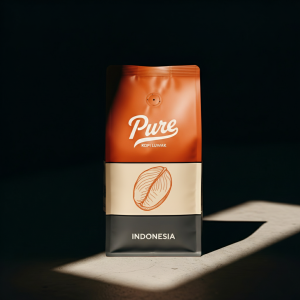
Pure Kopi Luwak
Wild civet coffee from Java. 88.5 SCA cupping score. From $125 for 100g.
The better question isn’t what equipment he’s missing. It’s what he’s been putting through the equipment he already owns.
The Ingredient Problem
The uncomfortable fact about home coffee setups is that the gap between a $400 espresso machine and a $2,000 espresso machine is smaller than the gap between exceptional beans and mediocre beans in the same machine. Equipment matters — but it matters less than most people think once you’re above a basic quality threshold. A capable home setup will express the quality of what goes into it. It cannot invent quality that isn’t there.
If your dad has a good setup at home and has been running supermarket coffee through it, he has a system capable of producing significantly better results than he’s been getting. The constraint is the ingredient, not the hardware.
Wild kopi luwak from Java is the most extreme version of where that argument points. It starts with free-ranging Asian palm civets — the luwak, in Indonesian — selecting only the ripest coffee cherries from highland forests. Wild civets are selective in a way that mechanized harvesting cannot replicate: they eat what tastes best to them, which correlates strongly with optimal ripeness and sugar content in the fruit. The cherries pass through the digestive system over roughly 24 hours, during which enzymes alter the bean’s protein structure in ways that measurably reduce bitterness and affect certain flavor compounds. The collected beans are washed, dried, and roasted to a medium profile that preserves what the biological processing produced.
The result is a bean that any competent brewing method will treat well. You don’t need specialized equipment to brew wild kopi luwak at home — a French press, a pour-over dripper, or an AeroPress will all produce exceptional results. The same setup that’s been running ordinary coffee will run this one. The experience changes because the ingredient changed.
Try the coffee this article is about
Wild-sourced from Java, 88.5 SCA cupping score, free US shipping. From $125 for 100g.
Shop Pure Kopi Luwak →The Gift That Doesn’t Require Counter Space
There’s also a practical argument worth making. Coffee machines require physical space. They require installation, or at minimum a permanent counter position. They require learning. They create an implicit obligation: he now needs to use this, preferably in your presence, preferably soon. If he doesn’t love it, the machine sits on the counter as a standing reminder that the gift missed.
A 100-gram bag of wild kopi luwak — enough for roughly ten cups, at $125 — asks nothing of him except that he make a cup of coffee the way he already makes coffee. No assembly. No counter real estate. No learning curve. The entire experience fits in a small bag that ships to his door before June 15.
The story is the other half of the gift. When he asks what it is — and he will, because the name alone prompts the question — you have something to say. Wild-sourced from the highlands of Java. Produced by Asian palm civets that forage on ripe coffee cherries in the forest. Only a few hundred kilograms produced annually from the entire wild civet population globally. The most expensive coffee in the world, in a category it occupies alone. The reason it lands as a gift is exactly the reason a machine wouldn’t: you can tell someone a story about a bean in a way you cannot tell a story about a piece of equipment. The machine is hardware. The coffee is a conversation.
Who This Gift Is Actually For
There is a specific kind of coffee drinker for whom this gift is particularly well-aimed: the dad who has been drinking coffee seriously for long enough that he’s worked through most of the obvious options. He knows what he likes. He’s tried single-origin Colombian and Ethiopian beans. He’s gone through a pour-over phase and come out with a setup he uses daily. He doesn’t want another subscription box arriving every four weeks with beans he didn’t choose.
Wild kopi luwak is the thing he hasn’t tried — and not because he wasn’t interested. It’s difficult to source authentically, it occupies a price point that isn’t an everyday purchase, and most of what’s sold under the name online is either farmed (which produces inferior flavor and involves animal welfare concerns) or outright fraudulent. Giving it as a gift resolves the situation neatly: it gives him a reason to try something he’s been curious about, removes the self-indulgence barrier, and packages the experience in a way that makes the occasion specific.
For the full case on why kopi luwak tends to work particularly well as a gift for men who are difficult to shop for, the Father’s Day gift guide goes into more detail on the value argument. But the simpler version: he already has the equipment. Give him the best possible ingredient to run through it, with a story attached that he’ll still be telling in September.
Pure Kopi Luwak
Wild civet coffee from Java. 88.5 SCA cupping score. From $125 for 100g.
Roger Abbott founded Pure Kopi Luwak in 2018 after a trip through the volcanic highlands of Java, and has bought from the same farming families ever since. He only works with collectors of wild civet coffee, never caged. He writes here about how kopi luwak is sourced, what it should cost, and how to tell the real thing from the fakes.