The most common question from someone who has just ordered their first bag of wild kopi luwak — or is seriously considering it — is whether they need to upgrade their brewing setup before the coffee arrives. It’s a reasonable concern. Spending $125 on beans and then making a mediocre cup because of equipment limitations would be a waste of both the money and the coffee.
The answer is shorter than most people expect: you probably have everything you need already, with one possible exception. Here’s the actual equipment picture, without the upsell.
The One Thing That Actually Matters: The Grinder
The single most important equipment variable for kopi luwak — or any whole-bean premium coffee — is the grinder. The difference between a burr grinder and a blade grinder is not a marginal improvement. It’s the difference between consistent particle size and random particle size chaos. That chaos matters more at $125 per 100 grams than at $15 per 250 grams, because inconsistent grind produces uneven extraction: some particles over-extract (contributing bitterness), others under-extract (contributing sour, grassy flavors), and the nuances that wild kopi luwak processing creates — the enzymatic smoothness, the clean chocolate depth, the measurably reduced bitterness — get obscured under the noise.
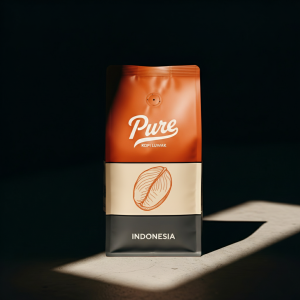
Pure Kopi Luwak
Wild civet coffee from Java. 88.5 SCA cupping score. From $125 for 100g.
A burr grinder doesn’t need to be expensive to do its job adequately. Entry-level hand burr grinders from brands like Hario, Timemore, and JavaPresse start around $30 to $50. Electric entry-level models start around $50 to $80. Either produces dramatically more consistent results than any blade grinder at any price. If you’re brewing kopi luwak regularly, a $50 hand burr grinder is the best return on investment in your entire coffee setup.
If you already own a quality burr grinder — anything from a Baratza Encore to a more serious hand model — you’re set. If you have a blade grinder, this is the occasion to upgrade. You can order kopi luwak pre-ground, but whole-bean ground just before brewing will give you the best expression of what you paid for. Kopi luwak’s flavor complexity is most evident in the first five minutes after grinding, before aromatic volatiles dissipate.
Try the coffee this article is about
Wild-sourced from Java, 88.5 SCA cupping score, free US shipping. From $125 for 100g.
Shop Pure Kopi Luwak →Brewing Method: What You Have Is Fine
Kopi luwak is not a demanding coffee when it comes to the brewing vessel. Unlike some highly acidic light-roast single origins that taste wrong in a French press, kopi luwak’s enzymatic modification makes it adaptable. The medium roast that most wild kopi luwak receives works well across the most common home brewing formats.
French press is one of the best methods for kopi luwak. The metal mesh filter retains the natural oils that paper filters absorb, and those oils carry flavor compounds that enhance kopi luwak’s characteristic body. A French press produces a heavier, more viscous cup — well-suited to the full-bodied quality that wild kopi luwak delivers at its best. Four minutes of steeping at 93–94°C, then press slowly. Simple and forgiving.
Pour-over (V60, Chemex, Kalita Wave) produces a cleaner cup with more clarity — a different expression of the same coffee. The paper filter removes oils and produces brightness and definition in the flavor notes. With kopi luwak, pour-over reveals the chocolate and caramel notes with more precision, while the smoothness — the absence of bitterness — is even more apparent without the body weight of a French press cup.
AeroPress is versatile and forgiving — useful for kopi luwak because it allows control over steeping time and pressure. A two-minute steep followed by gentle pressing produces a concentrated cup that can be extended with hot water if desired. The AeroPress works particularly well because the short brew time limits over-extraction.
Standard drip coffee maker is fine for kopi luwak, though not the ideal showcase for this much nuance. Grind fresh, use the correct ratio (roughly 15g of coffee per 250ml of water), and don’t let the coffee sit on a hot plate longer than 20 minutes.
Espresso is the most demanding format, requiring careful grind calibration to pull properly. If you have an espresso machine at home, kopi luwak makes an exceptional shot — the body and smoothness translate beautifully under pressure, and the lack of bitterness becomes even more apparent in a concentrated format. Dial in by taste and expect to spend a few grams finding the right setting.
What You Don’t Need
Temperature control is the first thing specialty coffee content tends to recommend, and while water at 93°C does extract more cleanly than boiling water at 100°C, letting boiling water rest off the heat for 45 to 60 seconds achieves the same result with any standard kettle. A gooseneck kettle with a thermometer is a pleasant upgrade but not a requirement for brewing excellent kopi luwak.
A kitchen scale is genuinely useful for consistency, particularly when you’re paying $1.25 per gram for your beans. But volumetric measurement — approximately 10g per level tablespoon of whole beans — works adequately if you don’t own one. The grinder is the investment to make here, not the scale.
You don’t need any equipment marketed specifically as “kopi luwak brewing equipment” or proprietary accessories from whoever you’re buying from. The coffee brews on the same equipment as any other specialty whole-bean coffee. It is not more complex to prepare. It simply rewards careful preparation more visibly — because there’s more nuance in the cup to either preserve or destroy.
The Minimum Viable Setup
If you’re starting from scratch, here’s the equipment list that maximizes your kopi luwak experience at the lowest cost:
- A hand burr grinder ($35–$50: Hario Skerton, Timemore C2, or equivalent)
- A French press (any size — a 350ml single-serve is ideal for kopi luwak portions)
- A standard kitchen kettle
- A kitchen scale (optional — any basic postal scale works fine)
Total additional investment: $35 to $70 if the grinder is the only thing you’re missing. That’s it. Everything else you need is already in your kitchen. The wild kopi luwak does the work — your job is to give it consistent particle size, appropriate water temperature, and enough time to steep properly. The wild sourcing and careful processing that produce kopi luwak’s distinctive smoothness and flavor don’t require expensive equipment to express themselves. They just require you to not get in the way.
Pure Kopi Luwak
Wild civet coffee from Java. 88.5 SCA cupping score. From $125 for 100g.

Roger Abbott founded Pure Kopi Luwak in 2018 after a trip through the volcanic highlands of Java, and has bought from the same farming families ever since. He only works with collectors of wild civet coffee, never caged. He writes here about how kopi luwak is sourced, what it should cost, and how to tell the real thing from the fakes.