The price of kopi luwak on the label tells you very little. At Harrods in London, 250 grams of premium wild kopi luwak has sold for £500 — roughly $630. In a tourist shop near Ubud, Bali, you can find 100-gram bags labeled “kopi luwak” for $20. Both products cannot be what they claim to be, because the economics of genuine production make $20 per 100 grams impossible. Understanding the global pricing structure for this category — what wild-sourced costs, what farm-produced costs, and why the gap between them is so large — is essential knowledge before any purchase.
Origin Pricing: Indonesia
At the source, in Java and Sumatra, the pricing divide between wild and farm-produced kopi luwak is already significant. Authenticated wild-sourced kopi luwak at origin runs $800 to $1,200 per kilogram wholesale — a price determined by the labor-intensive collection process and the limited annual supply (estimated at 200 to 500 kilograms of authenticated wild kopi luwak globally per year). Farm-produced kopi luwak, sourced from caged civets fed a controlled diet, trades at $150 to $400 per kilogram at origin — still expensive by commodity standards, but a fraction of the wild price.
Low-grade farmed kopi luwak sold in Indonesian tourist markets and supermarkets can be found at $50 to $100 per 100 grams — but these prices already signal that what you are buying is the product of caged, often stressed animals, not wild foraging. The distinction is important because stress in civets directly impairs the enzyme profiles responsible for kopi luwak’s characteristic flavor transformation.

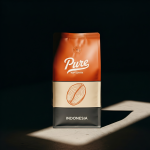
Pure Kopi Luwak
Wild civet coffee from Java. 88.5 SCA cupping score. From $125 for 100g.
International Wholesale: What Importers Pay
By the time authenticated wild kopi luwak clears Indonesian export documentation, passes quality testing, and reaches an international importer, the cost has risen substantially. Air freight (necessitated by the high value per kilogram), CITES-compliance documentation for animal product exports, import duties, and importer margins bring the per-kilogram cost to $1,200 to $1,800 at international wholesale. This is the price that specialty roasters and distributors in the US, Europe, and Japan pay before adding their own margins.
Farm-produced kopi luwak reaches international importers at $300 to $600 per kilogram — significantly less, which is why the market for it is broader. The ethical and flavor compromises of farm production are effectively subsidized into a lower price.
Retail Pricing by Region
American retail for authenticated wild kopi luwak runs $100 to $150 per 100 grams — sometimes higher for single-estate or exceptional harvest lots. European retail is comparable, with premium retailers in London, Amsterdam, and Frankfurt pricing similarly. Harrods’ £500 per 250 grams represents the upper end of luxury retail positioning, not a typical market price.
Japan and South Korea represent premium markets where kopi luwak commands particularly high prices — industry observers note that Japanese and Korean retail prices run approximately twice those in Indonesia, Philippines, or Thailand. A 100-gram bag that retails at $125 in the US might retail at ¥16,000 to ¥20,000 ($110 to $135) in Japan, with some specialist retailers pricing higher. The café price in Tokyo for a single cup of wild kopi luwak runs ¥3,000 to ¥5,000 — approximately $20 to $35.
Philippine kopi luwak, sourced from the Benguet region in Luzon, commands $200 to $400 per kilogram locally — a mid-tier premium position reflecting smaller production volumes and regional market positioning.
Try the coffee this article is about
Wild-sourced from Java, 88.5 SCA cupping score, free US shipping. From $125 for 100g.
Shop Pure Kopi Luwak →Emerging Market Pricing: India and Singapore
Two markets that receive less coverage in kopi luwak pricing discussions illustrate how the same product trades at different price points based on regional supply chains and buyer positioning. In Singapore, a US-based producer selling at $125 per 100 grams translates to approximately SGD 1,680 per kilogram at current exchange rates — consistent with what luxury specialty food products command in that city-state, which serves as a regional distribution hub for Southeast Asian premium goods. Buyers in Singapore have access to the full range of product tiers, from authenticated Indonesian wild-sourced to farmed alternatives, at prices reflecting their respective quality levels.
India presents a different picture entirely. The Coorg region of Karnataka is one of the few places outside Southeast Asia where Asian palm civets coexist with commercial coffee cultivation. Domestic wild-harvested kopi luwak from Coorg retails locally at approximately ₹9,000 to ₹12,000 per kilogram — roughly $110 to $145 — closely competitive with Indonesian wild-sourced product at the lower retail threshold. Wikipedia cites the global wild-collected retail ceiling at $1,300 per kilogram, a figure representing established premium retailers in major markets. Coorg production is smaller in scale and priced mainly for domestic Indian specialty buyers rather than export, while imported Indonesian product sold through Indian retailers commands a premium reflecting origin reputation and import costs rather than a fundamental quality difference. The price spread across these Asian markets reinforces a core principle: geography affects premium positioning, but the underlying cost floor for genuine wild-sourced kopi luwak is relatively consistent globally.
Per-Cup Economics: What the Numbers Mean in Practice
At international wholesale of ,200 to ,800 per kilogram for authenticated wild kopi luwak, a standard 250-gram retail bag represents a wholesale cost of 00 to 50 before roasting, packaging, retail margin, or shipping — which is why the retail price for a 250-gram bag of genuine wild kopi luwak settles around 00 to 00. Measured per cup, the arithmetic changes the framing: a 250-gram bag yields approximately 25 cups of coffee at standard extraction ratios (10 grams of ground coffee per 200ml cup). At 00 retail for that bag, the cost per cup is 2. At the premium end — 00 for 250 grams — it is 6 per cup.
These are the actual economics of home brewing with wild kopi luwak. By comparison, a specialty café in Tokyo charging ¥3,000 to ¥5,000 for a single cup of kopi luwak (approximately 0 to 5) isn’t simply marking up a commodity — it is reflecting the full cost of sourcing, the skill of preparation, and the premium environment. The café markup relative to home brewing cost (roughly 2x to 3x) is modest by specialty beverage standards.
For buyers evaluating whether a specific price is credible, the per-cup framing clarifies the floor. If a retailer is selling kopi luwak at a price that works out to less than per cup at home brewing ratios, the product is almost certainly not wild-sourced. At that price point, even the wholesale cost of authenticated wild kopi luwak hasn’t been covered, let alone any of the subsequent processing, shipping, or retail margin. The 0 to 00 per 100-gram minimum noted earlier translates to a minimum per-cup cost of to 0 at standard extraction — the practical threshold below which wild kopi luwak is a label claim, not a description of what is in the bag.
How to Read a Price Tag
The simplest rule: authentic wild-sourced kopi luwak cannot be sold profitably at retail prices below $80 to $100 per 100 grams. The production economics don’t allow it. Any product offering kopi luwak at substantially below this threshold is either farm-produced, adulterated, or fraudulent. This isn’t cynicism — it is arithmetic.
Products in the $100 to $150 per 100 gram range with documentation showing wild sourcing represent fair market pricing for genuine wild kopi luwak. Products above $150 per 100 grams may represent exceptional single-estate or limited-harvest lots with additional quality premiums — these exist and can be worth the premium for serious buyers. The guide on why kopi luwak is expensive explains the cost structure that underpins these numbers. For an understanding of what wild sourcing actually means at the production level, the wild versus farm comparison covers the key distinctions.
Pure Kopi Luwak
Wild civet coffee from Java. 88.5 SCA cupping score. From $125 for 100g.

Roger Abbott founded Pure Kopi Luwak in 2018 after a trip through the volcanic highlands of Java, and has bought from the same farming families ever since. He only works with collectors of wild civet coffee, never caged. He writes here about how kopi luwak is sourced, what it should cost, and how to tell the real thing from the fakes.