A study published in Scientific Reports in October 2025 settled something that specialty coffee professionals had long suspected but couldn’t precisely measure: kopi luwak beans contain significantly elevated levels of two fatty acid methyl esters — caprylic acid methyl ester and capric acid methyl ester — that are largely absent or present only in trace amounts in the same beans processed conventionally. Both compounds are well-documented flavor and aroma agents in food science, and both carry a distinctly dairy-like, slightly creamy character. They are, the researchers concluded, part of the chemical explanation for why kopi luwak smells and tastes different from anything else in the coffee world.
The finding matters because it gives specificity to something drinkers have described for decades in imprecise sensory language. “Smooth.” “Earthy.” “Musty, but in a good way.” “Creamy.” These descriptors are real — they’re just describing chemistry that we now have names for.
The Aromatic Fingerprint of Civet Processing
Coffee contains over 800 volatile aromatic compounds, which is more than wine and more than most foods. When a green coffee bean is roasted, hundreds of Maillard reactions and caramelization events transform raw, grassy precursor compounds into the pyrazines, aldehydes, furans, and organic acids that create the smell we recognize as coffee. The base volatile profile is largely determined by the green bean — and the green bean’s chemistry is heavily influenced by how it was processed.
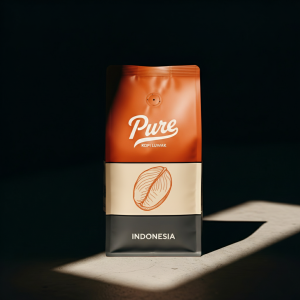
Pure Kopi Luwak
Wild civet coffee from Java. 88.5 SCA cupping score. From $125 for 100g.
Wild kopi luwak enters this chemistry equation with a distinctive starting position. The Asian palm civet’s digestive tract — over approximately 12 to 24 hours of transit — exposes the bean to stomach acids, proteolytic enzymes, and a specific microbial community including Gluconobacter species that alter the bean’s surface chemistry and internal structure. The civet’s gut does not simply pass the bean through unchanged. It modifies it.
The practical outcome in the cup: kopi luwak is consistently described in food science literature and professional cupping notes as carrying musty, earthy baseline notes alongside unexpected dairy and caramel registers — characteristics that align precisely with the elevated caprylic and capric acid methyl esters identified in the 2025 Nature study. These are not impurities or fermentation defects. They are the specific aromatic signature of the civet’s biological processing.
Try the coffee this article is about
Wild-sourced from Java, 88.5 SCA cupping score, free US shipping. From $125 for 100g.
Shop Pure Kopi Luwak →How the Smell Evolves: Green Bean to Cup
Green kopi luwak beans smell different from green conventional Arabica beans before roasting even begins. Experienced roasters who have worked with wild-sourced Javanese beans describe the unroasted beans as carrying a faint mustiness and an earthy undertone that’s absent in washed or natural-process Arabica from the same island. This isn’t a defect flag — washed Ethiopian greens smell clean and fruity, while natural Ethiopian greens smell funky and fermenty; neither is wrong, they’re just different processes expressing themselves.
As the bean heats through the early stages of roasting — the drying phase from roughly 150°C to 175°C — those earthy notes from the civet processing begin to transform. The Maillard reaction starts in earnest above 150°C, and the modified protein structures in kopi luwak (altered by the civet’s proteolytic enzymes) react differently at this stage than unmodified beans. The result is a roasted aroma with lower pyrazine intensity than conventional Arabica at the same roast level — meaning less of the sharp, roasted-grain character — and comparatively more of the caramel and dairy-adjacent volatile compounds that come from the elevated fatty acid methyl esters.
At medium roast — the level most commonly recommended for kopi luwak to preserve its civet-processing characteristics — the aroma profile in the cup is typically described as: low-toned, earthy, slightly woody, with a warm caramel sweetness and a creamy undertone that lingers after the initial vapor dissipates. It lacks the bright, high-toned fruit aromatics of a light-roast washed Ethiopian, and it lacks the dark, smoky char of a dark-roast Sumatran. It occupies a distinct aromatic register that doesn’t map neatly onto any conventional coffee archetype.
The Role of Wild Selection in Aroma
The civet’s chemistry isn’t the only factor in kopi luwak’s distinctive smell. The starting material matters enormously. Wild civets on Javanese farms select peak-ripe coffee cherries — the stage when sugar content is highest and the cherry’s aromatic volatile profile is at its most developed. Studies of wild civet behavior on farms have documented animals bypassing under-ripe and overripe cherries, consuming only the fruit in its optimal window. This selectivity means the beans entering the digestive process are already at a higher aromatic starting point than commercially harvested coffee, where some percentage of under-ripe cherries invariably makes it into the mix.
The implication for aroma: the civet’s biological processing amplifies and transforms a high-quality starting material. The dairy and earthy notes it introduces sit on top of a base that already has the sweetness and fruit development of fully ripe Arabica. That layering — ripe cherry sweetness modified by civet processing into something earthier and creamier — is what creates the aromatic complexity that makes a properly sourced kopi luwak unlike anything else in the cup.
Compare this to cage-farmed kopi luwak, where civets are fed indiscriminate mixed-quality cherries under stress. The biological transformation still occurs, but the starting material is wrong and the animal’s metabolic state affects the enzymatic output. The result is often a flat, undistinguished aroma — the earthy marker of civet processing without the quality substrate underneath it. The smell test, in a side-by-side comparison, is often definitive.
What to Expect When You Open the Bag
If you’re encountering wild-sourced kopi luwak for the first time, the aromatic experience begins before you brew. Freshly roasted and properly rested whole beans should smell: warm and low-toned, with earthiness in the foreground, a hint of dark caramel, and a slightly musky quality that sits closer to aged wood than to the bright, roasted-grain smell of typical Arabica. It’s not everyone’s first instinct for “good coffee smell,” because most of us have calibrated our expectations on brighter, more conventional aromatics.
Upon brewing — pour-over or French press at around 93°C to preserve the aromatic complexity — the cup releases what specialty coffee cuppers sometimes call a “low-register” bloom: less volatile and sharp than typical Arabica, more sustained and warming. The dairy undertone from the caprylic and capric acid methyl esters is most perceptible in the first ten seconds after pouring. It fades slightly as the cup cools but leaves a warm aftertaste that’s distinctive of genuine civet processing.
For the full sensory experience beyond aroma, the kopi luwak tasting notes guide covers what to expect across the five dimensions of taste, and the home brewing guide explains how to set up your brew to preserve those aromatic characteristics rather than boil them off.
Pure Kopi Luwak
Wild civet coffee from Java. 88.5 SCA cupping score. From $125 for 100g.

Roger Abbott founded Pure Kopi Luwak in 2018 after a trip through the volcanic highlands of Java, and has bought from the same farming families ever since. He only works with collectors of wild civet coffee, never caged. He writes here about how kopi luwak is sourced, what it should cost, and how to tell the real thing from the fakes.