A 2020 study from UC Davis’s Coffee Center found something that surprised a lot of brewers: when total dissolved solids and extraction yield were held constant, trained tasters couldn’t reliably distinguish between coffee brewed at 87°C, 90°C, or 93°C. The implication wasn’t that temperature doesn’t matter. It was that temperature matters primarily through its effect on extraction rate — which compounds dissolve, how quickly, and in what order — rather than as an independent flavor variable. Change the temperature without changing anything else and you’re changing the extraction, which changes the flavor. Hold the extraction constant and temperature becomes less significant than most brewing guides suggest.
That finding reframes the entire conversation about brewing temperature. The question isn’t simply “what temperature should I use?” It’s “what extraction am I targeting, and what temperature achieves it most reliably for this particular coffee?”
How Temperature Drives Extraction Chemistry
Hot water extracts compounds from coffee in a roughly predictable sequence: fruit acids and aromatic compounds come first, then sugars and heavier flavor compounds, then the bitter phenolic compounds that develop from the bean’s structure during roasting. This sequence is temperature-dependent — higher temperatures accelerate the extraction of each fraction, meaning that the window between pulling out what you want and pulling out what you don’t is compressed.
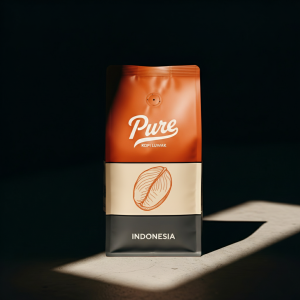
Pure Kopi Luwak
Wild civet coffee from Java. 88.5 SCA cupping score. From $125 for 100g.
At 93°C, the sweet spot for most specialty coffee, the extraction moves at a pace that allows a pour over to complete in 3 to 4 minutes with good balance across all fractions. Drop to 85°C and extraction slows enough that you either extend the brew time significantly or end up with an under-extracted cup that tastes sour and hollow. Push to 97°C or higher and the window closes quickly — bitter compounds extract before the brew completes, and the aggressive heat can scorch the surface of lighter-roasted beans, creating harsh notes that wouldn’t appear at lower temperatures.
The SCA recommends a brewing range of 90°C to 96°C (195°F to 205°F), with most practitioners landing at 92°C to 94°C as a practical middle ground. Espresso uses a narrower range — 88°C to 93°C — because the 9 bars of pressure involved changes the extraction kinetics significantly: pressure accelerates compound dissolution, so lower temperatures are appropriate to maintain control over what extracts.
Try the coffee this article is about
Wild-sourced from Java, 88.5 SCA cupping score, free US shipping. From $125 for 100g.
Shop Pure Kopi Luwak →Roast Level and Temperature Adjustment
One of the most practically useful temperature principles in specialty brewing is roast-level adjustment. Lightly roasted beans — particularly high-grown Arabica varieties that are dense, complex, and have retained most of their organic acid structure — need more energy to fully extract. A light roast ground to pour over consistency and brewed at 90°C will often produce a sour, underdeveloped cup not because the temperature is wrong in absolute terms, but because there isn’t enough thermal energy to fully dissolve the sugars and complex aromatics locked in a dense, lightly roasted bean.
Bump that same light roast to 95°C to 96°C and the extraction completes properly. The acidity brightens and balances rather than dominating. The sweetness that was inaccessible at 90°C becomes apparent.
Dark roasts behave oppositely. The extended roasting process has opened up the bean’s cell structure, creating pores and channels that give water easier access. Dark roasts extract faster and more readily, which means high temperatures overshoot easily. A dark-roasted bean brewed at 96°C will over-extract in the same 4 minutes that a light roast needs at that temperature to extract properly. Drop to 90°C to 92°C for dark roasts to maintain control.
For a medium-roasted specialty coffee like wild-sourced kopi luwak — which is typically roasted at the medium level to preserve the delicate enzymatic character that distinguishes it — 93°C is a reliable starting point. If the cup tastes thin or sour, raise by 1 to 2 degrees. If it tastes harsh or bitter, lower by the same increment. The adjustment doesn’t need to be dramatic; within the 90°C to 96°C window, 2 degrees can meaningfully shift the extraction balance.
Water Quality and Temperature Interaction
Temperature works in combination with water chemistry. The Specialty Coffee Association’s water standards recommend water with a total dissolved solids (TDS) of 75 to 250 parts per million, calcium hardness of 1 to 5 grains per gallon (17 to 85 mg/L), and neutral pH. Water that is too soft — below 50 ppm TDS — lacks the mineral content that facilitates the binding of coffee compounds to water molecules, producing flat, under-extracted coffee even at ideal temperatures. Water that is too hard — above 300 ppm — can suppress the extraction of delicate aromatic compounds and increase scaling in equipment.
Most municipal tap water in coffee-producing cities is somewhere within or near the acceptable range, but if you’re brewing a premium coffee and your tap water is notably hard or soft, using a simple carbon filter or a target mineral content (the Third Wave Water mineral packets are one practical solution) will make temperature adjustments more effective, because you’re working with a consistent base rather than a variable one.
Practical Temperature Control
The cheapest route to temperature precision is a thermometer and a kettle that you let cool from boiling. Water boils at 100°C at sea level (lower at altitude — at 1500 meters, it boils at around 95°C, which is why high-altitude brewing recommendations differ). Bringing a kettle to boil, then waiting 30 to 60 seconds before pouring, typically brings the temperature down to the 90°C to 95°C range without a thermometer. This is imprecise, but workable for most purposes.
Variable temperature gooseneck kettles, which hold a target temperature electronically, have become standard equipment in specialty coffee homes and shops for good reason. They eliminate the guesswork and allow you to dial in roast-specific temperatures consistently — which matters most when you’re brewing an expensive or unusual coffee and want the extraction to succeed on the first attempt rather than the third.
The discipline that temperature precision enables is the same discipline that separates good specialty brewing from mediocre brewing: controlling every variable so that when a cup tastes wrong, you know what to change. Pour over brewing in particular rewards this kind of systematic control, because the method gives you so many points of intervention. Temperature is one of the most powerful, because it affects every stage of extraction from the first pour of the bloom through the final drain.
Pure Kopi Luwak
Wild civet coffee from Java. 88.5 SCA cupping score. From $125 for 100g.

Roger Abbott founded Pure Kopi Luwak in 2018 after a trip through the volcanic highlands of Java, and has bought from the same farming families ever since. He only works with collectors of wild civet coffee, never caged. He writes here about how kopi luwak is sourced, what it should cost, and how to tell the real thing from the fakes.