Of the roughly 10 million metric tons of coffee produced globally each year, approximately 60% comes from a single species: Coffea arabica. The other 40% is mostly Coffea canephora — Robusta. These two species dominate the commercial coffee world, and the difference between them isn’t just marketing terminology. It’s genetics, altitude, chemistry, and flavor.
Understanding the distinction matters if you care about what you’re drinking. And if you’re reading this, you probably do.
Arabica: The Higher-Stakes Species
Coffea arabica originated in the highlands of southwestern Ethiopia, where it grows naturally in forest understory at elevations between 1,000 and 2,200 meters. It’s a demanding plant. It requires specific temperature ranges (15–24°C), distinct wet and dry seasons, well-drained volcanic soil, and protection from direct sun. It’s more susceptible to pests and disease than Robusta. It produces lower yields per hectare. It’s harder to grow.
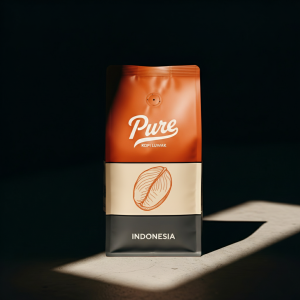
Pure Kopi Luwak
Wild civet coffee from Java. 88.5 SCA cupping score. From $125 for 100g.
The reward for all that difficulty: complexity. Arabica contains more sugars and lipids than Robusta, fewer harsh phenols, and a wider range of aromatic compounds. Well-grown, properly processed Arabica can taste like almost anything — stone fruit, jasmine, dark chocolate, citrus peel, caramel, tobacco, honey. Robusta tastes mostly like Robusta.
Arabica’s caffeine content runs roughly 1.2–1.5% by dry weight. Lower than Robusta, but paired with more pleasant organic acids and a significantly more complex flavor architecture. Caffeine in coffee is partly responsible for its characteristic bitterness — one of the reasons Arabica, with lower caffeine, tends to taste less harsh.
Robusta: The Practical Choice
Coffea canephora — Robusta — grows at lower elevations, tolerates heat, resists disease (hence the name), and produces twice the yield per hectare compared to Arabica. It’s the pragmatic coffee. Instant coffee? Mostly Robusta. Budget espresso blends? Robusta adds the thick crema and intensity that compensates for lack of nuance. Vietnamese coffee, which relies on drip-through sweetened condensed milk, is Robusta-based — the bold bitterness cuts through the sweetness in a way Arabica can’t.
Robusta’s caffeine content runs 2.7% by dry weight, roughly double Arabica’s. The higher caffeine isn’t just a stimulant difference — it’s part of the plant’s natural pest defense. Caffeine is toxic to insects. Robusta’s higher caffeine is why it needs less pesticide, one of the reasons it’s easier to grow organically.
Robusta also contains higher levels of chlorogenic acids (CGA) than Arabica — about 7–10% by dry weight versus 5.5–8% in Arabica. CGA is the polyphenol most associated with both coffee’s antioxidant properties and its capacity to irritate sensitive stomachs. High CGA means more antioxidants, but also more gastric acid stimulation. The tradeoff favors Arabica for daily drinkers who care about both quality and digestive comfort.
Try the coffee this article is about
Wild-sourced from Java, 88.5 SCA cupping score, free US shipping. From $125 for 100g.
Shop Pure Kopi Luwak →Why Processing Method Changes Everything
The species is just the starting point. How the coffee is processed after harvest — how the fruit is removed from the bean, how it’s dried, fermented, or washed — dramatically changes the final flavor. Washed Arabica (where the fruit is removed before drying) tends toward clarity and brightness. Natural-processed Arabica (dried with the fruit on) picks up fermented fruit notes. Honey-processed sits between the two.
Which brings us to the far end of the processing spectrum: enzymatic fermentation inside the digestive system of an Asian palm civet.
Kopi luwak is almost exclusively made from Arabica. The civet’s selectivity is part of why — wild civets prefer the ripest Arabica cherries, avoiding Robusta and under-ripe fruit when given the choice. The Arabica cherry’s sweetness and aromatic complexity are what drive the animal’s selection behavior.
As the cherry passes through the civet’s digestive system over 24–36 hours, proteolytic enzymes break down the storage proteins in the bean, releasing shorter peptide chains and altering the amino acid profile. A 2013 study by Udi Jumhawan and colleagues at the Indonesian Coffee and Cocoa Research Institute (Journal of Agricultural and Food Chemistry, 61(33):7994–8001) identified citric acid, malic acid, and the inositol/pyroglutamic acid ratio as the key chemical markers distinguishing genuine kopi luwak from every other coffee tested — including regular Arabica from the same growing region.
The result: kopi luwak isn’t just premium Arabica. It’s Arabica that has undergone a biological transformation no other processing method replicates. Higher malic acid content, modified bitter polyphenols, a reduced astringency that shows up immediately in the cup as a smoothness that doesn’t read as weakness.
The Hierarchy In Practice
Think of Arabica vs. Robusta as the foundational distinction. Within Arabica, there’s a further hierarchy defined by cultivar, growing region, altitude, and processing: commodity-grade Arabica at one end, single-origin specialty lots in the middle, and wild-processed kopi luwak at the far end.
The price difference isn’t arbitrary. It reflects scarcity, selection difficulty, and genuinely different chemistry. Wild kopi luwak from free-ranging Javanese civets — not cage-farmed, not from processed blends — costs up to $1,300 per kilogram because every step of its production is artisanal by necessity, not by choice.
For a more detailed look at why sourcing matters for both quality and ethics, see our guide to cruelty-free kopi luwak and our buyer’s guide to finding genuine product.
If you’ve understood the distinction between Arabica and Robusta and you want to experience what the best expression of Arabica tastes like — the version that’s been selected, transformed, and produced through a process that has no industrial analogue — our wild-sourced Javanese kopi luwak is where that ends up. Roasted to order, ships worldwide.
Most coffee is Arabica. Some Arabica is exceptional. Kopi luwak is something else entirely — built on the same genetic foundation, taken somewhere different by a process that’s been happening in the forests of Java since the 19th century and still can’t be replicated in a lab.
Pure Kopi Luwak
Wild civet coffee from Java. 88.5 SCA cupping score. From $125 for 100g.

Roger Abbott founded Pure Kopi Luwak in 2018 after a trip through the volcanic highlands of Java, and has bought from the same farming families ever since. He only works with collectors of wild civet coffee, never caged. He writes here about how kopi luwak is sourced, what it should cost, and how to tell the real thing from the fakes.