In November 2007, a single white truffle from San Miniato in Tuscany sold at auction for $330,000 — 1.5 kilograms of underground fungus that had never seen sunlight and couldn’t be cultivated, farmed, or manufactured. A Macau casino owner bought it. The price wasn’t irrational: white truffles (Tuber magnatum) grow only in specific forest soils in northern Italy and parts of Croatia, only in symbiosis with oak, hazel, and poplar root systems, and only if the microclimate cooperates that year. They cannot be replicated or scaled. The price reflects genuine scarcity.
The world’s most expensive foods share this characteristic: their price is not marketing. It’s physics, biology, or geography — constraints that no amount of money reliably overcomes.
White Truffles: Up to $4,000 Per Pound
Italian white truffles (Tuber magnatum pico) are the undisputed apex of the truffle market, regularly fetching $1,000–$4,000 per pound at retail, with exceptional specimens reaching multiples of that at auction. Unlike their black counterparts, white truffles cannot be cultivated commercially — every attempt to recreate the precise soil chemistry, mycorrhizal relationships, and microclimate has failed. They are found by trained dogs (truffles have been hunted with pigs historically, but Italian law now mandates dogs to protect root systems) in the forests of Piedmont, Tuscany, and Umbria during a narrow October–January season.
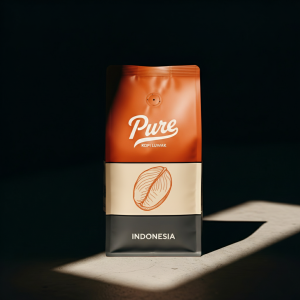
Pure Kopi Luwak
Wild civet coffee from Java. 88.5 SCA cupping score. From $125 for 100g.
Their aroma — described variously as garlic, hay, honey, and something ineffably animal — is produced by a compound called bis(methylthio)methane that begins dissipating within days of harvest. A white truffle that was extraordinary on Thursday can be pedestrian by Monday. This impermanence is part of what makes the experience irreproducible: you cannot stockpile it or ship it globally without significant degradation. The price includes the perishability.
Saffron: $5,000 Per Pound at the High End
Saffron is the dried stigmas of Crocus sativus, a flower that blooms for two weeks in autumn and must be harvested by hand within hours of opening. Each flower produces three stigmas; it takes approximately 75,000 flowers — roughly the size of a football pitch — to produce one pound of dried saffron. The arithmetic of that labor is why genuine Kashmiri or Iranian saffron reaches $5,000 per pound at wholesale, while the commodity “saffron” sold in supermarket packets for a few dollars per gram is either heavily adulterated or of dramatically lower quality.
Iran produces roughly 90% of the world’s saffron supply, and the quality range within that production is enormous. The “super negin” grade — long, deep-crimson stigmas with almost no yellow style — commands premiums of five to ten times the price of lower-grade material. The flavor compounds (safranal and picrocrocin) that give saffron its distinctive aroma and color are present at measurably higher concentrations in the premium grades.
Try the coffee this article is about
Wild-sourced from Java, 88.5 SCA cupping score, free US shipping. From $125 for 100g.
Shop Pure Kopi Luwak →Kopi Luwak: The World’s Most Expensive Coffee
Wild-sourced kopi luwak regularly retails at $500–$1,500 per kilogram, making it by a significant margin the world’s most expensive commercially available coffee. The economics of that price are identical to white truffles and saffron: genuine scarcity created by an irreproducible biological process. Wild Asian palm civets (Paradoxurus hermaphroditus) in the coffee-growing highlands of Java, Sumatra, and Sulawesi selectively eat ripe coffee cherries during harvest season, and the beans recovered from their excrement — after thorough cleaning, drying, and processing — yield a cup with a distinctively smooth, low-bitterness profile that results from enzymatic transformation during digestion.
A single wild civet consumes perhaps 50–100 cherries per night. The total annual global supply of authentic wild kopi luwak is tiny — a few hundred kilograms at most, when sourced genuinely and transparently. The market is unfortunately saturated with “kopi luwak” that is either cage-farmed (civets kept in poor conditions and force-fed cherries, producing inferior coffee) or outright fraudulent (conventionally processed coffee sold with a civet label). Pure Kopi Luwak, sourced exclusively from wild civets on Javanese farms, represents the genuine article — the same category of verifiable scarcity that makes white truffles worth their price.
Matsutake Mushrooms: $1,000–$2,000 Per Pound
Japanese matsutake (Tricholoma matsutake) has been considered a luxury food in Japan for over a thousand years — records of it being offered as tribute to the imperial court date to the 8th century. Its value has increased dramatically in recent decades as Japanese pine forests have been decimated by pine wilt nematode, destroying the mycorrhizal habitat matsutake requires. Domestic Japanese production has fallen from 12,000 tons annually in the 1940s to under 70 tons today. What once appeared in autumn as a seasonal treat for ordinary households now sells for $1,000–$2,000 per pound for premium domestic specimens.
Beluga Caviar: $3,000–$5,000 Per Kilogram
Beluga caviar from wild Caspian beluga sturgeon (Huso huso) is effectively banned from international trade, as the species has been listed under CITES Appendix II since 2006. What exists legitimately in the market comes from licensed aquaculture operations in Iran, Russia, and Azerbaijan, where sturgeon take 10–25 years to reach reproductive maturity. The legality, rarity, and the 25-year lead time required to produce each harvest push prices for genuine “Almas” grade beluga to $3,000–$5,000 per kilogram.
The Price of Irreproducibility
What these foods share is not exotic flavor for its own sake — it’s that the process creating their character cannot be engineered away. White truffles grow where they grow, on their own schedule. Saffron is harvested by hand because no machine can do it without destroying the stigmas. The world’s dearest coffees achieve their character through biological processes — civet digestion, specific terroir, wild cultivation — that don’t scale. The most expensive foods in the world are expensive because they occupy a category that technology cannot commoditize. That’s not a coincidence. It’s what luxury food actually means.
For buyers willing to pay these prices, the question worth asking is always: can I verify that this is what it claims to be? White truffle fraud — using synthetic bis(methylthio)methane-infused oil to flavor inferior fungi — is rampant. Saffron adulteration with safflower petals and dyed corn silk is documented globally. Kopi luwak fraud is pervasive enough that investigative reporting has estimated over 80% of the global kopi luwak market to be misrepresented. In every category of the world’s most expensive foods, provenance transparency is the only thing standing between the genuine article and an expensive disappointment.
Pure Kopi Luwak
Wild civet coffee from Java. 88.5 SCA cupping score. From $125 for 100g.
Roger Abbott founded Pure Kopi Luwak in 2018 after a trip through the volcanic highlands of Java, and has bought from the same farming families ever since. He only works with collectors of wild civet coffee, never caged. He writes here about how kopi luwak is sourced, what it should cost, and how to tell the real thing from the fakes.