When a lot from Colombia’s Elber Herrera won recognition at a specialty coffee competition a few years ago, the flavor notes on the score sheet included “tropical fruit, wine, and fermented grape.” The coffee had been processed using sealed anaerobic tanks — the same basic oxygen-exclusion principle used in wine fermentation — and the microorganisms that thrived in that environment had generated flavor precursors that conventional washed or natural processing would never produce. What Herrera had done, essentially, was import controlled-environment fermentation science from the winery into the coffee farm, and the result was categorically different from anything that environment had produced before.
That moment — replicated on farms across Colombia, Ethiopia, Indonesia, and elsewhere over the past decade — represents a genuine inflection point in coffee processing science. It also raises questions that fermentation researchers are still working through: how much of the flavor enhancement comes from the absence of oxygen, how much from the specific microbial populations that dominate in those conditions, and how repeatable these profiles are from batch to batch.
What Happens Chemically During Coffee Fermentation
In all coffee processing methods, fermentation occurs to some extent. Even washed (wet) coffee undergoes fermentation: after pulping removes the fruit skin, the mucilage layer that clings to the green bean parchment is broken down by microbial activity over 12-72 hours in water. The fermentation is largely incidental in traditional processing — it’s a step to facilitate mucilage removal, not a deliberate flavor intervention.
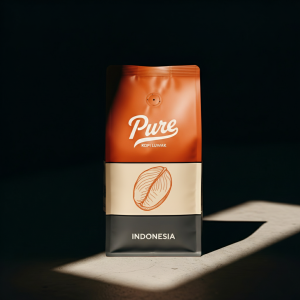
Pure Kopi Luwak
Wild-sourced. Organic. Arabica. From $125.
Anaerobic fermentation changes the premise. Sealed tanks exclude oxygen, which shifts the dominant microbial populations from aerobic organisms toward lactic acid bacteria (LAB) and specific yeast strains. A 2022 study published in ScienceDirect on Coffea canephora processed using the Self-Induced Anaerobic Fermentation (SIAF) method found that Leuconostoc mesenteroides reached concentrations of 8.54 log10 cells/mL during fermentation, while lactic and acetic acids were the primary acids produced. Those organic acids directly influence the finished coffee’s flavor chemistry by creating precursors that develop during roasting into specific aromatic compounds.
Research cited in specialty coffee literature by Ferreira and colleagues in 2023 found that specific yeast strains used as starter cultures in anaerobic fermentation — including Torulaspora delbrueckii and Candida parapsilosis — produced distinct aromas of citrus, caramel, honey, chocolate, and chestnut. These outcomes are not random. They’re the result of particular metabolic pathways that specific organisms follow when sugar substrates are available in an oxygen-deprived environment: glycolysis produces ethanol and CO₂, but also a cascade of esters, alcohols, and volatile organic acids that become flavor compounds in the roasted bean.
The Three Primary Experimental Processing Methods
Anaerobic processing is the most discussed but not the only innovation reshaping coffee’s flavor landscape. Natural processing — drying whole coffee cherries with the fruit intact, allowing a long slow fermentation as the fruit dries around the bean — has been common in Ethiopia and Brazil for centuries, but controlled natural processing applies tighter temperature management, thinner drying layers, and more frequent turning to manage the microbial activity more precisely. The result is much more reproducible than traditional naturals, which historically were prone to defects from uneven fermentation.
Carbonic maceration, borrowed directly from the Beaujolais wine technique, takes the concept further. Whole coffee cherries are placed in sealed tanks and CO₂ is introduced externally — not just excluded passively, but actively filled to a specified concentration. The carbonic environment triggers intracellular fermentation within the intact cherry, where the fruit’s own enzymes break down sugars and malic acid without requiring microbial action. The flavor profiles that result lean toward bright berry, stone fruit, and reduced perceived acidity, reflecting the malolactic conversion that winemakers use carbonic maceration to achieve.
The parallel to winemaking is deliberate and increasingly sophisticated. Some coffee producers in Colombia, Guatemala, and Indonesia are now working with fermentation consultants who have backgrounds in the wine industry, applying inoculation protocols and fermentation environment management that would be recognizable in any modern winery.
The Relevance to Kopi Luwak’s Original Fermentation
What makes this moment interesting for understanding premium coffee is that enzymatic processing — fermentation driven by biological rather than purely chemical mechanisms — has a long history in coffee, even if that history isn’t usually framed that way. Wild kopi luwak represents the oldest known example of biological intervention in coffee processing: as green coffee beans pass through a civet’s digestive tract over 12-24 hours, proteolytic enzymes break down specific proteins, lactic acid bacteria in the gut contribute organic acids, and the internal environment creates chemical changes that are functionally analogous to what modern controlled-fermentation producers are engineering in their tanks.
The difference is that the civet’s gut is a proprietary environment evolved over millennia rather than a designed one. The microbial community involved, the enzyme concentrations, and the pH conditions are all natural parameters that emerge from a healthy animal consuming ripe cherries. Modern anaerobic fermentation is an attempt to replicate some of the same principle — controlled biological environment, specific microbial intervention, enzymatic flavor development — through entirely different means.
Both systems share the core insight: coffee’s flavor potential doesn’t end at the cherry. It extends through the processing environment and the biological agents active in it. Understanding why kopi luwak tastes different is inseparable from understanding fermentation science.
Quality Control and the Reproducibility Problem
The major challenge with experimental fermentation is the same one that has always troubled winemakers: microbial systems are not perfectly predictable. A tank that produces outstanding fruit-forward anaerobic natural in one harvest may behave differently in the next if the ambient temperature, cherry sugar content, or microbial community shifts. Producers using SIAF methods have found that temperature control during fermentation is particularly critical — research indicates that fermentation at different temperatures (30°C versus 40°C versus 50°C) produces substantially different volatile compound profiles, meaning small environmental variations change the flavor outcome.
The solution pursued by the most serious producers involves starter culture inoculation — introducing known quantities of specific yeast or LAB strains at the beginning of fermentation to dominate the process and outcompete wild organisms. This approach, standard in commercial winemaking, is being adapted for coffee and produces more repeatable results, though it also changes the flavor profile from what wild fermentation would generate. Whether the result is better or merely more consistent depends on the producer’s goals and the market’s preferences.
For buyers of experimental process coffees, this context matters. A lot described as “48-hour anaerobic natural” is not simply a labeling detail — it’s a report on a specific set of controlled conditions that produced specific flavor outcomes, and understanding what those conditions do chemically helps you evaluate whether the result justifies what are often significantly higher prices than conventional processing commands. Premium coffee that communicates its processing protocol is telling you something meaningful about its provenance, and increasingly, the fermentation details are as important as the origin.
Pure Kopi Luwak
Wild-sourced. Organic. Arabica. From $125.

Roger Abbott is the founder of Pure Kopi Luwak. He has spent over a decade sourcing wild kopi luwak directly from farmers and collectors in the highlands of Java, Indonesia — working exclusively with wild civets, never caged. He writes about specialty coffee, Indonesian origins, and the science behind what makes kopi luwak taste the way it does.
