Alan Adler spent decades as a Stanford mechanical engineering professor and holder of more than 40 patents before turning his attention to coffee. His frustration was specific: he wanted one excellent cup, not a pot, and existing brewers forced you to either make more than you’d drink or compromise on extraction quality. In 2005, he introduced the AeroPress — a brewer using controlled air pressure to push hot water through coffee grounds in under two minutes, producing a cup cleaner than French press and more approachable than espresso. Two decades later, it remains one of the most versatile and forgiving brewers ever made. For wild kopi luwak, it’s an exceptional match.
The AeroPress’s appeal for exceptional coffee comes from what it lets you control. Water temperature, brew time, pressure during the press, and coffee-to-water ratio are all independently adjustable in ways that capsule machines and automatic drip brewers don’t allow. With a coffee as specific and expensive as wild kopi luwak, that control isn’t academic. It’s how you avoid wasting a gram of what you paid for.
Why the AeroPress Works for Kopi Luwak
Standard drip brewing pushes near-boiling water through coffee in a time determined by the machine’s design. Espresso machines run pressurized near-boiling water through a dense puck in 25-30 seconds. Both methods work by a kind of intensity: high heat and pressure extract quickly, and the resulting cup reflects whatever’s in the bean, pleasant or otherwise.
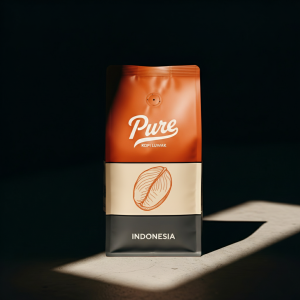
Pure Kopi Luwak
Wild civet coffee from Java. 88.5 SCA cupping score. From $125 for 100g.
The AeroPress works differently. Immersion — coffee steeping in contact with water for 1-4 minutes — extracts flavor compounds more gently and evenly than forced flow. The pressure applied at the end (you pressing the plunger down) finishes the extraction and pushes it through the filter cleanly. The result is a cup with less bitterness than most methods produce from the same beans, because the immersion extracts aromatic compounds efficiently while the moderate temperature prevents harsh extraction of bitter-tasting compounds that require higher heat or longer contact to dissolve.
For kopi luwak specifically — a coffee whose distinguishing characteristic is reduced bitterness through enzymatic modification — the AeroPress amplifies what’s already there. If the civet’s digestion has already reduced the bitterness precursors in the green bean, and the roaster has used a medium roast to preserve the enzymatic modifications, the AeroPress’s gentle extraction ensures none of that work gets undone. The result is typically the smoothest cup you can produce from wild kopi luwak beans without specialized equipment.
Try the coffee this article is about
Wild-sourced from Java, 88.5 SCA cupping score, free US shipping. From $125 for 100g.
Shop Pure Kopi Luwak →The Standard Recipe
Use 15 grams of medium-fine ground kopi luwak to 225 grams of water — a 1:15 ratio that produces a full, single-serving cup. For a slightly stronger, more concentrated result closer to the AeroPress’s original design intention, try 17 grams to 200 grams of water and add 30-40 grams of hot water to the finished cup after pressing.
Water temperature should be 88-92°C (190-198°F) — notably cooler than pour over brewing. AeroPress’s immersion extraction is efficient enough at lower temperatures that you don’t need the extra heat, and kopi luwak’s modified chemistry means the flavor compounds you want extract readily without it. Boil water and let it sit uncovered for two minutes before pouring, or use a temperature-controlled kettle set to 90°C.
Standard (upright) position: place a paper filter in the cap, wet it with hot water, lock the cap onto the chamber, and place it over your mug. Add the ground coffee, pour 30 grams of water to bloom for 30 seconds (the grounds will swell visibly with fresh coffee), then pour the remaining water to fill the chamber. Place the plunger on top without pressing. Steep for 90 seconds. Then press slowly and steadily over 30 seconds. Stop when you hear a hiss of air. Total active time: about 3 minutes.
The Inverted Method
Many specialty coffee enthusiasts prefer the inverted AeroPress technique, which gives you more control over steep time by preventing premature dripping through the filter. Flip the AeroPress upside down — plunger inserted, chamber facing up — add your coffee, pour water at the same 88-92°C, stir gently, and set the filter cap on top. After a 2-minute steep, carefully flip the brewer onto your mug and press slowly over 30-45 seconds.
The longer steep in the inverted method produces a slightly heavier, more full-bodied cup. For kopi luwak, where body and depth are part of what you’re paying for, the inverted method often produces a richer result that showcases the chocolate and earth notes typical of Javanese Arabica. The standard method produces a cleaner, more delicate cup that highlights aromatic complexity more clearly.
Start with the standard method on your first brew from a new bag. Try inverted on the third or fourth. The comparison is instructive: you’ll taste different aspects of the same beans depending on which approach you use, which reveals something about the coffee’s actual range that a single method alone wouldn’t show you.
Common Mistakes to Avoid
The most common AeroPress mistake is pressing too fast. Pressing hard in five seconds creates turbulence in the grounds and uneven extraction, producing a bitter, gritty cup. The ideal press is slow and consistent — maintained evenly over 25-35 seconds. If the plunger won’t move at all, your grind is too fine. If it collapses immediately without resistance, it’s too coarse.
The second most common mistake is water that’s too hot. Above 95°C in an AeroPress, you risk extracting astringent compounds that you’re specifically trying to avoid — this is especially true for kopi luwak, where the whole value is a cup without bitter edges. Use cooler water than you think you need and adjust upward only if the cup tastes under-extracted or flat.
A 100-gram bag of Pure Kopi Luwak yields approximately 6-10 AeroPress servings depending on ratio. Each cup costs between $12 and $20 — less than a specialty café experience, and considerably better than most of them. The AeroPress is also the most travel-ready of serious brewers: small, lightweight, essentially indestructible. If you’ve bought kopi luwak partly for the ritual of exceptional morning coffee at home, and partly because you travel and want that ritual to travel with you, the AeroPress is the reason that’s possible.
Pure Kopi Luwak
Wild civet coffee from Java. 88.5 SCA cupping score. From $125 for 100g.

Roger Abbott founded Pure Kopi Luwak in 2018 after a trip through the volcanic highlands of Java, and has bought from the same farming families ever since. He only works with collectors of wild civet coffee, never caged. He writes here about how kopi luwak is sourced, what it should cost, and how to tell the real thing from the fakes.