The housewarming gift category has a predictability problem. Candles, wine, olive oil, a nice plant — these are the defaults because they’re consumable, universally appreciated, and require no deep knowledge of the recipient’s taste. They also guarantee that whoever just moved in will receive three candles, two bottles of wine, and at least one succulent from different people who had the same idea at the same time.
For a close friend or family member whose new home you want to mark with something that won’t get lost in the pile, the question isn’t really about budget — it’s about finding something that feels considered, memorable, and genuinely useful without duplicating everything else on the counter. Wild kopi luwak, the rare civet coffee sourced from free-ranging Asian palm civets in the highlands of Java, answers that question in a way that a third bottle of Sauvignon Blanc does not.
Why Consumables Make the Best Housewarming Gifts
The instinct toward consumable housewarming gifts is correct, even if the execution often lands in cliche. The logic is sound: when someone has just moved, they don’t need another object. They have boxes of objects, most of which don’t have a designated place yet. What they actually want is something that gets used, enjoyed, and absorbed into the new space without becoming another thing to store.
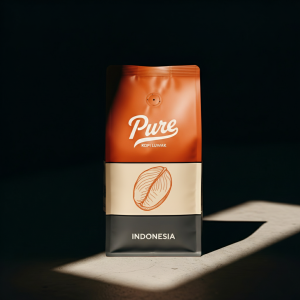
Pure Kopi Luwak
Wild civet coffee from Java. 88.5 SCA cupping score. From $125 for 100g.
Consumables also carry a different kind of sentiment than objects. A bottle of wine says “celebrate this.” A bag of extraordinary coffee says the same thing but extends the celebration across a week of morning rituals. Every cup is a small reminder of the gift, which is worth something on its own. For a friend who drinks coffee seriously — who has a grinder and a pour-over setup and cares about roast dates — kopi luwak is the version of “consumable gift” that shows you thought past the default.
Try the coffee this article is about
Wild-sourced from Java, 88.5 SCA cupping score, free US shipping. From $125 for 100g.
Shop Pure Kopi Luwak →The Conversation It Starts
One reliable quality of great housewarming gifts is that they create moments. A good bottle of wine might get opened the first weekend; a bag of wild Javanese kopi luwak gets brewed on a quiet morning when the recipient finally has a moment to do something properly, and then becomes the subject of at least one enthusiastic explanation to the next person who visits and notices the bag.
The story behind wild kopi luwak is genuinely compelling once you’ve heard it. Asian palm civets (Paradoxurus hermaphroditus) are small, nocturnal omnivores that forage through Java’s highland coffee plantations during harvest season. They’re fastidious about ripeness — evaluating each cherry individually by scent before eating, bypassing underripe and overripe fruit for peak-ripe ones with a selectivity that outperforms even careful human pickers.
The beans they consume pass through their digestive systems over 12 to 24 hours. During that transit, proteolytic enzymes partially hydrolyze specific proteins that would otherwise generate bitterness during roasting. Researchers comparing wild kopi luwak to conventionally processed Javanese Arabica have documented lower concentrations of malic and citric acid in the kopi luwak — a measurable chemical difference that explains the unusually smooth, round, low-bitterness character the coffee is known for. The beans are collected from the forest floor, cleaned and washed, dried, hulled, and roasted.
That story — told in thirty seconds or three minutes depending on how much detail your audience wants — is genuinely interesting to anyone who cares about where their food comes from and how it’s made. For a housewarming gift context, it’s the kind of detail that makes the gift memorable long after the coffee is gone.
Matching It to the Right Recipient
This gift works best for someone who already takes coffee seriously. Not just a daily drinker — someone with a grinder, an opinion about brew methods, and the kind of morning routine that treats the first cup as an event rather than a mechanism for waking up. For that person, wild kopi luwak is genuinely exciting: it’s something they’ve probably heard of, possibly googled, and haven’t found a reason to spend $150 on for themselves.
For someone who drinks Nespresso pods and considers coffee a delivery vehicle for caffeine, the gift still works — but differently. They get the story, they get to tell the story, and they get an experience that might expand their frame of reference for what coffee can taste like. The smoothness and roundness of well-sourced wild kopi luwak tends to impress even people who don’t normally think about coffee. It tastes unlike what most people expect coffee to taste like, which is interesting on its own terms.
What to look for when buying: wild-sourced matters. Pure Kopi Luwak sources exclusively from free-ranging civets in Java — not cage-farmed operations, which dominate the broader market and produce inferior coffee under indefensible conditions. For a gift you’re presenting to someone you care about, the ethical and quality distinction is worth a few minutes of verification.
The Practical Notes
A 100-gram bag of whole-bean kopi luwak — approximately $125 to $199 depending on sourcing — gives the recipient roughly 12 to 15 full pour-over servings or 10 to 12 double AeroPress serves. That’s enough for two weeks of exceptional morning coffee, or a week if they’re sharing with a partner. It’s a focused, finite experience rather than a supply that runs indefinitely — which actually suits the gift context well. It’s meant to be savored rather than stockpiled.
If you want to add context to the gift, a short note about the production — wild civets, Javanese highlands, enzymatic processing, why it tastes the way it does — turns the bag into a small education as well as a coffee. Most recipients will read it, Google the rest, and come back to you with questions. That’s probably the best outcome a housewarming gift can produce.
For anyone who wants to understand more before buying, the Java harvest cycle explains why wild kopi luwak is as scarce as it is and why the price reflects something real rather than marketing.
Pure Kopi Luwak
Wild civet coffee from Java. 88.5 SCA cupping score. From $125 for 100g.

Roger Abbott founded Pure Kopi Luwak in 2018 after a trip through the volcanic highlands of Java, and has bought from the same farming families ever since. He only works with collectors of wild civet coffee, never caged. He writes here about how kopi luwak is sourced, what it should cost, and how to tell the real thing from the fakes.