The world of rare coffee has never been more crowded — or more expensive. In 2025, a kilogram of Hacienda La Esmeralda Gesha sold at auction for $30,204. That same year, Black Ivory Coffee was retailing at $1,500 per kilogram through select luxury hotels, where it fetched $50 a cup. Wild kopi luwak from verified Indonesian sources sits around $1,000 to $1,500 per kilogram — exceptional by any measure outside this field, modest by comparison to the outliers above it.
Here are seven coffees worth seeking out, what makes each genuinely remarkable, and what you should expect to pay.
1. Wild Kopi Luwak — Java and Sumatra, Indonesia
Kopi luwak begins with the Asian palm civet selecting ripe arabica cherries in highland Indonesian forest. The beans pass through the animal’s digestive tract over 24 to 72 hours, during which enzymatic activity breaks down bitter proteins, alters amino acid profiles, and creates a suite of secondary metabolites documented in peer-reviewed research. The result — after washing, drying, hulling, sorting, and roasting — is coffee with dramatically reduced bitterness, a smooth, almost syrupy texture, and complexity that evolves through the finish in ways conventional processing cannot produce.
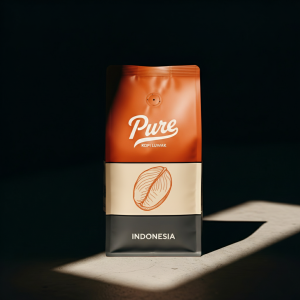
Pure Kopi Luwak
Wild-sourced. Organic. Arabica. From $100.
Authentic wild production is estimated at 50 to 500 kilograms annually across all of Indonesia. Over 80 percent of what’s sold as kopi luwak globally is fraudulent or caged-origin. Verified wild product retails for $100 to $150 per 100 grams. If you find it for significantly less, you are not buying what the label claims. Our wild kopi luwak is sourced directly from Java highland collections with documented provenance.
2. Black Ivory Coffee — Surin Province, Thailand
Blake Dinkin founded Black Ivory Coffee after years of searching for an animal-processing method with stronger ethical credentials than standard kopi luwak. The company works with rescued elephants at the Golden Triangle Asian Elephant Foundation in Thailand’s Surin province. Thai arabica beans are mixed into the elephants’ feed; the animals’ plant-based, fiber-rich diets and long digestive tracts produce different fermentation conditions than civet processing — sweeter, less earthy, with reduced bitterness through a different enzymatic pathway.
Annual production is approximately 500 pounds (about 225 kilograms) — comparable to wild kopi luwak in scarcity. Price: $1,500 per kilogram, $50 per cup at select luxury hotels. The company donates a portion of revenue to elephant welfare organizations.
3. Hacienda La Esmeralda Gesha — Boquete, Panama
The Peterson family entered a Gesha (or Geisha) variety from their Boquete farm in the 2004 Best of Panama competition at $21 per pound. It sold for $21 per pound. By 2024, top Esmeralda lots were clearing $10,013 per kilogram at auction. In 2025, $30,204 per kilogram.
The Gesha variety originated in the Gori Gesha forest of Ethiopia. It has a naturally unusual flavor profile — jasmine, bergamot, tropical fruit, tea-like clarity — that expresses itself fully only at high elevations above 1,700 meters. At Hacienda La Esmeralda’s growing sites on the slopes of Volcán Barú, these qualities are maximized. Retail Esmeralda Gesha from specialty roasters: $30 to $50 per 100 grams. Auction lots are not commercially available.
4. Jamaica Blue Mountain — Blue Mountains, Jamaica
Jamaica Blue Mountain carries a protected designation of origin covering arabica grown above 2,000 feet in specific parishes including St. Andrew, St. Thomas, Portland, and St. Mary. Japan purchases approximately 80 percent of certified production annually — a relationship that began in the 1960s and has influenced the price and positioning of the coffee ever since. Retail: $40 to $80 per 100 grams for verified certified product.
The flavor profile — mild, balanced, low acidity, nutty sweetness — is consistent and approachable rather than complex. The premium reflects geographic certification and Japanese market demand as much as cup quality. Genuine certified product carries the CIB (Coffee Industry Board of Jamaica) seal and a certification number.
5. Yemeni Mocha — Western Highlands, Yemen
Yemeni coffee was the original exported coffee to the world, traded through the port of Mocha beginning in the 15th century. Modern Yemeni arabica — Jaadi, Dawairi, Tufahi — is grown by smallholders in the western highlands at extreme elevation (1,500 to 2,500 meters) with minimal water and ancient farming practices largely unchanged for centuries. Conflict and infrastructure challenges have made consistent export difficult, which has created a secondary market where exceptional lots fetch $80 to $200 per 100 grams from specialty importers who can source it.
The flavor profile is unlike anything from conventional origins: dried fruit, wine, chocolate, complex spice. It’s an acquired taste — intense and sometimes polarizing — but for those who love it, irreplaceable.
6. Kona Coffee — Big Island, Hawaii
Hawaiian Kona coffee benefits from unique microclimate conditions on the Big Island’s western slopes: sunny mornings, cloudy afternoons, volcanic soil, and elevations up to 2,500 feet. Production is expensive by global standards — American labor costs, small farm sizes, no mechanized harvesting — which drives prices to $30 to $50 per 100 grams for Extra Fancy grade certified Kona. Kona blend products may contain as little as 10 percent Kona; certified 100% Kona carries a state inspection seal. The flavor is mild, clean, and pleasant — good coffee, premium price, partly for place.
7. St. Helena Green Tipped Bourbon — South Atlantic
The island where Napoleon Bonaparte was exiled after Waterloo produces coffee from Green Tipped Bourbon arabica descended from seeds brought by the East India Company in the 18th century. The island’s maritime isolation, consistent sea breeze, and moderate temperatures create growing conditions that have remained largely unchanged for 200 years. Annual production is tiny; transportation costs are substantial. Retail: $40 to $80 per 100 grams. The coffee’s character — clean, bright, citric, with a pleasant fruit finish — is genuinely good, though the premium is partly driven by geographic romanticism.
For those working through this list sequentially, our comparison of the world’s most expensive coffees provides additional context on value and verification. For the full story on kopi luwak’s chemistry and what distinguishes it from every other coffee on this list, see our breakdown of the kopi luwak taste profile versus regular arabica.
Pure Kopi Luwak
Wild-sourced. Organic. Arabica. From $100.