The Bureau of Labor Statistics calculates that the average American spends approximately 90,000 hours working over a full career — the equivalent of more than ten years of continuous waking time. Built into that figure are roughly 40 years of alarm clocks set to go off when the body would prefer to stay horizontal, 40 years of coffee consumed as fuel rather than pleasure, and the accumulated weight of decades of showing up whether you felt like it or not. Retirement ends that obligation. The gift you choose to mark the occasion should reflect what that ending actually means.
The standard retirement gift vocabulary is limited: the engraved watch, the gift basket, the champagne, the framed photograph. These are fine. But there’s a version of the retirement gift that operates in a different register — one that addresses not just the milestone but the specific daily texture of retirement, the part where every morning is now theirs. Wild kopi luwak from Java belongs in that category.
The First Morning Without an Alarm
People who retire speak about the first alarm-free morning with the kind of reverence usually reserved for significant life events. There’s no meeting to catch, no commute to beat, no clock running against them. The morning becomes something to move through at its own pace rather than a series of obstacles to clear before the real day begins. Coffee, in that context, stops being fuel and starts being pleasure — possibly for the first time in decades.
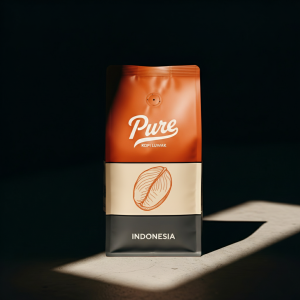
Pure Kopi Luwak
Wild civet coffee from Java. 88.5 SCA cupping score. From $125 for 100g.
The retirement coffee gift plays directly into that transformation. Wild-sourced kopi luwak from Java is a coffee that demands to be savored rather than consumed. Its smoothness, its absence of bitterness, its full body with dark chocolate and earthy depth — these are qualities that reward the kind of unhurried attention that working life rarely permits. A cup brewed slowly, in a kitchen no longer governed by departure times, reveals something that rushed mornings consistently miss.
What Makes It Different
Wild kopi luwak is produced when Asian palm civets (Paradoxurus hermaphroditus) forage through Javanese coffee plantations at night, selecting peak-ripe cherries with olfactory precision that no human harvesting operation matches at scale. The beans pass through the civet’s digestive system over 12 to 24 hours, where proteolytic enzymes break down specific proteins that would otherwise become bitterness compounds during roasting. Research published in food chemistry journals has documented measurably lower concentrations of malic and citric acids in kopi luwak compared to conventionally processed beans from the same origin — which is why the finished cup tastes fundamentally different even to someone who hasn’t been primed to notice.
Indonesia produces genuine wild-sourced kopi luwak in naturally limited quantities on the island of Java, where volcanic soil and high-altitude growing conditions already produce Arabica with unusual depth. The combination of quality growing conditions and genuine wild processing creates coffee that the world’s rarest coffees category genuinely earns. A 100-gram bag yields approximately 6 to 8 cups — a week of exceptional mornings for someone who has just earned an unlimited supply of them.
Why Experiential Gifts Win at Retirement
Most retirement gifts are either one-time experiences (the dinner reservation, the spa day) or objects that get used until they don’t. Wild kopi luwak is something different: an experience that distributes itself across multiple exceptional mornings. Unlike the champagne that’s finished in an evening, the kopi luwak generates a week of specific pleasure — each cup a morning in retirement that feels intentionally different from working life.
The story behind it becomes part of the gift too. A brief note explaining where it comes from, how it’s processed, what makes it taste the way it does gives the retiree something worth sharing — with their household, with friends who come over for coffee, with anyone who asks what they’ve been drinking since they stopped going in to work. The story of authentic wild kopi luwak is genuinely interesting, and retirees with time on their hands tend to follow that interest further than working people typically do.
What the Price Says
A retirement gift carries implicit weight as an accounting of what the person’s career represented. The common failure of retirement gifts is that they communicate “we did something” rather than “we thought about you.” At $125 for 100 grams, wild kopi luwak is not an extravagant gift relative to what four decades of professional investment represents. It is, however, specific enough to communicate genuine intention — it cannot be approximated by a last-minute alternative, and there is no “similar option for less” at this level of the category.
For the retiree who was, specifically, a dedicated coffee drinker through working life — the person who had particular preferences, who talked about coffee, who kept a good grinder on the counter — this is the gift that converts that long interest into its best possible expression. After 90,000 hours of mandatory early mornings, the best cup of their life should arrive somewhere in the first week of freedom.
Pure Kopi Luwak
Wild civet coffee from Java. 88.5 SCA cupping score. From $125 for 100g.

Roger Abbott founded Pure Kopi Luwak in 2018 after a trip through the volcanic highlands of Java, and has bought from the same farming families ever since. He only works with collectors of wild civet coffee, never caged. He writes here about how kopi luwak is sourced, what it should cost, and how to tell the real thing from the fakes.