The last day of someone’s career is a Thursday. They go home, sleep in on Friday, and Saturday morning make coffee the way they’ve always made it — fast, functional, whatever’s left in the bag from three weeks ago. The ritual is the same. But now there’s a new ingredient: time. Forty years of nine-minute mornings are over. The person you’re buying a retirement gift for has earned the right to slow down. The question is whether your gift will reflect that.
Most retirement gifts are either useless (the framed photo from HR, the trophy paperweight) or predictable (the restaurant gift card, the spa voucher). A bag of the world’s rarest coffee is neither. It is specific to this person, specific to this moment, and it gives them something they’ve never actually had before: a legitimate reason to spend twenty minutes with a single cup.
Why a Coffee Lover’s Retirement Is Different
For people who genuinely love coffee — not the caffeine, but the ritual — retirement is a pivot point. According to survey data from Drive Research, 36% of regular coffee drinkers consume between 3 and 5 cups daily. Most of those cups, over a forty-year career, are consumed in roughly the same way: before the commute, between meetings, at the desk, on autopilot. The enjoyment is real but compressed. Retirement removes the compression.
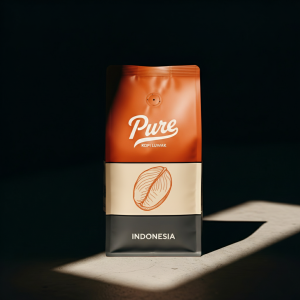
Pure Kopi Luwak
Wild civet coffee from Java. 88.5 SCA cupping score. From $125 for 100g.
Now they can do it properly. They can weigh the beans. They can bloom the grounds. They can pay attention to what’s in the cup rather than what’s on the agenda. What they need — and probably won’t buy themselves — is a coffee worth paying that level of attention to. This is the gap that wild-sourced kopi luwak fills precisely.
What Kopi Luwak Is, and Why It Matters as a Gift
Kopi luwak is coffee processed through the digestive system of the Asian palm civet (Paradoxurus hermaphroditus), a nocturnal mammal native to the coffee-growing highlands of Java, Sumatra, and Sulawesi. Wild civets eat only peak-ripe coffee cherries — they select by smell, rejecting under-ripe or overfermented fruit with a precision that human harvesting cannot replicate. The passage through the civet’s digestive tract exposes the beans to proteolytic enzymes that partially break down proteins linked to bitterness, which is why authentic kopi luwak produces a cup that is notably smooth, full-bodied, and less bitter than any conventionally processed coffee from the same origin.
This is not marketing. The enzymatic mechanism is documented in food chemistry research. The smoothness is structural, not incidental — and it means kopi luwak rewards careful brewing in a way that ordinary beans don’t. When you have twenty minutes to spend on your cup, and you’re tasting it instead of drinking it, the difference is obvious.
As a retirement gift, this matters because the quality lives in the drinking, not in looking at the bag on a shelf. Give someone something they’ll actually experience.
Try the coffee this article is about
Wild-sourced from Java, 88.5 SCA cupping score, free US shipping. From $125 for 100g.
Shop Pure Kopi Luwak →What Sets This Apart from a Wine Bottle or Gift Card
The default retirement gift for someone who “has everything” is either consumable (wine, food) or forgettable (experiences that get booked and cancelled). What makes kopi luwak different from the wine bottle is that it asks the recipient to engage with it. There is a method to brew it, a correct temperature — 93–96°C (199–205°F) — a preferred grind, a right way to open the bag and smell the beans before anything else.
This is a gift that has instructions — not because it’s complicated, but because it rewards attention. Retirees who have spent forty years in meetings where someone else set the agenda now get to set their own. That first morning with a bag of wild kopi luwak, brewed at leisure, is a small ceremony marking the beginning of something different. According to data published by U.S. News, more than 4.1 million Americans turned 65 in 2025. That’s a lot of first Saturdays ahead. This gift is built for them.
Quantity, Format, and What to Expect
A 100g bag of Pure Kopi Luwak brews approximately 10–12 cups depending on brewing method and grind ratio. At a standard pour-over ratio of roughly 1:15 (coffee to water by weight), 10 grams yields around 150ml — a generous cup. That’s ten mornings. Ten intentional starts to the first weeks of a life that now belongs entirely to the person drinking it.
The coffee is whole-bean, sourced exclusively from wild civets on Javanese farms, and roasted to medium — the level that best preserves the enzymatic modifications made during digestive processing. Dark roasting destroys much of what makes kopi luwak distinct. A medium roast delivers the chocolatey, earthy, low-bitterness flavor profile that makes this coffee unlike anything else available at any price point.
If the retiree you’re buying for doesn’t already own a grinder, a compact hand grinder costs $30–50 and adds a tactile element to the gift. There’s something fitting about grinding beans by hand on a morning with nowhere to be.
The Gift Logic
Retirement gifts tend to fall into two categories: symbolic (something to remember the career by) and forward-looking (something for the next chapter). A bag of the world’s most famous rare coffee is unambiguously forward-looking. It doesn’t commemorate the grind; it announces the end of it. It says: you’ve earned the kind of morning where the only thing on your schedule is finishing the cup while it’s still hot.
Most retirement presents get put on a shelf. This one gets used on day one.
For more on what makes wild-sourced kopi luwak different from cage-farmed imitations, see our guide on caged vs. wild civet coffee. For brewing guidance once the bag arrives, our complete brewing guide covers every method from pour-over to French press.
Pure Kopi Luwak
Wild civet coffee from Java. 88.5 SCA cupping score. From $125 for 100g.

Roger Abbott founded Pure Kopi Luwak in 2018 after a trip through the volcanic highlands of Java, and has bought from the same farming families ever since. He only works with collectors of wild civet coffee, never caged. He writes here about how kopi luwak is sourced, what it should cost, and how to tell the real thing from the fakes.