The Smithsonian Migratory Bird Center established its Bird Friendly® certification in 1997, after research showed that shade-coffee plantations support 50–90% more bird species than sun-grown farms. Qualifying farms must maintain canopy height of at least 40 feet and foliage density above 40%, with multiple native tree species — standards that reflect specific habitat requirements, not marketing language. The same conditions that protect neo-tropical migratory birds also produce better coffee: under shade canopy, cherries ripen 20–30% more slowly, accumulating more natural sugars and complex aromatic compounds in the extended time on the branch.
Shade vs. Sun: Two Worlds of Coffee Farming
Traditional coffee cultivation mimicked nature’s design — coffee plants growing beneath a protective canopy of larger trees, just as they evolved in the highlands of Ethiopia. In these systems, coffee plants thrive under diverse canopy species often reaching 40–60 feet. The ecosystem is genuinely layered: tall canopy species provide primary shade and windbreak; medium-height understory trees offer filtered sunlight below them; coffee bushes grow in dappled light; native ground cover prevents soil erosion at the base. Each layer supports the others in ways monoculture sun farms simply can’t replicate.
Beginning in the 1970s, agricultural intensification pushed coffee farming toward sun cultivation. This approach cleared forest canopy to maximize plant density and boost short-term yields. Sun-grown farms can produce 2–3 times more coffee per acre initially, explaining their rapid adoption. But maintaining that productivity requires heavy synthetic fertilizer and pesticide inputs, as the natural ecosystem services have been eliminated.
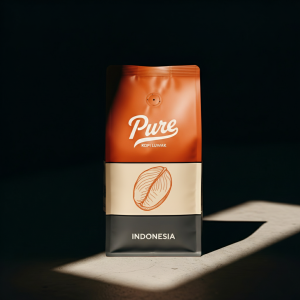
Pure Kopi Luwak
Wild civet coffee from Java. 88.5 SCA cupping score. From $125 for 100g.
The Biodiversity Advantage of Shade-Grown Systems
Shade coffee farms function as biodiversity hotspots. The Smithsonian’s Bird Friendly® certification, developed in 1997, established rigorous standards that go well beyond “has some trees”: qualifying farms must maintain canopy height of at least 40 feet, foliage density of at least 40% year-round, multiple native tree species (not monoculture shade), and genuine structural complexity across multiple vegetation layers. These thresholds reflect the specific habitat requirements of neo-tropical migratory birds whose populations the Smithsonian actively tracks — many of which are experiencing decline due to habitat loss across their winter range.
The benefits extend across the entire ecosystem beyond birds. Insect diversity creates natural pest control without chemical inputs. Tree leaf litter decomposes into natural fertilizer, reducing synthetic input dependence. The canopy reduces evaporation and prevents erosion. The trees themselves sequester significantly more carbon than a field of coffee bushes alone — a climate benefit that extends well beyond the farm boundary.
Why Shade Creates Superior Coffee Flavor
Under shade, coffee cherries ripen 20–30% more slowly than in direct sunlight — and that extended timeline matters for what ends up in the cup. More time on the branch means more opportunity for natural sugar accumulation. Desirable organic acids develop with better balance rather than spiking under intense sun exposure. Volatile flavor compounds responsible for aroma and complexity form more completely. Slower growth creates denser beans, which extract more efficiently and tend to produce more concentrated flavor. Shade-grown beans typically exhibit enhanced acidity, more nuanced flavor notes, and greater sweetness compared to sun-grown counterparts from the same variety and origin.
Shade systems also allow terroir — the environmental factors affecting taste — to express more fully. The diverse microclimates created by varying canopy density and tree species contribute to unique flavor profiles that reflect specific farm locations in ways that homogenous sun-grown fields rarely achieve.
Try the coffee this article is about
Wild-sourced from Java, 88.5 SCA cupping score, free US shipping. From $125 for 100g.
Shop Pure Kopi Luwak →Indonesian Coffee and Natural Shade Systems
Indonesia’s coffee regions naturally align with shade-grown principles, particularly in areas where wild-sourced coffee like kopi luwak originates. The traditional agroforestry systems of Java, Sumatra, and Sulawesi have maintained forest canopy for centuries. Wild civets, the animals central to authentic kopi luwak production, forage under these forest canopies — making shade-grown and wild-sourced deeply connected concepts. The protected forest environment that supports civet populations also creates optimal growing conditions for exceptional coffee. Our Pure Kopi Luwak exemplifies this connection: beans selected by wild civets in their natural forest habitat, then processed using traditional methods that honor both the environment and the coffee’s unique character.
The Economic Challenge for Farmers
Despite superior environmental and quality outcomes, shade coffee farming faces significant economic pressures. Lower yields and more labor-intensive practices often result in higher production costs, requiring premium pricing to remain viable. Specialty coffee consumers have increasingly come to value these environmental and quality attributes — shade-grown coffee commands 10–40% price premiums in specialty markets, and certifications like Bird Friendly®, Rainforest Alliance, and organic further enhance market value.
The long-term economics favor shade systems even where initial yields are lower. Reduced erosion maintains soil productivity over decades — sun farms often see significant productivity decline as topsoil degrades. Natural pest control from insect diversity lowers pesticide costs. The canopy buffers temperature extremes, providing resilience that becomes increasingly valuable as climate patterns shift. And the trees themselves generate diversified income — fruit, timber, and other tree products — that reduces vulnerability to coffee price volatility in ways that monoculture sun farms cannot.
Climate Change and Shade Coffee’s Future
As climate change intensifies, shade-grown systems are proving more resilient than exposed sun farms. Research shows that shade coffee farms maintain temperatures 2–5°C cooler than surrounding areas, creating microclimates that help coffee plants cope with rising global temperatures — a meaningful buffer when even a 1–2°C increase can push crops outside their viable range. The forest canopy significantly reduces water evaporation, helping coffee plants survive extended dry periods that are becoming more common across all major coffee-growing regions. Farms investing now in shade canopy establishment are building a climate hedge that will compound in value as conditions shift.
Choosing Shade-Grown Coffee: What to Look For
When selecting shade-grown coffee, certification tiers reflect genuine differences in rigor. The Smithsonian’s Bird Friendly® certification carries the most exacting shade standards, with the specific canopy height, density, and species diversity requirements described above. Rainforest Alliance certification addresses broader sustainability criteria. Organic certification prohibits synthetic inputs, encouraging natural farming systems that often include shade canopy. Fair Trade standards address social equity and often correlate with more traditional farming methods that maintain shade.
Beyond certification, many specialty roasters develop direct relationships with shade coffee farms. Look for roasters who can tell you specific details about their farm partners’ growing methods — canopy species, altitude, canopy density — rather than simply claiming “shade-grown” as a marketing term. The difference between a Bird Friendly® certified farm maintaining 45-foot native canopy and a farm with a few decorative trees overhead is enormous for both biodiversity and cup quality. Every purchase of certified shade-grown coffee sends a direct market signal supporting farming practices that maintain critical wildlife habitat, build climate resilience, and produce the kind of unhurried, complex flavor that industrial sun farming simply cannot match.
Pure Kopi Luwak
Wild civet coffee from Java. 88.5 SCA cupping score. From $125 for 100g.

Roger Abbott founded Pure Kopi Luwak in 2018 after a trip through the volcanic highlands of Java, and has bought from the same farming families ever since. He only works with collectors of wild civet coffee, never caged. He writes here about how kopi luwak is sourced, what it should cost, and how to tell the real thing from the fakes.