Java typically runs one month behind Sumatra. That sentence, simple as it sounds, determines everything about when authentic Javanese kopi luwak enters the supply chain — and it’s why buyers who want the freshest possible wild-sourced beans need to understand Indonesian harvest geography rather than treating “Indonesia” as a single undifferentiated growing region.
According to sourcing data from Sucafina, Sumatra’s Robusta harvest begins in May in the southern lowlands, with higher elevation Arabica regions starting in June. Java then follows, typically running a full month behind Sumatra’s curve. Flores starts a month after Java. The staggered calendar is a function of geography, latitude, elevation, and rainfall patterns — and for kopi luwak specifically, it shapes when wild civets begin feeding on ripe cherries and when collectors can start gathering passed beans from beneath the forest canopy.
Understanding Indonesia’s Coffee Geography
Indonesia is the world’s fourth-largest coffee producer, spread across an archipelago that spans more than 5,000 kilometers from west to east. That distance means radically different growing conditions on each major island. Sumatra’s main Arabica regions — Mandheling and Gayo in the north — sit near the equator and receive year-round rainfall, giving them a complex two-harvest pattern. Java’s traditional growing highlands, including the Ijen Plateau and the farms around Blawan and Kayumas, have a more pronounced dry season that concentrates the harvest into a cleaner window.
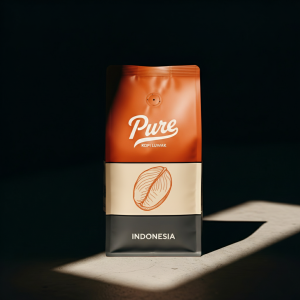
Pure Kopi Luwak
Wild civet coffee from Java. 88.5 SCA cupping score. From $125 for 100g.
Most of Indonesia’s Arabica — including the Typica-descended varieties that form the base of the finest kopi luwak — is grown at elevations between 1,000 and 1,800 meters. At these altitudes, lower temperatures slow cherry development, concentrating sugars and building complexity in the fruit. The harvest calendar on Java reflects this: cherries don’t reach peak ripeness until June or July, and the main picking window runs through September.
What Civet Activity Looks Like Through the Season
Wild Asian palm civets (Paradoxurus hermaphroditus) don’t follow a fixed feeding schedule, but their activity on coffee farms intensifies as cherries ripen. During the pre-harvest months — when most cherries are green and unripe — civets forage elsewhere, eating wild fruits, small animals, and whatever the forest offers. As the red cherry flush begins, civet presence on coffee farms increases noticeably. Farmers who work with wild civets describe hearing them in the canopy at night during harvest season, and finding larger numbers of passed beans beneath high-traffic trees.
Peak civet collection on Java typically runs from June through August. This aligns with the narrow window when cherries are at maximum ripeness — the specific sugar content and aromatic profile that civets preferentially select. Outside this window, collection drops sharply, not because civets stop entirely, but because the quality and quantity of ripe cherries available doesn’t support the same level of activity. Wild kopi luwak is genuinely seasonal in a way that most coffee commodities are not.
Try the coffee this article is about
Wild-sourced from Java, 88.5 SCA cupping score, free US shipping. From $125 for 100g.
Shop Pure Kopi Luwak →The Timing Gap Between Collection and Cup
Raw kopi luwak beans collected during the June-August Javanese harvest don’t reach roasters and buyers immediately. After collection, the beans are washed, dried, hulled, sorted, and graded — a process that takes several weeks. Green bean export preparation adds more time. By the time a bag of freshly harvested Javanese kopi luwak reaches an overseas buyer, three to four months have typically passed since collection.
This means that kopi luwak available for purchase in October and November is often from that year’s harvest — relatively fresh. Product sold in March or April may be from the previous year’s harvest, which is still entirely usable (green coffee stores well for twelve to eighteen months under proper conditions) but should be priced accordingly. Buyers who understand the harvest calendar can ask better questions about the specific harvest year and ask roasters how long ago the green was roasted.
Wet Season Variation and What It Does to Flavor
Indonesia’s harvest quality varies year to year, primarily due to rainfall during the drying phase. Kopi luwak, like all specialty coffee, is dried after collection — typically on raised beds or patios. Excessive rain during drying encourages mold growth and uneven moisture reduction, which creates fermented or musty defects in the finished cup. Dry, clear weather in August and September on Java produces cleaner, better-dried kopi luwak with more expressive terroir character.
The 2024 Indonesian harvest benefited from a relatively dry post-monsoon season across Java’s main Arabica regions, according to sourcing reports from multiple traders. For buyers of premium kopi luwak, harvest year transparency is a useful quality indicator: producers who disclose specific harvest dates and drying conditions are generally operating at a higher standard than those who don’t.
Buying With the Season in Mind
For most specialty coffees, the freshness conversation centers on roast date — how many days since the beans were roasted. For kopi luwak, the conversation extends further back: what month were the cherries collected, how long did drying take, and when was the green bean roasted?
Buyers of Pure Kopi Luwak sourced from wild Javanese civets are getting beans from farms where the harvest calendar runs June through August, collection peaks in July, and the beans reach roasters in the September-October window. Understanding that timeline doesn’t just satisfy curiosity — it helps set expectations for freshness, flavor, and the specific character that the Javanese growing season imparts to that year’s beans.
Indonesia is a vast country with a complex coffee calendar. For kopi luwak specifically, Java’s mid-year harvest produces the authentic wild-sourced product that inspired the product category. The season is finite, the window is specific, and the difference between harvest-fresh Javanese kopi luwak and off-season stock matters in the cup.
Pure Kopi Luwak
Wild civet coffee from Java. 88.5 SCA cupping score. From $125 for 100g.

Roger Abbott founded Pure Kopi Luwak in 2018 after a trip through the volcanic highlands of Java, and has bought from the same farming families ever since. He only works with collectors of wild civet coffee, never caged. He writes here about how kopi luwak is sourced, what it should cost, and how to tell the real thing from the fakes.