Australian customs agents have a specific entry on their import restrictions list for “alimentary tract of animals” products — meaning goods that passed through an animal’s digestive system. Kopi luwak, collected from civet feces, falls technically within that category. Whether it clears customs without incident depends on a second condition: whether it arrives commercially prepared, properly packaged, and under one kilogram. Meet those criteria and Australian border officials generally let it through. Exceed them or show up with loose beans in a plastic bag, and you may have a problem.
That Australian example illustrates the broader pattern with kopi luwak and import law: there are almost no countries that specifically ban kopi luwak by name. The legal landscape is defined by how general customs frameworks — food safety rules, agricultural import restrictions, animal product regulations, and wildlife trade laws — apply to a product that is technically unusual but has been traded internationally for decades.
The Regulatory Categories That Affect Kopi Luwak
When customs authorities evaluate a shipment of kopi luwak, they’re applying one or more of four regulatory frameworks. Understanding which framework applies in your country is more useful than looking for a kopi luwak-specific rule that probably doesn’t exist.
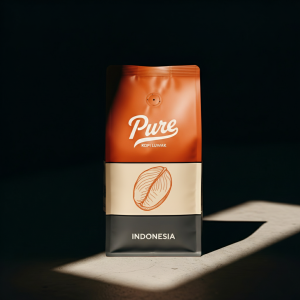
Pure Kopi Luwak
Wild civet coffee from Java. 88.5 SCA cupping score. From $125 for 100g.
Agricultural quarantine rules govern the import of plant and animal material that could introduce pests or pathogens. Coffee beans — including kopi luwak — are typically cleared for import when roasted and commercially packaged, because the roasting process eliminates biological risks. Raw, unroasted (green) beans from certain origins face stricter scrutiny in countries with sensitive agricultural ecosystems. Australia, New Zealand, and the United States apply particularly rigorous quarantine standards.
Animal product regulations come into play because kopi luwak involves material that passed through an animal’s digestive system. In practice, most regulatory frameworks treat roasted, fully processed kopi luwak as a food product rather than an animal byproduct, as long as it’s commercially packaged. The EU, UK, and most of East Asia take this approach.
CITES (Convention on International Trade in Endangered Species) protections apply if the civet species involved is listed. The Asian palm civet (Paradoxurus hermaphroditus) is not currently CITES-listed, which means wild kopi luwak doesn’t automatically require CITES permits. However, some national laws go further than CITES, particularly regarding wildlife welfare.
Food safety import regulations in many countries require that commercially imported food products meet labeling, origin, and safety standards. Kopi luwak from a licensed Indonesian exporter with proper documentation generally satisfies these requirements globally.
Try the coffee this article is about
Wild-sourced from Java, 88.5 SCA cupping score, free US shipping. From $125 for 100g.
Shop Pure Kopi Luwak →Country-by-Country Overview
In the United States, kopi luwak is legal to import. Coffee falls under FDA import oversight and standard CBP food product rules, with no specific restriction on kopi luwak. Commercial shipments from licensed Indonesian exporters clear routinely, and personal imports for non-commercial use generally pass without incident. USDA Agricultural Inspection applies at ports of entry, but commercially packaged roasted coffee is considered low-risk.
The European Union permits kopi luwak imports from Indonesia under general food safety import law — EFSA has no kopi luwak-specific ban. EU labeling requirements apply, including country of origin marking. Some member states, particularly the Netherlands, have seen stronger welfare-related scrutiny of kopi luwak sourcing, though this has not translated into a formal import prohibition.
In the United Kingdom post-Brexit, commercial imports require compliance with UK Food Safety standards. The UK maintains its own controls on products of animal origin, but roasted coffee beans generally fall outside the most restrictive POAO (Products of Animal Origin) categories.
Australia applies a 1-kilogram personal import limit under its Biosecurity Import Conditions (BICON) system. Commercially packaged, roasted kopi luwak under that threshold generally clears without incident. Larger commercial shipments require prior arrangement and may face more rigorous inspection.
China permits coffee imports for personal consumption in quantities under 5 kilograms, with commercial imports requiring GACC (General Administration of Customs of China) registration. Kopi luwak has been sold commercially in China for years and faces no specific prohibition. Japan’s position is similarly straightforward — imports from Indonesia are routine, and Japanese consumers are among the world’s most active kopi luwak buyers. Singapore, a major regional transit and retail hub for Indonesian specialty coffee, places no specific restriction on kopi luwak through its SFA (formerly AVA) framework.
The Animal Welfare Dimension
The legal complexity that does exist around kopi luwak in several European countries has less to do with food safety and more to do with animal welfare. Following a 2013 BBC documentary that documented the conditions of caged civet operations in Indonesia, several European retailers voluntarily stopped selling kopi luwak. The Netherlands and some Scandinavian countries have seen the strongest pushback, though this has primarily manifested as retail bans and public pressure rather than formal import law.
For buyers concerned about this issue, the distinction between wild and caged kopi luwak is the central question. Wild-sourced kopi luwak, collected from the natural movements of free-living civets, doesn’t involve captivity or forced feeding. The regulatory challenge is that without supply chain verification, it can be difficult to confirm sourcing claims — which is why documentation from the producer and third-party verification matter more than simply a “wild” label on the packaging.
Bringing Kopi Luwak Through Customs Practically
For most buyers receiving a commercial shipment from a licensed Indonesian exporter, the practical steps are: ensure the package is commercially sealed, labeled with weight and country of origin, and accompanied by the exporter’s documentation. In most countries, quantities for personal consumption (under 1-5kg depending on country) clear without incident.
If you’re purchasing genuine wild-sourced kopi luwak from a reputable producer, the exporter handles the Indonesian export documentation. What arrives at your end is a sealed, commercially prepared food product that customs authorities in most countries process as standard imported coffee. The process is far less complicated than the product’s reputation might suggest — the questions are mostly about quality and authenticity, not legality. Those questions are covered in the guide to verifying authentic kopi luwak.
Pure Kopi Luwak
Wild civet coffee from Java. 88.5 SCA cupping score. From $125 for 100g.

Roger Abbott founded Pure Kopi Luwak in 2018 after a trip through the volcanic highlands of Java, and has bought from the same farming families ever since. He only works with collectors of wild civet coffee, never caged. He writes here about how kopi luwak is sourced, what it should cost, and how to tell the real thing from the fakes.