Researchers studying kopi luwak’s chemistry have found lower concentrations of malic acid and citric acid in civet-processed beans compared to conventionally processed Arabica from the same origin. Both are prominent contributors to the sharp, bright acidity that many coffee drinkers with sensitive stomachs find problematic. Their reduction in kopi luwak isn’t incidental — it’s a direct result of the enzymatic activity in the civet’s digestive tract, the same process that transforms the bean’s protein structure and aromatic precursors. The acidity reduction and the smoothness are the same chemistry expressing itself in two different sensory registers.
For coffee drinkers who have given up on coffee because of stomach problems, heartburn, or acid reflux, this matters practically. But it’s worth being precise about what kind of acidity we’re discussing and how much reduction actually occurs — the answers affect whether kopi luwak is a genuine solution or just another coffee with exaggerated claims.
Two Different Kinds of Coffee Acidity
Coffee acidity refers to two distinct phenomena that are often conflated. The first is perceived acidity — the bright, crisp, sometimes fruity quality that coffee professionals describe as desirable in light-roasted Ethiopian or Kenyan coffees. This is the tartness you taste on the sides of your tongue, driven primarily by organic acids like citric, malic, tartaric, and acetic acids that develop during the coffee cherry’s ripening and are preserved or transformed during processing and roasting.
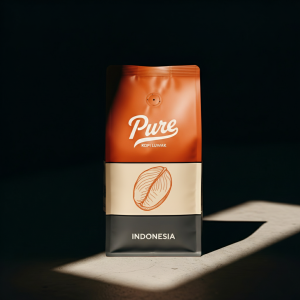
Pure Kopi Luwak
Wild-sourced. Organic. Arabica. From $125.
The second is pH acidity — the actual hydrogen ion concentration of brewed coffee. Black coffee typically has a pH between 4.7 and 5.0, making it moderately acidic on a scale where neutral is 7.0 and stomach acid is around 1.5-2.0. This pH level can stimulate gastric acid secretion in some people, irritate the esophageal lining in others, and cause discomfort for people with conditions like GERD, gastritis, or irritable bowel syndrome.
These two types of acidity are related but not identical. A coffee can have high perceived brightness without unusually low pH, and vice versa. When people say they “can’t drink coffee because of the acid,” they’re almost always referring to the stomach effects of pH acidity and the gastric stimulation compounds in coffee — not to perceived sourness in the taste.
What the Civet’s Processing Actually Does to Acidity
The civet’s digestive tract operates at a pH substantially lower than neutral — stomach acid in most mammals, including civets, runs between pH 1.5 and 3.0. During the 12-to-24-hour transit of coffee beans through the civet’s gut, the beans are exposed to this acidic environment along with proteolytic enzymes and the specific microbial community resident in the civet’s gastrointestinal tract.
One effect of this exposure is the partial breakdown of chlorogenic acids — major antioxidants in coffee that are also precursors to the acidic compounds contributing to both brightness and gastric irritation. Research documented in food science journals has measured lower concentrations of malic and citric acids specifically in kopi luwak compared to identically sourced conventional Arabica. The Gluconobacter bacteria in the civet gut metabolize some of these compounds through enzymatic activity, effectively pre-digesting the acidity components before the bean ever reaches a roaster or a cup.
A 2023 PMC metabolomics study confirmed that kopi luwak’s organic acid profile — quinic acid, caffeic acid, p-coumaric acid, ferulic acid — differs meaningfully from conventional Arabica brews. These aren’t minor variations in data noise; they’re consistent, reproducible differences that correspond to the known enzymatic activities of the civet’s gut microbiota.
How Much Lower Is the Acidity, Really?
There are two honest answers to this question depending on which acidity you’re measuring. For perceived brightness in the cup: kopi luwak is consistently described by specialty coffee professionals and in sensory evaluation research as “notably smooth,” “low in brightness,” and “less sharp” than comparable Arabica at the same roast level. The taste difference is real and distinctive.
For pH: the measurement data is less comprehensive, and the difference in pH units is likely modest — perhaps 0.2-0.4 pH units higher (less acidic) than conventional Arabica brewed at equivalent parameters. That’s a meaningful chemical difference but not a dramatic one in absolute terms. Kopi luwak is not an alkaline coffee, and it’s not appropriate to position it as a medical solution for acid reflux.
What it is: a genuinely lower-acid option among quality Arabica coffees, achieved through a natural biological process rather than through the artificial low-acid processing methods (steam treatment, cold brewing, specific roast profiles) used on commercial “low acid” coffees. The reduction comes from the civet’s chemistry, not from stripping out flavor compounds.
Practical Advice for Sensitive-Stomach Coffee Drinkers
If you’re exploring kopi luwak specifically because of stomach sensitivity, a few practical considerations beyond the bean choice itself:
Brew temperature matters significantly for acidity in the cup. Water above 96°C extracts more of the acidic compounds from any coffee, including kopi luwak. Brewing at 90-93°C — slightly below the temperature often used for light-roasted specialty coffees — reduces acid extraction while preserving body and aromatic complexity.
Roast level is an often-overlooked variable. Medium-roasted kopi luwak — the standard recommendation for preserving its civet-processing character — has lower acid concentration than light-roasted kopi luwak. The Maillard reactions that continue past first crack degrade some of the organic acids. Darker roasting degrades even more, but also destroys the nuances that make kopi luwak worth its cost. Medium roast is the sweet spot: lower acidity than light roast, full expression of the civet’s enzymatic modifications.
For people with diagnosed GERD or significant acid sensitivity, kopi luwak’s reduced acidity is a genuine, chemistry-backed advantage over conventional Arabica. It won’t work for everyone — coffee also stimulates gastric acid secretion through mechanisms that aren’t about the coffee’s own pH, and some people with severe reflux may not tolerate any coffee regardless of origin or processing. But as a gentler entry point into the specialty coffee world, wild kopi luwak has a legitimate case that goes beyond marketing.
For more on how coffee acidity works in the cup and how different coffees compare, coffee acidity explained covers the science in depth. And if you’re curious how kopi luwak’s acidity compares to the broader Indonesian coffee family it comes from, the complete Indonesian coffee guide provides useful context on what distinguishes Java, Sumatra, and Sulawesi coffees from each other.
Pure Kopi Luwak
Wild-sourced. Organic. Arabica. From $125.

Roger Abbott is the founder of Pure Kopi Luwak. He has spent over a decade sourcing wild kopi luwak directly from farmers and collectors in the highlands of Java, Indonesia — working exclusively with wild civets, never caged. He writes about specialty coffee, Indonesian origins, and the science behind what makes kopi luwak taste the way it does.
