Walk through a Malaysian night market and you may encounter “kopi musang” on a menu, priced at a premium, described as rare civet coffee. Walk through a Javanese coffee farm and you will find something produced by a different animal, under different conditions, with a different flavor profile, sold by a different name. The confusion between Malaysian musang coffee and Indonesian kopi luwak is genuine and commercially significant — both are produced via animal digestive processing, both are marketed as luxury coffees, and both are routinely misrepresented at the point of sale. Understanding the actual differences requires getting specific about the animals, the geography, and the production practices.
The Animals Are Not the Same
The word “musang” in Malay refers primarily to the Malayan civet, Viverra tangalunga — a species distinct from the Asian palm civet (Paradoxurus hermaphroditus) that produces traditional Indonesian kopi luwak. Both are members of the family Viverridae, which also includes the binturong (bearcat), but they diverge significantly in biology, diet, and habitat. The Malayan civet is larger, more terrestrial, and has a different digestive microbiome profile than the arboreal Asian palm civet that thrives in Java’s highland coffee farms.
The “luwak” in kopi luwak specifically refers to the Asian palm civet — Paradoxurus hermaphroditus — and its range covers Indonesia, Sri Lanka, India, Southeast Asia, and parts of China. In Malaysia, some producers use the same species (Paradoxurus hermaphroditus) and legitimately call their product a form of kopi luwak. Others use Viverra tangalunga and market it under the musang name. The distinction matters because the digestive chemistry, and therefore the flavor transformation of the coffee beans, differs between species.

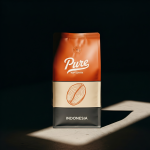
Pure Kopi Luwak
Wild civet coffee from Java. 88.5 SCA cupping score. From $125 for 100g.
Geography, Varietals, and Processing
Malaysian coffee production is concentrated in Sabah and Sarawak on the island of Borneo, and in parts of the Peninsular highlands. The predominant coffee variety grown in Malaysia for musang coffee production tends to be robusta, which is more disease-resistant and productive in Malaysia’s lower-altitude, humid conditions. Indonesian kopi luwak from Java is primarily arabica — specifically highland varietals like Typica, grown at elevations between 1,000 and 1,800 meters in the volcanic soils of the Priangan highlands and Ijen Plateau.
This arabica-versus-robusta difference is perhaps the most significant practical distinction for the cup. Robusta contains roughly twice the caffeine of arabica, has a harsher, more bitter base flavor, and lacks the complexity that high-altitude arabica develops through slower cherry maturation. Wild civet processing can improve a robusta — reducing its characteristic harshness by partial protein hydrolysis — but it cannot transform it into an arabica. The ceiling is different.
Javanese highland arabica kopi luwak, when produced from genuinely wild civets consuming peak-ripe cherries, has a documented flavor profile: smooth, full-bodied, low bitterness, with earthy and chocolate notes reflecting the volcanic soil and the Typica variety’s inherent character. Malaysian musang coffee from robusta tends toward earthiness with more body and caffeine but less of the delicate complexity that arabica brings. Neither is objectively better for all palates — but they are different products with different target experiences.
Try the coffee this article is about
Wild-sourced from Java, 88.5 SCA cupping score, free US shipping. From $125 for 100g.
Shop Pure Kopi Luwak →The Wild Versus Caged Problem (And It’s Worse in Both Countries)
Both Indonesia and Malaysia have significant cage-farming problems in their civet coffee industries, and both markets contain substantial volumes of fraudulently labeled “wild” coffee. The BBC’s 2013 investigation documented cage-farming conditions in both countries, and subsequent investigations — including work by wildlife conservation organizations — have found persistent practices of confining civets in small wire cages, feeding them diets of almost exclusively coffee cherries (which is nutritionally inadequate), and harvesting the resulting beans under “wild” labels.
For buyers trying to navigate this, the indicators of authenticity are similar in both markets: documented farm provenance, named production location, and willingness of the seller to discuss the farming system in detail. Authentic wild production is inherently limited in volume — a wild civet processes roughly 50-100 cherries per night, and a farm might produce 20-30 kg of kopi luwak in an entire month. Products available in large quantities at consistent supply are almost certainly not genuinely wild-sourced.
Pure Kopi Luwak, sourced from wild civets on Javanese highland arabica farms, represents one of the few sources where production traceability is maintained from farm collection to final product. The specificity of origin — Java, highland arabica, wild collection — is the documentation that distinguishes genuine kopi luwak from the broader category of animal-processed coffee.
Price, Market, and What You Should Expect to Pay
Authentic wild kopi luwak from Indonesia commands between $100 and $600 per kilogram at wholesale, depending on origin specificity, roast quality, and certification. Genuine wild musang coffee from Malaysia, when it actually exists, occupies a similar price tier. What both markets have in common is a vast underclass of cage-farmed or blended products retailing at $20-40 per 100 grams that cannot possibly be genuine wild-sourced coffee at those prices — the production economics simply don’t support it.
The specialty coffee community has developed increasingly rigorous authentication standards for both markets. DNA-based testing can now distinguish between Asian palm civet-processed beans and other origins, and stable isotope analysis can verify geographic origin. These tools are being applied by premium buyers who need supply chain confidence beyond a paper certificate. For buyers at the retail level, provenance storytelling and price are still the most accessible signals — but understanding the biology and geography behind the claims is the deeper skill.
For more on the ethical sourcing questions that apply to both markets, ethical sourcing in luxury coffee examines how the specialty coffee world is addressing supply chain transparency. And for those interested in how the civet’s digestive chemistry works — why the processing transformation matters regardless of species — the civet cherry selection process explains the biology in detail.
Pure Kopi Luwak
Wild civet coffee from Java. 88.5 SCA cupping score. From $125 for 100g.

Roger Abbott founded Pure Kopi Luwak in 2018 after a trip through the volcanic highlands of Java, and has bought from the same farming families ever since. He only works with collectors of wild civet coffee, never caged. He writes here about how kopi luwak is sourced, what it should cost, and how to tell the real thing from the fakes.