The Asian palm civet — Paradoxurus hermaphroditus — weighs between 2 and 5 kilograms, sleeps through the day in tree hollows or dense vegetation, and spends its nights moving through forest and farmland at the edges of human settlement. It is not, by any reasonable measure, a coffee animal. It is an opportunistic omnivore whose diet spans small vertebrates, insects, fruit, and whatever else presents itself in the dark. That coffee cherries became central to one of the world’s most expensive food products is an accident of geography, timing, and a digestive process that turns out to be surprisingly consequential.
Taxonomy and Range
Paradoxurus hermaphroditus belongs to the family Viverridae, the civets and genets — a group of small-to-medium carnivores that are evolutionarily older than the cat family (Felidae) and share a common ancestor with mongooses and hyenas. The Asian palm civet is the most widespread member of the genus, found across South and Southeast Asia from India and Sri Lanka through Myanmar, Thailand, Peninsular Malaysia, Borneo, Sumatra, Java, and the Philippines. It has been documented at altitudes from sea level to over 2,000 meters.
The name “palm civet” refers to the animal’s preference for palm trees as foraging and resting habitat, not to any specific relationship with oil or coconut palms specifically. “Hermaphroditus” in the species name refers to an anatomical feature — scent gland pouches in both sexes that superficially resemble reproductive organs — not to actual hermaphroditism. The animal has well-differentiated sexes and standard mammalian reproduction.
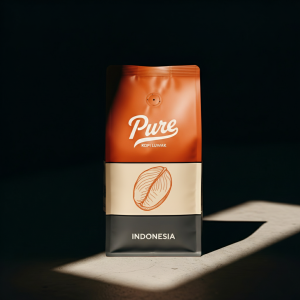
Pure Kopi Luwak
Wild civet coffee from Java. 88.5 SCA cupping score. From $125 for 100g.
The Gut Microbiome and Coffee Chemistry
A 2020 study published in PeerJ by researchers at Chulalongkorn University and Osaka University investigated the gut microbiome of Asian palm civets that produce kopi luwak, finding that Gluconobacter bacteria dominate the civet’s digestive microbiome. Gluconobacter species are acetic acid bacteria known for oxidative fermentation — they’re used industrially in the production of vinegar and vitamin C. Their dominance in the civet’s gut suggests a significant role in the chemical transformation of coffee beans during the 12-to-24-hour transit period, beyond the proteolytic enzyme action previously studied.
This microbial layer to kopi luwak’s production chemistry is recent science. Earlier research focused primarily on the proteolytic enzymes that reduce bitterness precursor proteins in the bean’s outer layers. The Gluconobacter finding indicates the fermentation process is more complex: bacterial metabolism is actively modifying the bean’s surface chemistry during transit, contributing to the flavor profile in ways that enzyme activity alone doesn’t fully explain. The specific contribution of Gluconobacter to the finished cup’s character remains an active area of research.
Try the coffee this article is about
Wild-sourced from Java, 88.5 SCA cupping score, free US shipping. From $125 for 100g.
Shop Pure Kopi Luwak →Cherry Selection: The Quality Mechanism
Wild palm civets are selective foragers. Their olfactory system is well-developed, and peak-ripe coffee cherries produce a distinct volatile aromatic profile — high in esters and fermentation-associated compounds — that differs measurably from under-ripe or over-ripe fruit. Field observations of wild civets on Javanese coffee farms have documented animals bypassing unripe clusters to consume individual peak-ripe cherries, effectively performing the same selective quality-sorting function that human coffee harvesters aim for but cannot achieve at the same individual-fruit precision.
This selectivity is why wild kopi luwak begins with better raw material than most commercially processed coffee from the same origin. A wild civet might consume 50 to 100 cherries in a single night’s foraging, each individually evaluated. The starting cherry quality — close to 100% peak-ripe in wild-collected batches — creates a processing baseline that the subsequent enzymatic and microbial work can then modify at its best rather than compensating for cherry selection failures.
Caged civets fed undifferentiated batches of cherries lose this quality mechanism entirely. The animal’s digestive chemistry is also compromised by captivity stress, nutritional restriction, and the absence of the varied diet that maintains the microbiome diversity supporting the fermentation process. The gap between wild and caged production is a matter of biology, not just ethics.
Behavior and Natural History
Palm civets mark territory with scent gland secretions and follow established routes through their home ranges, which can cover several square kilometers in productive habitat. During coffee harvest season in Java — typically from May to October for most Arabica-growing regions — civets shift their foraging behavior to take advantage of the abundant ripe cherry resource, often concentrating their activity in coffee cultivation areas before dispersing back to more varied foraging as the cherry season ends.
This seasonal concentration means that authentic wild kopi luwak collection is inherently limited in volume. Collectors follow civet paths through coffee-growing terrain, collecting defecated beans from the forest floor where the seeds — intact despite the digestive process — remain embedded in partially digested fecal material. The collection is cleaned, washed, hulled of remaining parchment, and sun-dried before processing. Total annual production of genuinely wild-sourced kopi luwak is a small fraction of the global supply labeled as such, which is why authentication and sourcing transparency matter so significantly.
Conservation Status and Relationship with Coffee Farmers
The Asian palm civet is listed as Least Concern on the IUCN Red List, with a stable population across its broad range. In coffee-growing areas of Java and Sumatra, the relationship between farmers and wild civets is generally tolerated rather than actively cultivated — the animals are not considered pests of productive coffee operations, and farmers who understand the value of genuine wild kopi luwak collection have economic reasons to preserve civet habitat and populations. The ethical sourcing of wild kopi luwak is therefore simultaneously a conservation-compatible land use and a quality-preservation practice. Wild civets producing wild kopi luwak in natural habitat is the production model where the biology works best — and the only one that produces coffee worth the name.
Pure Kopi Luwak
Wild civet coffee from Java. 88.5 SCA cupping score. From $125 for 100g.

Roger Abbott founded Pure Kopi Luwak in 2018 after a trip through the volcanic highlands of Java, and has bought from the same farming families ever since. He only works with collectors of wild civet coffee, never caged. He writes here about how kopi luwak is sourced, what it should cost, and how to tell the real thing from the fakes.