Sometime in the wet season of 1699, a Dutch colonial officer named Hendrik Zwaardecroon oversaw the planting of coffee seedlings — the second attempt, after the first batch was destroyed by flooding in Batavia — on the island of Java. Twelve years later, in 1711, the Dutch East India Company shipped the first Javanese coffee to European markets, and a trade that would reshape global commerce had begun. What Zwaardecroon almost certainly couldn’t have foreseen was that those plantings would establish an agricultural system that still operates, on the same volcanic slopes, more than 300 years later.
The modern expression of that history sits at the eastern end of Java: the Ijen Plateau, a high-altitude complex of volcanic terrain and crater lakes perched between 900 and 1,500 meters above sea level. It’s here, on four estates built by the Dutch colonial administration in the 18th century, that Java’s arabica coffee is still concentrated. The names on the estates haven’t changed much. Blawan, Jampit (historically Djampit), Pancoer (Pancur), and Kayumas are the four primary holdings, with a fifth — Tugosari — rounding out the original colonial footprint. Together, they cover more than 4,000 hectares of high-elevation land.
What Makes Ijen Different from the Rest of Java
Java is a large island with a complicated agricultural history, and most of it today grows Robusta, not Arabica. The VOC’s original plantation system expanded rapidly through the 18th century but suffered catastrophic collapse when coffee leaf rust — Hemileia vastatrix — swept through Java’s plantations in the 1880s, devastating the Typica variety that had made the island famous. Smallholder production shifted toward Robusta, which is far more rust-resistant, and never fully shifted back.
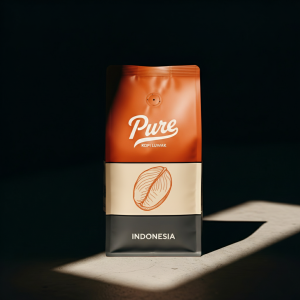
Pure Kopi Luwak
Wild civet coffee from Java. 88.5 SCA cupping score. From $125 for 100g.
The Ijen Plateau survived, partly by geography. Altitude is one of the most effective natural defenses against coffee leaf rust — cooler temperatures slow the fungal life cycle, and the Ijen estates’ elevations of 1,400 to 1,500 meters at their highest points put them in a more protected zone than the lowland and mid-altitude plots that were hardest hit. The volcanic soil of the Ijen complex — acidic, well-drained, rich in minerals from the active Ijen crater system — also contributes to the flavor complexity that distinguishes estate Javanese Arabica from the island’s Robusta production.
The two largest estates, Djampit and Blawan, are both wet-processing operations using the washed method: cherries are pulped, fermented briefly in water tanks to remove mucilage, washed, and dried on raised beds or patios. This contrasts with the giling basah (wet-hulling) method dominant in Sumatra, which produces that island’s characteristic earthy, low-acid body. Java estate coffee has more brightness, cleaner structure, and a lighter body — closer to a Central American washed coffee than to a Sumatran single origin, despite coming from the same country. Pancoer, historically cited at approximately 1,110 hectares, has at times used a slightly different processing approach from the other estates, contributing to the variation collectors notice across Ijen Plateau lots.
Try the coffee this article is about
Wild-sourced from Java, 88.5 SCA cupping score, free US shipping. From $125 for 100g.
Shop Pure Kopi Luwak →Three Centuries of Continuous Cultivation
The Dutch colonial administration maintained these estates through a system of forced and semi-forced agricultural labor through much of the 19th century — most infamously through the Cultuurstelsel (Cultivation System) instituted in 1830 by Governor-General Johannes van den Bosch, which required Javanese farmers to dedicate 20% of their land or 66 days of labor annually to government export crops. Coffee was among the primary crops. The Ijen estates were central to that system.
After Indonesian independence in 1945 and the subsequent nationalization of Dutch colonial agricultural assets, the estates became government-managed properties. They’ve remained so — the “Government Estate” designation on Java coffee from these four farms refers to this nationalized status, not to any quality certification. Privatization discussions have occurred, but as of recent years, the estates continue operating under state management through the Indonesian government’s plantation agency (PT Perkebunan Nusantara or related entities).
The coffee produced here is still primarily Typica — the same variety that the 1699 Zwaardecroon planting introduced, the same variety that was taken as a single specimen to Amsterdam’s Hortus Botanicus in 1706, and from which virtually all Arabica in the Americas descends. Typica is an agriculturally inconvenient variety by modern standards: tall, susceptible to disease, moderate-yielding. Specialty buyers continue to seek it out precisely because those inconveniences are the price of a cup quality that higher-yielding hybrid varieties haven’t matched.
Wild Civets in the Estate Landscape
The Ijen Plateau estates don’t exist in isolation from the surrounding ecosystem. Asian palm civets (Paradoxurus hermaphroditus) range across Java’s forested highlands and move through plantation land at the margins of their territory, particularly during coffee harvest season. The cherry-laden Typica trees of the estate edges and adjacent smallholder plots provide an attractive food source, and the civets’ nocturnal foraging routes regularly intersect with coffee production areas.
It’s this overlap — between the 300-year-old Typica planting history of East Java and the natural behavior of a wild viverrid navigating the same terrain — that makes Javanese kopi luwak what it is. The Paniis cooperative in Sumedang, West Java, documents this precisely: of approximately 15 tonnes of annual coffee production, roughly 2.5 tonnes is collected as kopi luwak from wild civets. Similar proportions apply across highland Java production areas, though the specific numbers vary by altitude, forest proximity, and seasonal civet activity.
What the civets are selecting from, on Java’s estate and estate-adjacent land, is predominantly Typica. The variety’s characteristic cherry size and sugar accumulation at elevation make it attractive to animals with the selection instinct for peak-ripe fruit described in the research on civet cherry selection. The resulting kopi luwak — Typica Arabica from the Ijen altitude range, processed through the civet’s Gluconobacter-rich digestive tract — carries that genetic and geographic heritage into every cup.
For buyers, the practical implication is that origin specificity matters more in kopi luwak than in almost any other coffee category. Java estate kopi luwak from Ijen Plateau altitude, sourced from wild civets, is a product with a documentable history that stretches to a specific seed shipment in 1699. That’s not marketing. That’s agronomy.
The wild-sourced Java kopi luwak from Pure Kopi Luwak comes from a comparable highland smallholder context in the volcanic highlands of West Java — high-altitude Javanese Arabica, wild civet, washed parchment processing. The flavor that arrives in your cup is a direct descendant of what Hendrik Zwaardecroon planted on this island more than three centuries ago.
For broader context on Indonesian coffee beyond the Ijen estates, the post on giling basah processing covers how Sumatra’s very different approach to processing produces the contrasting flavor profile that makes Indonesian coffee as a category so varied.
Pure Kopi Luwak
Wild civet coffee from Java. 88.5 SCA cupping score. From $125 for 100g.

Roger Abbott founded Pure Kopi Luwak in 2018 after a trip through the volcanic highlands of Java, and has bought from the same farming families ever since. He only works with collectors of wild civet coffee, never caged. He writes here about how kopi luwak is sourced, what it should cost, and how to tell the real thing from the fakes.