On the morning of October 17, 1815, Napoleon Bonaparte walked ashore on the island of St. Helena for the first time and was shown to Longwood House, the damp, wind-scoured property that would serve as his prison until his death six years later. One of his few recorded pleasures during that confinement was the local coffee. The island’s thin volcanic soil, cooled by Atlantic trade winds at 500 to 800 meters of elevation, was producing a bean that his companions described as genuinely excellent — smooth, low in bitterness, with a clarity that the coarser coffees of the continent could not match. Whether Napoleon’s appreciation was aesthetic or merely a function of limited options, the story has followed St. Helena coffee ever since.
The island produces some of the rarest coffee on earth. Annual output rarely exceeds 25 tonnes — a quantity that a single Colombian farm of modest size surpasses before February. It sits in the South Atlantic, 1,950 kilometers from Africa and 2,900 kilometers from South America, on a volcanic pinnacle with an area of 122 square kilometers and a human population under 5,000. Getting coffee off St. Helena and into the specialty market is a logistical exercise that the island’s main roaster, St. Helena Coffee Company, has spent decades refining. The scarcity is real, not manufactured.
The Wire Plant Variety: Isolation’s Gift
The coffee grown on St. Helena belongs to a variety that botanists have traced to Yemen-derived Bourbon arabica, brought to the island by the British East India Company in the 1730s. Isolated from the gene pool for nearly three centuries — no new planting material arrived, no crossing with other varieties, no selection pressure from commercial breeders — the St. Helena variety developed its own distinct expression. Local farmers call it the Green Tipped Bourbon or, informally, the “wire plant,” after the wiry, slow-growing character of young trees that struggle in the island’s harsh winds.
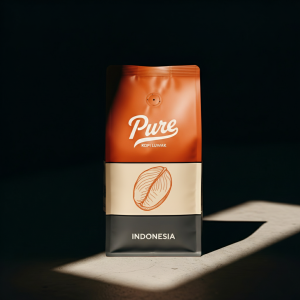
Pure Kopi Luwak
Wild civet coffee from Java. 88.5 SCA cupping score. From $125 for 100g.
The genetic isolation that might seem like a disadvantage has produced something that specialty roasters find genuinely compelling: a variety with extremely low genetic variability, expressing the island’s specific volcanic terroir without the confounding influence of modern cultivar engineering. When you cup St. Helena coffee, you are tasting a nearly unmodified descendant of the Arabian peninsula’s original export coffee — the same lineage that reached Java in 1616 and Brazil in 1727, but without three centuries of human selection imposed on it.
Try the coffee this article is about
Wild-sourced from Java, 88.5 SCA cupping score, free US shipping. From $125 for 100g.
Shop Pure Kopi Luwak →Terroir at the Edge of the World
The island’s growing conditions are anomalous by any standard. St. Helena sits in the path of the Southeast trade winds, which moderate temperatures year-round to a narrow 18–26°C range even at low elevations. At the upper growing zones — 500 to 800 meters on the island’s interior ridges — temperatures are cooler and more stable than many highland African origins. The volcanic soil is well-drained, mineral-rich, and deeply weathered, producing organic matter profiles that benefit slow-maturing arabica.
What St. Helena lacks is quantity. The terrain is steep and difficult to farm mechanically, which means all harvesting is done by hand. The island’s population is small enough that labor at harvest time is genuinely constrained, and logistics to the mainland add costs that mainland-grown coffees do not bear. All of these factors push prices upward: St. Helena coffee typically retails for $70–90 per 100g from specialty importers, placing it in the same tier as high-grade Jamaican Blue Mountain and mid-tier Panama Geisha.
The 1845 London Market and the Coffee’s Modern Revival
St. Helena coffee has been valued for a long time. In 1839, London merchants Wm Burnie & Co. described it as being “of very superior quality and flavour.” By 1845, it was selling in London at the highest price of any coffee in the world at that time. The island’s coffee industry then declined through the late 19th and early 20th centuries as production costs made it uncompetitive with mass-market origins.
The modern revival began in the 1990s, when David Henry — a St. Helenian who returned from England — developed the Blueman’s Field Plantation and subleased the Bamboo Hedge Estate to restart commercial production. His efforts brought the island’s coffee output to a new peak in the late 1990s, and the establishment of the St. Helena Coffee Company as a focused specialty operation cemented the island’s return to the specialty conversation. Today, the coffee is exported to Germany, Japan, the United Kingdom, and the United States, with supply consistently outpaced by demand from collectors and enthusiasts who want something genuinely one-of-a-kind in their cup.
What St. Helena Tastes Like
The cup profile reported consistently across specialty roasters is a medium-light coffee with delicate floral aromatics, mild but present acidity, and a characteristic caramel sweetness that finishes clean. The mouthfeel is lighter than Javanese or Sumatran coffees — closer in texture to Ethiopian washed coffees than to Indonesian naturals. There is an approachability to it, a gentleness, that makes sense given the moderate growing altitude and the variety’s age. This is not a coffee that challenges you with intensity; it rewards patience and attention.
That profile — smooth, distinctive, historically grounded, produced in tiny quantities on an island most people couldn’t locate on a map — positions St. Helena alongside wild kopi luwak and other genuinely rare coffees as something worth understanding rather than just consuming. The scarcity and the story are part of the value, as they always have been since a French emperor drank it by candlelight in an Atlantic prison 200 years ago.
For further context on how geography and isolation create distinctive coffee profiles, see our guide to coffee terroir and our comparison of Jamaican Blue Mountain — another island-grown coffee that commands luxury prices for reasons of both quality and provenance.
Pure Kopi Luwak
Wild civet coffee from Java. 88.5 SCA cupping score. From $125 for 100g.

Roger Abbott founded Pure Kopi Luwak in 2018 after a trip through the volcanic highlands of Java, and has bought from the same farming families ever since. He only works with collectors of wild civet coffee, never caged. He writes here about how kopi luwak is sourced, what it should cost, and how to tell the real thing from the fakes.