PCR testing — Polymerase Chain Reaction, the same DNA detection technology used in forensic laboratories — can now confirm whether a coffee bean actually passed through a civet’s digestive tract. If genuine civet processing occurred, trace genetic material from the animal remains detectable on the bean’s surface through standard food fraud screening panels. The test exists. Most kopi luwak buyers never request it. This gap explains how the counterfeit kopi luwak market has grown to dwarf the genuine supply by a substantial margin.
Here is a practical framework for closing that gap — from supply chain checks to laboratory tests to what a genuine cup should taste like in the glass.
The Scale of the Problem
Wild-sourced kopi luwak is produced in very small quantities by nature. A single free-roaming civet might process a few hundred grams of beans in a foraging night. Total global production from legitimate wild sources is measured in hundreds of kilograms annually — not tonnes. Yet the global “kopi luwak” market sells vastly more than this supply can support. The math has only one resolution: much of what is sold under the kopi luwak label is fraudulent.
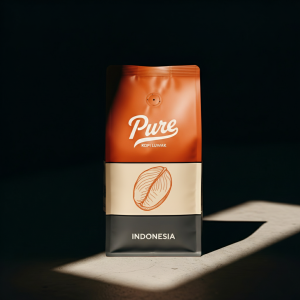
Pure Kopi Luwak
Wild-sourced. Organic. Arabica. From $100.
Understanding why genuine kopi luwak is expensive is the first authentication tool you have. When something is genuinely scarce and labor-intensive to collect, bargain pricing is a confession. Any kopi luwak priced comparably to premium single-origin Arabica — typically under $50 per 100 grams — should prompt immediate skepticism about provenance.
Laboratory Tests That Actually Work
The most reliable authentication involves laboratory analysis, and three methods have emerged as the most effective for serious buyers.
PCR testing detects civet-specific DNA sequences in processed coffee samples. If beans genuinely passed through a civet’s digestive tract, genetic material from the animal will be present in trace quantities on the bean’s surface. Commercial labs that offer food fraud detection can run PCR panels for specific civet genetic markers. The result is definitive: either civet DNA is present or it isn’t. Some producers now include PCR documentation with their lots as a baseline authentication tool, though the test is not yet standardized across the industry.
Metabolite profiling uses nuclear magnetic resonance spectroscopy (NMR) or gas chromatography-mass spectrometry (GC-MS) to identify the chemical fingerprint of civet processing — the specific amino acid ratios and organic acid profiles that distinguish beans that have passed through a civet’s gut from conventionally processed Indonesian Arabica. Third-party testing laboratories such as SGS — the Swiss-based global testing and inspection company — offer food authentication services that include coffee metabolite analysis. This is the kind of documentation that credible producers can provide and fraudulent operations typically cannot produce.
Sensory evaluation by a Q-grader — a coffee professional certified by the Coffee Quality Institute (CQI), the technical arm of the Specialty Coffee Association — can identify the flavor characteristics of genuine kopi luwak with reasonable reliability. Authentic civet-processed coffee has a distinct profile: low bitterness, heavy syrupy body, earthy-chocolate flavor notes, and muted acidity. Trained palates can distinguish this from conventionally processed coffee with meaningful accuracy. It isn’t as definitive as PCR, but it’s accessible without a laboratory and signals that a credible evaluator has assessed the cup.
Certifications Worth Examining
The certification landscape for kopi luwak is fragmented, but several bodies provide meaningful verification. UTZ Certification — now merged into the Rainforest Alliance — monitors supply chain transparency and can confirm whether a producer’s claimed collection methods are being independently verified through on-site audits. World Animal Protection has worked with specific producers in Sumatra and Java to certify wild-sourcing practices and actively rule out caged production, visiting facilities and documenting collection routes.
The Specialty Coffee Association does not certify kopi luwak specifically, but Q-grader certification from the Coffee Quality Institute means a trained evaluator has formally assessed the cup against CQI standards. Some producers pair their lots with Q-grader cupping notes as part of their documentation package. This is a meaningful signal: a Q-grader won’t certify something they haven’t evaluated to the SCA’s technical protocol.
For export documentation, Indonesian agricultural inspections and certificates of origin issued by BPOM — Badan Pengawas Obat dan Makanan, Indonesia’s national food and drug authority — confirm geographic provenance, though they don’t verify civet processing specifically. Combined with lab analysis, they create a paper trail that legitimate producers can provide. Requests for this documentation are entirely reasonable and a credible seller should fulfill them without resistance.
Physical Inspection Before Brewing
Physical inspection of green or roasted beans won’t replace laboratory testing, but it provides useful supporting data. Wild-sourced kopi luwak tends to be slightly more irregular in bean size and color than commercially processed lots — a consequence of individual civets processing different cherries on different trees over multiple nights. Perfect uniformity in a supposed wild-sourced lot is suspicious; it suggests machine sorting or conventional processing with a relabeling.
Green kopi luwak beans carry a distinctive aroma — earthy, faintly musty, faintly sweet — that comes from enzymatic activity during digestion. This aroma should be present and pronounced. Beans that smell neutral or conventionally “green” are a warning sign. Our guide on what kopi luwak is made of explains the biochemical basis for these aromatic differences and what the civet’s digestive process actually does to the bean at a molecular level.
The Cup as Final Verification
Once brewed, genuine kopi luwak announces itself in ways that are difficult to fake. Low bitterness is the most reliable cup marker: the civet’s digestive enzymes break down bitter protein precursors, and this effect persists through roasting and into the cup. If a supposed kopi luwak is bitter, something is wrong at the source level. The body should be heavy and velvety — not watery, not sharp. Earthy, chocolaty notes should dominate the flavor, with the acidity notably muted compared to conventional Arabica from the same Indonesian region.
If the coffee tastes generic — like any decent Indonesian single-origin with better marketing — the authentication question has answered itself. Genuine wild-sourced Pure Kopi Luwak should taste unlike anything else in your coffee rotation. That distinctiveness is not a marketing claim. It’s a measurable result of specific enzymatic processes, and it’s verifiable through the lab tests and certification documentation described above.
For broader context on how wild versus caged production affects both cup quality and the ethical basis for the premium price, see our overview of kopi luwak farming practices in Java.
Pure Kopi Luwak
Wild-sourced. Organic. Arabica. From $100.