The Majelis Ulama Indonesia — Indonesia’s highest Islamic scholarly authority and the world’s most influential body on halal certification — issued Fatwa No. 07 in 2010 specifically on the question of kopi luwak. The ruling: halal, under defined conditions. That fatwa covers the world’s largest Muslim-majority country, where an estimated 231 million Muslims live. It wasn’t a close call.
But the reasoning behind that ruling is as important as the headline, and understanding it removes the lingering uncertainty that stops some Muslim coffee drinkers from ordering.
The Islamic Legal Framework: Mutanajjis, Not Najis
Islamic food law makes a precise distinction between two categories of impurity. ‘Ayn najis refers to a substance that is inherently impure — the substance itself is najis and cannot be purified regardless of washing or processing. Mutanajjis refers to a clean object that has come into contact with impurity — it is not inherently impure, and it can be returned to a pure state through proper cleansing.
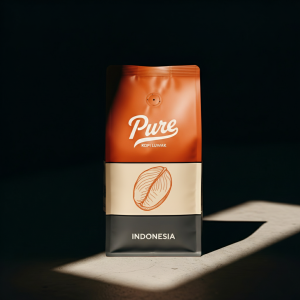
Pure Kopi Luwak
Wild civet coffee from Java. 88.5 SCA cupping score. From $125 for 100g.
The MUI’s 2010 fatwa rested directly on this distinction. A coffee bean that passes through a civet’s digestive tract is not transformed into feces. The bean retains its essential nature as a seed — it can germinate, it is structurally intact, and it is not absorbed into the animal’s body. It is mutanajjis: something clean that has been in contact with impurity. Under both the Shafi’i and Hanbali schools of jurisprudence — dominant across Southeast Asia — mutanajjis objects can be purified through thorough washing. The MUI stipulated that kopi luwak beans must be thoroughly washed before processing. That is precisely what every legitimate producer does, because washing is a required processing step before drying and roasting regardless of religious law.
The Principle of Istihala
Running alongside the mutanajjis argument is the Islamic jurisprudential concept of Istihala — complete transformation that changes a substance’s essential nature. The classical example is wine becoming vinegar: wine is haram, but vinegar produced from wine is halal because the transformation is complete and irreversible. Some scholars apply this reasoning to kopi luwak as a secondary support: the bean that emerges from the civet, washed, dried, and roasted at over 200°C, has undergone a total transformation. Whatever contact it had with the animal’s digestive contents has been eliminated through processes that would satisfy any food safety standard.
The roasting step deserves emphasis here. Coffee is roasted at 180 to 230°C for eight to fifteen minutes. Every known pathogen is killed below 100°C. The thermal processing that produces a roasted coffee bean is not incidentally safe — it is a kill step so thorough that it eliminates the very thing the original concern was about.
Try the coffee this article is about
Wild-sourced from Java, 88.5 SCA cupping score, free US shipping. From $125 for 100g.
Shop Pure Kopi Luwak →The Second Fatwa: MPU Aceh 2011
The following year, the Majelis Permusyawaratan Ulama (MPU) of Aceh — the Islamic authority for Indonesia’s most devoutly observant province, which governs itself under elements of sharia law — issued its own ruling. MPU Aceh Fatwa No. 07 Year 2011 reached the same conclusion through the same reasoning: kopi luwak is halal when the beans are intact, capable of germination, and properly washed before processing.
Two independent Indonesian Islamic authorities, examining the same product from the perspective of an Islamic-law-governed province and a national body, arriving at the same conclusion in consecutive years. That’s a meaningful consensus.
What Singapore‘s MUIS Added to the Conversation
Singapore’s Islamic Religious Council (MUIS) took a practical angle, confirming permissibility while adding a consideration that reflects the modern supply chain reality: Muslim consumers are encouraged to source from producers who demonstrate both ethical civet treatment and rigorous processing standards. This framing connects the halal question to the sourcing question — and that connection is not just pragmatic, it’s theologically grounded in the concept of tayyib.
Tayyib means wholesome, pure, and good — it extends the halal framework beyond ritual impurity to encompass the entire production context. The Prophet Muhammad’s clear instructions about animal treatment, and the prohibition on causing unnecessary suffering, are part of the halal calculus. This is why cage-farmed kopi luwak creates a genuine problem for Muslim consumers even if the washing conditions are technically met: a product from animals kept in isolation, fed forced diets, exhibiting documented stress behaviors is not tayyib regardless of the ritual purity of the final bean.
Wild-sourced kopi luwak — from civets that roam freely and choose their own cherries — doesn’t carry that ethical burden. The distinction between wild and caged kopi luwak therefore matters directly to the halal assessment, not just to secular animal welfare concerns.
Where Disagreement Persists
Not every Islamic scholar agrees with the MUI position. Some Malaysian scholars have expressed reservations grounded in the Maliki school’s different approach to taharah (ritual purity standards). The Maliki tradition’s washing sufficiency requirements differ from the Shafi’i interpretation, and that difference can produce different conclusions from the same facts.
That disagreement is real and worth acknowledging. But the weight of scholarly opinion across the Muslim-majority world — particularly Southeast Asia, where the majority of Muslims live — falls on the halal side. For a Muslim consumer navigating this question, the consensus position of Indonesia’s national religious authority and its most observant provincial authority is a reasonable basis for confident consumption.
The Practical Checklist
For Muslim buyers, the halal assessment ultimately resolves to two questions. First: are the beans properly washed and processed? For any reputable producer, yes — washing is non-negotiable for both hygiene and quality. Second: are the civets wild-sourced, not caged? This is the tayyib question, and it separates ethical kopi luwak from its problematic imitators.
Pure Kopi Luwak sources exclusively from wild civets on Javanese farms — animals that are never caught, caged, or force-fed. Beans are triple-washed, sun-dried, and roasted at temperatures that satisfy both the MUI’s technical requirements and the broader tayyib standard. The supply chain is transparent: we can tell you the farm, the island, and the collection method.
The scholars have done their work. The halal question has an answer. The only thing left is deciding how you want to brew it — for that, the post on roasting kopi luwak covers everything from home roasting to what the expert medium roast profile looks like.
Pure Kopi Luwak
Wild civet coffee from Java. 88.5 SCA cupping score. From $125 for 100g.
Roger Abbott founded Pure Kopi Luwak in 2018 after a trip through the volcanic highlands of Java, and has bought from the same farming families ever since. He only works with collectors of wild civet coffee, never caged. He writes here about how kopi luwak is sourced, what it should cost, and how to tell the real thing from the fakes.