Coffee contains approximately 800 identified volatile flavor compounds. Wine has around 200. If complexity were the primary measure of a beverage’s sophistication, specialty coffee would have eclipsed wine decades ago. That it hasn’t — that wine retains its cultural position as the definitive language of connoisseurship — says something interesting about how these two beverages are perceived, and about how coffee’s arrival in the same conversation is changing the vocabulary that both communities use to talk about quality.
The parallels between fine coffee and fine wine run deeper than marketing. They share a biology of terroir, a craft of fermentation, a science of post-harvest processing, and a culture of evaluation that uses essentially the same tools. Understanding those parallels makes you better at evaluating both.
Terroir: Where the Similarities Start
Terroir — the French concept that the character of an agricultural product is shaped by the soil, climate, altitude, and microclimate of the place it was grown — is as applicable to coffee as to wine. Arabica grown in the volcanic highlands of Java at 1,200 to 1,500 meters produces different flavor characteristics than Arabica grown in the same country at 800 meters. The soil mineral content affects the availability of nutrients that shape the bean’s organic acid profile. The temperature range between day and night at altitude slows the maturation of the cherry, allowing more complex sugars to develop. Shade canopy affects photosynthesis rate and bean density.

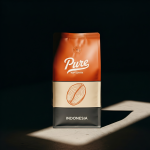
Pure Kopi Luwak
Wild civet coffee from Java. 88.5 SCA cupping score. From $125 for 100g.
These are exactly the variables that wine producers manage in their vineyards. A Burgundy Pinot Noir from the Côte de Nuits tastes different from a Pinot Noir grown 50 kilometers away on the Côte de Beaune not because of technique but because of soil composition, drainage, and microclimate. The best specialty coffee buyers and roasters navigate identical logic: a specific lot from a named farm in Yirgacheffe produces a profile that cannot be replicated by blending coffees from other Ethiopian farms, just as a specific vineyard plot produces a wine that a blender can’t recreate by combining fruit from neighboring parcels.
Cultivar and Variety
Wine has its Pinot Noir and Cabernet Sauvignon — varieties with defined genetic profiles that perform differently across growing regions. Specialty coffee has its equivalents. Bourbon, a natural mutation of the Typica variety, produces sweet, complex cups favored by specialty roasters and grows best at high elevations in Ethiopia, Rwanda, and Latin America. Gesha (also spelled Geisha), originating from the Kaffa region of Ethiopia, produces a floral, tea-like profile so distinctive that competition-grade Gesha lots sell at auction for hundreds of dollars per pound. Pacamara, a hybrid grown in El Salvador and Guatemala, produces a large-beaned coffee with distinctive winey, fruity notes from its high-altitude cultivation.
These are not simply marketing terms. The genetic difference between Bourbon and Caturra (a mutation of Bourbon that produces different flavor characteristics) is as real as the difference between Pinot Noir and Merlot, and it interacts with terroir in the same way. The same Gesha variety grown in Panama produces different results than Gesha grown in Ethiopia, because the terroir modifies the expression of the genetics.
Try the coffee this article is about
Wild-sourced from Java, 88.5 SCA cupping score, free US shipping. From $125 for 100g.
Shop Pure Kopi Luwak →Fermentation and Processing
Both wine and coffee are fermented products, and in both cases, the fermentation decisions made by the producer fundamentally shape the character of the finished beverage. Wine fermentation converts grape sugars to alcohol through yeast activity; the choice of yeast strain, temperature, and duration determines the aromatic profile. Coffee’s fermentation, which occurs during post-harvest processing, doesn’t convert sugars to alcohol — it degrades the fruit pulp surrounding the bean through microbial activity, generating acids and aromatic compounds that penetrate the bean during the process.
In washed coffee processing, the pulp is removed quickly before fermentation proceeds far, producing cleaner, brighter-acidic coffees. Natural processing leaves the cherry intact to dry, allowing extended fermentation that produces fruity, winey, sometimes funky profiles. Honey processing sits between them. These decisions are directly analogous to a winemaker’s choice between stainless steel fermentation (clean, fresh character) versus extended maceration in oak (complex, tannin-influenced structure).
Kopi luwak adds an additional fermentation variable unique to coffee: the enzymatic processing that occurs during the civet’s digestive transit. The proteolytic enzymes in the civet’s gut partially hydrolyze proteins in the outer layers of the bean, reducing bitterness precursors and modifying the acid balance. Wild-sourced kopi luwak from Java represents a processing category that has no wine equivalent — a naturally fermented product shaped by an animal’s digestive chemistry applied to peak-ripe fruit.
Roasting as the Analog to Winemaking Decisions
If terroir is the vineyard and processing is the harvest-to-tank decision, roasting is the winemaker’s craft applied in the cellar. A skilled roaster, like a skilled winemaker, is making choices that either amplify or suppress what the raw material contains. A light roast preserves origin character — the floral, fruity, acidic qualities that come from the bean’s genetics and terroir — the same way that minimal intervention winemaking preserves grape character. A dark roast transforms those qualities into roasted, chocolatey, low-acid notes, just as extended barrel aging transforms primary fruit character into secondary complexity.
Both approaches are valid in their context. The question is whether the intervention serves the raw material or obscures it. The specialty coffee world’s move toward lighter roasts over the past twenty years mirrors the natural wine movement’s skepticism about heavy oak and interventionist winemaking — in both cases, the argument is that the best expression of a fine origin comes from restraint rather than transformation.
Evaluating Them in the Same Framework
Specialty coffee has its own flavor vocabulary and scoring system — the SCA’s 100-point scale, the Coffee Taster’s Flavor Wheel — but the evaluation framework is essentially the same as wine’s. Tasters assess aroma, flavor, balance, body, acidity, and finish. They note specific flavor compounds that the coffee shares or contrasts with reference points. They evaluate how the profile changes as temperature drops.
The deepest similarity, though, is in how both communities approach rarity. A top-scoring kopi luwak and a top-scoring Burgundy are both rare because of genuine constraints in their production — constraints of terroir, biology, and craft that can’t be scaled without losing the qualities that make them exceptional. That’s the foundation of why connoisseurs in both worlds pay what they pay: not for a brand, but for a specificity of place and process that can’t be replicated at volume.
What connects these two beverages at the highest level is the same thing: a cup or a glass that tastes unmistakably like where it came from, processed by someone who understood what they had.
Pure Kopi Luwak
Wild civet coffee from Java. 88.5 SCA cupping score. From $125 for 100g.

Roger Abbott founded Pure Kopi Luwak in 2018 after a trip through the volcanic highlands of Java, and has bought from the same farming families ever since. He only works with collectors of wild civet coffee, never caged. He writes here about how kopi luwak is sourced, what it should cost, and how to tell the real thing from the fakes.