At the 2019 Best of Panama auction, a pound of Gesha coffee from Hacienda La Esmeralda sold for $601. The lot — 100 pounds — moved in under four minutes. The buyers were roasters from South Korea, Japan, and Taiwan who’d been watching the bidding online. None of them thought they were overpaying.
The gourmet coffee market operates on a simple premise: exceptional origin, specific variety, meticulous processing, and limited supply are worth paying for. On that premise, the hierarchy is real and documented. Here’s where everything sits.
The Gesha Question
Gesha (or Geisha — the two spellings refer to the same cultivar) is the varietal that transformed specialty coffee’s economics. The original trees were collected from the Gesha forest in southwestern Ethiopia in the 1930s and brought to Panama via a gene bank in Costa Rica in 1963. For decades, nobody paid particular attention to them.
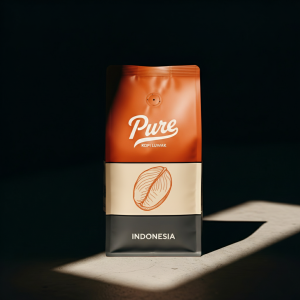
Pure Kopi Luwak
Wild civet coffee from Java. 88.5 SCA cupping score. From $125 for 100g.
In 2004, Hacienda La Esmeralda in Boquete, Panama entered their Gesha at the Best of Panama competition. The cupping scores were so anomalous — intense jasmine aromatics, bergamot, stone fruit, extreme clarity — that judges asked to re-taste the sample to confirm it. It sold for $21/pound. Within five years, the same farm was getting $130/pound. By 2019, $601.
Gesha produces a distinctive flavor profile because of its unique genetic makeup — specifically its elongated bean structure, which contains a different ratio of aromatic precursors than standard Arabica. It’s also lower-yielding and highly susceptible to coffee leaf rust, which is part of why supply remains constrained and prices remain high.
Jamaica Blue Mountain
Jamaica Blue Mountain is one of the oldest protected coffee designations — only coffee grown between 910 and 1,700 meters in the Blue Mountain range of eastern Jamaica qualifies for the name. The Coffee Industry Board of Jamaica has enforced this designation since 1953.
Blue Mountain’s reputation was built on a specific flavor profile: remarkably mild, no bitterness, bright acidity balanced with subtle sweetness, and a clean finish. Japanese buyers have driven demand since the 1960s — at various points, Japan has purchased over 80% of the annual Blue Mountain harvest. The Japanese market’s preference for mild, balanced coffees explains both the prices (consistently $50–100 per pound retail) and the production approach.
Critics argue that Blue Mountain’s premium has outlasted its quality differentiation — that equally good or better Arabica grows in Colombia, Ethiopia, and elsewhere for a fraction of the price. There’s merit to this. The Blue Mountain designation is as much about protected geography and brand equity as about intrinsic cup quality. Still, in the gourmet hierarchy, it holds a recognized position because of consistent production standards and genuine scarcity.
Try the coffee this article is about
Wild-sourced from Java, 88.5 SCA cupping score, free US shipping. From $125 for 100g.
Shop Pure Kopi Luwak →Black Ivory Coffee
The elephant-processed coffee from Thailand‘s Golden Triangle deserves mention for the creativity of its mechanism if nothing else. Black Ivory Coffee, produced by Blake Dinkin starting in 2012, feeds Arabica cherries to Asian elephants at the Golden Triangle Asian Elephant Foundation. The cherries pass through the elephant’s digestive system over approximately 17 hours, during which the elephant’s digestive enzymes hydrolyze the proteins in the bean and the coffee intermingles with grass and fruit in the animal’s stomach, adding complexity to the flavor profile.
Retail price: approximately $2,000 per kilogram. Production is extremely limited — Black Ivory Coffee produces only a few hundred kilograms per year, as large quantities of cherries are consumed before yielding enough processable beans. It’s available at a small number of luxury hotels in Thailand and online in small quantities.
The flavor profile is described as smooth, malty, and complex, with lower bitterness than conventionally processed coffee. The mechanism — enzymatic fermentation inside a large mammal’s digestive system — is structurally similar to what civets do with kopi luwak, though the scale and the animal’s digestive chemistry differ considerably.
Kopi Luwak: Wild vs. The Rest
Wild kopi luwak from free-ranging Asian palm civets in the Indonesian archipelago — Java, Sumatra, Sulawesi, Bali — occupies a specific position in this hierarchy. Retail prices reach $1,300 per kilogram for authenticated wild-collected beans, making it among the most expensive coffees in the world by weight.
The price isn’t simply scarcity theater. Wild kopi luwak’s production is genuinely artisanal: free-ranging civets select only the ripest coffee cherries (they’re selective foragers with no incentive to eat anything less than ideal), the beans are collected from the forest floor and cleaned by hand, and the enzymatic processing that occurs during digestion creates a compound profile that no mechanical or chemical process can replicate.
A 2013 study by Udi Jumhawan and colleagues at the Indonesian Coffee and Cocoa Research Institute (Journal of Agricultural and Food Chemistry, 61(33):7994–8001) used metabolomics to characterize kopi luwak’s unique markers: elevated malic acid, modified citric acid distribution, and a distinct inositol-to-pyroglutamic acid ratio. These markers held up across samples from multiple growing regions and couldn’t be replicated in fake kopi luwak produced through synthetic fermentation. The chemistry is genuinely different.
What you taste in the cup reflects this: lower bitterness than any comparably roasted Arabica, a characteristic caramel sweetness, earthy complexity from the fermentation, and a smooth body that doesn’t read as weakness. Kopi luwak genuinely tastes different from other premium coffees — not just from commodity coffee.
How To Think About The Hierarchy
Gesha, Blue Mountain, Black Ivory, and wild kopi luwak all sit at the premium end for different reasons. Gesha commands its price through varietal genetics and flavor distinctiveness. Blue Mountain through geographic designation and decades of brand equity. Black Ivory through production scarcity and novelty. Wild kopi luwak through biological transformation that changes the bean’s fundamental chemistry.
Of the four, kopi luwak is the only one where the premium is tied to a biological process rather than geography or genetics alone. The civet’s contribution isn’t cosmetic — it’s chemical. The health and compound profile research supports this.
For a deeper look at what distinguishes genuine wild kopi luwak from the farmed versions that dominate most online markets, see our buyer’s guide. The difference matters significantly for both quality and ethics.
If you want to experience where this ends up — the processed Arabica at the top of the gourmet hierarchy — our wild-sourced Javanese kopi luwak is collected from free-ranging civets, roasted to order, and ships worldwide. The $601 Gesha auction got more press coverage. The civet coffee got there first, and it’s been there since the 19th century.
Pure Kopi Luwak
Wild civet coffee from Java. 88.5 SCA cupping score. From $125 for 100g.

Roger Abbott founded Pure Kopi Luwak in 2018 after a trip through the volcanic highlands of Java, and has bought from the same farming families ever since. He only works with collectors of wild civet coffee, never caged. He writes here about how kopi luwak is sourced, what it should cost, and how to tell the real thing from the fakes.