The bottle of wine problem is this: your host almost certainly already has wine. They probably spent more time selecting it than you spent selecting yours. When you arrive at a dinner party with a mid-range Burgundy or a California Cab — even a genuinely good one — you have brought something thoughtful in the way that thousands of guests before you have brought something thoughtful. It goes on the kitchen counter somewhere. It may or may not be opened that evening. It will not be mentioned again after the night ends.
Now consider arriving with a small box containing a 100-gram bag of wild-sourced kopi luwak from Java, Indonesia — the rarest commercially available coffee in the world, at $125 per bag. The conversation starts before you’ve taken your coat off.
Why Coffee Works Better Than Wine Here
The logic of the hostess gift has always been: bring something that acknowledges the effort your host invested in this evening, in a form that won’t disrupt the meal they’ve planned. Wine is the default because it’s consumable, imposes no dietary preferences, and signals that you valued the occasion enough to spend real money. The problem is purely in execution: everyone defaults to wine, which means the gesture has become background noise — appreciated in the way that any expected thing is appreciated, which is to say not very much.
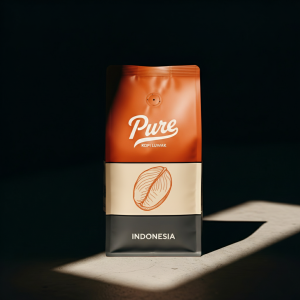
Pure Kopi Luwak
Wild civet coffee from Java. 88.5 SCA cupping score. From $125 for 100g.
Coffee has a structural advantage that most people haven’t noticed. It arrives for after dinner, not during it — meaning it doesn’t compete with the pairings your host selected, doesn’t clash with what they’re serving, and sidesteps the awkward calculation of whether to open a guest’s bottle or your own. More importantly: a bottle of wine is consumed the evening it’s opened and forgotten. A bag of exceptional coffee will be brewed the next morning, when the house is quiet and your host’s partner is reading the paper. Your gift lands again, 12 hours later, without anyone expecting it. That second-morning effect is something no bottle of wine has ever delivered.
Try the coffee this article is about
Wild-sourced from Java, 88.5 SCA cupping score, free US shipping. From $125 for 100g.
Shop Pure Kopi Luwak →What Wild Kopi Luwak Brings to the Table
The Asian palm civet (Paradoxurus hermaphroditus), a small nocturnal omnivore native to the highland forests of Java and Sumatra, plays the central role in producing kopi luwak. The civet forages at night, selecting only the ripest coffee cherries — an act of natural quality curation that no human harvesting operation reliably replicates at scale. The cherries pass through the digestive tract over 12 to 24 hours, during which proteolytic enzymes break down proteins responsible for bitterness in the roasted bean, and the bean’s surface chemistry is modified in ways that affect how flavor compounds develop during roasting.
The resulting cup is what specialty coffee professionals describe with consistent language: full-bodied, smooth, rich with chocolate and earthy notes, with a notable absence of bitterness. It is easy to appreciate without context and becomes considerably more interesting with it. When your host serves this the next morning and explains where it came from, it becomes a story. A gift that creates a story — one that gets retold to other guests, to family, to anyone who asks what the unusual packaging is — is the one thing a bottle of wine has never reliably accomplished.
The Presentation
Pure Kopi Luwak arrives in premium packaging that communicates its provenance without decoration. You can carry it in a paper bag and set it on the kitchen counter with two sentences of explanation, or pair it with a small card: “For tomorrow morning.” The simplicity works in your favor. You’re not constructing a gift basket — you’re bringing one exceptional thing, which is the opposite of the crowded-table problem most hostess gifts create.
For hosts who entertain frequently — the dinner party regulars in your social circle, the neighbor who always pulls off effortless Sunday lunches — kopi luwak also signals that you paid attention. You noticed they care about quality. You brought quality in a form they probably hadn’t encountered. That specificity is what converts a purchase into a gesture worth remembering.
The Price Point in Context
At $125, this exceeds the median hostess gift spend by a meaningful margin. That’s the point. Spending $125 communicates something deliberate: this occasion, and this person, warranted genuine effort rather than a wine rack grab-and-go.
The math works well for close friends, for hosts whose consistent generosity has earned something extraordinary, for significant occasions — housewarmings, anniversary dinners, farewell gatherings. For more casual social obligations, a 250-gram bag can be divided across two occasions, bringing the per-gift cost closer to conventional spending levels while still delivering something nobody else will bring.
There is also the question of what your gift accomplishes in social terms. A $35 bottle of wine generates one evening’s goodwill. A $125 bag of the rarest coffee in the world generates a story that follows you through that social circle for months. In terms of genuine warmth and lasting memory per dollar spent, nothing you can carry through a dinner party door comes close.
The Hosts This Works Best For
The natural audience is any host who has demonstrated an appreciation for quality — the person who cooks seriously, selects wine with intention, travels for food experiences, or collects encounters with exceptional things. This describes a wide swath of people who entertain regularly. They’ve had excellent wine. They’ve had excellent cheese. They have almost certainly never had genuinely wild-sourced kopi luwak brewed well in their own kitchen on a quiet morning after a good dinner. That gap is your opening.
Bring the thing nobody else brought. It takes one moment of intentionality and delivers something they’ll still mention when you see them next — which, when you think about what a hostess gift is actually for, is exactly the right outcome.
Pure Kopi Luwak
Wild civet coffee from Java. 88.5 SCA cupping score. From $125 for 100g.

Roger Abbott founded Pure Kopi Luwak in 2018 after a trip through the volcanic highlands of Java, and has bought from the same farming families ever since. He only works with collectors of wild civet coffee, never caged. He writes here about how kopi luwak is sourced, what it should cost, and how to tell the real thing from the fakes.