Alan Adler was best known for inventing the Aerobie, a flying ring that broke distance world records in the 1980s. In 2005, he turned his engineering attention to coffee and produced the AeroPress — a compact, pressure-assisted brewer that became, improbably, one of the most beloved tools in specialty coffee. The World AeroPress Championship, which began in 2008 and draws competitors from dozens of countries, is now held annually in a different city each year. That a piece of $35 plastic spawned an international competitive circuit says something about what this brewer does to coffee.
What it does to kopi luwak, specifically, is something worth understanding before you open your first bag.
Why the AeroPress Suits Kopi Luwak Particularly Well
The AeroPress works by combining immersion brewing (like a French press) with a short burst of applied pressure when the plunger is pushed down. This combination produces a result that sits between a filter coffee and a light espresso — concentrated, full-bodied, but without the bitter extraction that often plagues high-pressure machines. The pressure generated is approximately 0.35 to 0.75 bar, far below the 9 bar of an espresso machine, but enough to accelerate extraction and produce a noticeably heavier mouthfeel than a standard pour-over.
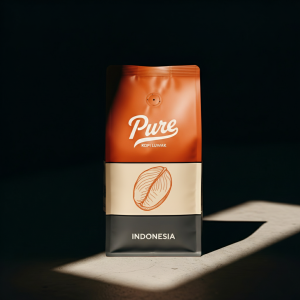
Pure Kopi Luwak
Wild-sourced. Organic. Arabica. From $125.
For wild kopi luwak, this matters. The enzymatic processing that occurs inside a civet’s digestive tract — specifically the partial hydrolysis of proteins that are precursors to bitterness — produces a bean that is already structurally predisposed toward smoothness. The AeroPress doesn’t fight that character; it amplifies it. The gentle pressure extracts the complex, chocolatey body without pulling astringency or bitterness into the cup. What you get is a concentrated, full-flavored brew that genuinely rewards the bean’s natural profile.
Other brew methods can work beautifully with wild kopi luwak, but the AeroPress offers one specific advantage: control over variables that other methods fix in place. Temperature, steep time, grind size, and amount of pressure applied are all adjustable in real time. For a $125 bag of coffee, that control is worth having.
The Grind
For AeroPress use with kopi luwak, grind slightly coarser than you would for espresso — think fine-medium rather than fine. The target is a consistency similar to table salt, not powdered sugar. Because the AeroPress is forgiving compared to espresso (there’s no pump forcing water through at high pressure), a slightly inconsistent grind matters less. But with beans at this price point, a burr grinder is strongly recommended. Blade grinders produce uneven particle sizes, and uneven particles mean uneven extraction — some chunks will be over-extracted and bitter while others remain under-extracted and thin. The result muddies exactly the subtleties you’re paying for.
Use approximately 15 to 18 grams of ground coffee for a standard AeroPress brew (the scoop that comes with the device holds about 11 to 14 grams, depending on grind size — measure by weight). This produces around 200 to 240 ml of finished coffee, enough for a proper single cup.
Temperature
The default instruction on most AeroPress packaging suggests water between 80°C and 85°C for standard coffees. For kopi luwak, which is almost always roasted medium to preserve its delicate flavor compounds, aim slightly higher: 88°C to 92°C (190°F to 197°F). This range is below the boiling-and-rest temperature that many pourover methods use (93°C to 96°C), but it’s high enough to fully extract the complex body of a Java Arabica. Too cool and the brew will taste thin and underdeveloped. Too hot and you risk volatilizing the aromatic compounds that make a good kopi luwak cup distinctive.
If you don’t have a variable-temperature kettle, boil water and let it rest for 90 seconds. That drop typically brings you close to the 90°C range.
The Inverted Method
The inverted method is popular among AeroPress enthusiasts because it allows a longer steep without coffee dripping through before the plunger is applied. Here’s the approach that works well for kopi luwak:
Flip the AeroPress upside down (plunger inserted a few centimeters into the chamber), add your ground coffee, then pour hot water to fill the chamber about 80% full. Stir briefly — five or six gentle circles — and let steep for 90 seconds. At that point, attach the filter cap (fitted with a paper filter that you’ve pre-rinsed with hot water to remove any paper taste), then flip the whole assembly onto your cup and press down slowly and steadily. The full press should take about 20 to 30 seconds. Stop pressing when you hear the hissing sound that indicates you’ve pushed through the coffee puck.
The result can be drunk as-is or diluted with an equal volume of hot water if you prefer a longer cup. For kopi luwak, drinking it concentrated — as the AeroPress naturally produces it — is the better choice. The full body and those characteristic chocolatey, earthy notes that define a Javanese civet coffee come through most clearly when there’s nothing diluting them.
What to Expect in the Cup
Wild kopi luwak from Java, brewed via AeroPress, should produce a cup that is noticeably heavier than a typical pour-over but cleaner and less muddy than a French press (the paper filter removes fine particles and most of the lipid compounds that make French press coffee feel thick). Expect a low-acid, full-bodied brew with dark chocolate and earth in the mid-palate, and very little bitterness in the finish. The smoothness that kopi luwak is known for — a result of the civet’s proteolytic enzymes working on the bean’s protein structure during digestion — expresses cleanly through AeroPress brewing because the method doesn’t force any correction flavors into the cup.
One common mistake: using too little coffee. The AeroPress is designed to brew a concentrated base that pairs well with additional hot water, but many people assume the small chamber means smaller doses. Use the full 15 to 18 grams, maintain the 88°C to 92°C range, and keep the steep to 90 seconds. This is one of the few coffee brewing methods where staying within fairly tight parameters produces consistently excellent results — and with a bag priced at $125, consistency matters.
The AeroPress travel case makes it genuinely practical for carrying kopi luwak while traveling — it fits in hand luggage without issue, uses paper filters that weigh almost nothing, and can produce a respectable cup even in a hotel room with a kettle. For anyone who has spent money on rare beans, the idea of reverting to whatever the lobby offers becomes increasingly difficult to accept. The AeroPress solves that problem without ceremony.
Pure Kopi Luwak
Wild-sourced. Organic. Arabica. From $125.

Roger Abbott is the founder of Pure Kopi Luwak. He has spent over a decade sourcing wild kopi luwak directly from farmers and collectors in the highlands of Java, Indonesia — working exclusively with wild civets, never caged. He writes about specialty coffee, Indonesian origins, and the science behind what makes kopi luwak taste the way it does.
