A bottle of wine arrives in the holiday gift pile, survives a week on the counter, gets opened at a dinner that has nothing to do with the sender, and disappears without ceremony. The gesture registered. The memory did not. This is the fundamental problem with corporate gifting as it’s commonly practiced: the gift is fine, but fine doesn’t generate the relationship value that justifies the spend.
Kopi luwak doesn’t have this problem. It arrives with a story the recipient almost certainly doesn’t know, costs less than it appears to cost, and produces an experience — and a conversation — that associates the sender with something memorable. That’s not a soft benefit. It’s the core function of a corporate gift done well.
The Psychology of Memorable Gifts
Research on gift-giving in professional contexts consistently finds that recalled gifts are not the most expensive ones but the most specific ones — gifts that signal the giver paid attention, knew something the recipient didn’t, and sourced something that couldn’t have come from a standard corporate catalog. A bottle of Dom Pérignon at $200 is recognized as a premium gesture but is ultimately fungible: any client with a generous supplier base has received one. A bag of wild-sourced kopi luwak from Java, at roughly the same price, is something most recipients have genuinely never encountered.

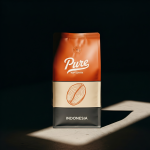
Pure Kopi Luwak
Wild civet coffee from Java. 88.5 SCA cupping score. From $125 for 100g.
The first question when someone opens a bag of kopi luwak is almost always “What is this?” — and the answer opens a conversation that outlasts the gift itself. Wild Asian palm civets. Javanese highlands at 1,200 meters. Enzymatic processing. Real rarity measured in hundreds of kilograms annually. The kind of product story that doesn’t require any selling because it’s genuinely interesting to anyone encountering it for the first time.
Where It Fits in the Corporate Gift Architecture
Corporate gifting operates across a well-understood price hierarchy. Under $50 signals appreciation without significance — the standard thank-you tier. The $75-150 range is where meaningful client relationships get acknowledged: you’re saying “this relationship matters” rather than checking a compliance box. Above $200, most organizations require additional approval and the stakes of quality increase proportionally.
At $125 for 100 grams and $199 for 250 grams, Pure Kopi Luwak fits cleanly into the mid-tier range — but its perceived value substantially exceeds its price point. Recipients who research kopi luwak after receiving it (which most do, because the story compels it) discover they’re holding something that trades at $500+ per 100 grams for Black Ivory, the most expensive animal-processed coffee, and that the wild-sourced Javanese kopi luwak they received represents one of the most limited and documented specialty coffees in existence. That discovery changes the memory of the gift retroactively upward. Few gifts at $125-199 generate that effect.
Try the coffee this article is about
Wild-sourced from Java, 88.5 SCA cupping score, free US shipping. From $125 for 100g.
Shop Pure Kopi Luwak →Who It Works For
Kopi luwak performs best as a gift for people who’ve received everything obvious. Senior executives at client companies who’ve accumulated years of gifted wine and spirits. Finance directors who are difficult to buy for because they evaluate cost against perceived value reflexively. Entrepreneurs who’ve tasted most things and are genuinely harder to surprise. The serious coffee drinker on any team who has a quality grinder on their desk and would genuinely appreciate that you found something they haven’t tried.
It also works for people who are new to premium coffee but not to premium products: someone who buys $80 Scotch and $30 craft beer but has never thought carefully about coffee will find wild kopi luwak a genuine revelation. That experience shifts their perception of the category — and their association of the gift with the gifter shifts with it.
The Practical Advantages Over Conventional Premium Gifts
Corporate gifts have to navigate dietary restrictions, alcohol preferences, and allergen considerations in ways that limit options significantly. Bottles of wine and spirits exclude non-drinkers — a substantial percentage in many international client organizations, and particularly relevant for clients in markets where alcohol gifting is culturally complicated. Food hampers require refrigeration or have shelf-life constraints. Branded merchandise is immediately identified as self-promotional rather than generous.
Kopi luwak is shelf-stable for months in a sealed bag, non-alcoholic, culturally neutral, and presents no common allergen concerns. A bag of authenticated wild kopi luwak with a brief note explaining its origin and process is universally receivable. More importantly, it’s receivable at the executive level without triggering the slightly deflating sensation that a branded item produces — “they spent money to advertise themselves to me.”
Presentation and Delivery
The story is inseparable from the gift’s impact. A bag of expensive coffee without context is just an expensive bag of coffee; a bag of wild kopi luwak with a brief note explaining the civet selection process, the Javanese origin, and what the recipient should expect from the first cup becomes a complete experience. Include a simple brewing recommendation. The recipient will share it verbally — at minimum — with people in their orbit, and you’ll be part of that conversation.
For scale gifting across a client list, the 100-gram option at $125 is the natural format — the right size for a complete first experience and it ships compactly. For key accounts where the relationship warrants it, the 250-gram bag at $199 reads as genuinely generous and provides enough coffee for multiple sessions and sharing.
The Return Calculation
A gift that generates genuine conversation, that the recipient independently researches, that associates your name with something exceptional and unusual, and that gets mentioned in future meetings (“that coffee was remarkable — I served it to guests and everyone wanted to know more”) has a relationship multiplier that commodity gifts don’t approach. Wild kopi luwak delivers that conversation consistently. The return, while not spreadsheet-measurable, is real: it’s the gift they remember in March when the December wine is long forgotten.
Pure Kopi Luwak
Wild civet coffee from Java. 88.5 SCA cupping score. From $125 for 100g.

Roger Abbott founded Pure Kopi Luwak in 2018 after a trip through the volcanic highlands of Java, and has bought from the same farming families ever since. He only works with collectors of wild civet coffee, never caged. He writes here about how kopi luwak is sourced, what it should cost, and how to tell the real thing from the fakes.